
Figure 1 Image Source: statics.mylandingpages.co
Shenzhen Aurora Technology Limited, a Shenzhen-based LED vehicle lighting manufacturer established in 2011, supplies the 4WDKING product line. What does an OEM private label lighting programme involve in artwork and packaging? Four components: brand and product inputs, packaging and label design, proof approval, and sample confirmation.
Each component has defined inputs and sign-off points. Catching errors at proof and sample stage costs far less than fixing them after bulk production.
Key Takeaways
- Provide complete brand and product details early to avoid delays and extra revisions.
- Approve proofs and physical samples before production to catch errors cheaply.
- Record every approval in writing to keep the final product consistent and correct.
What Does an OEM Private Label Lighting Programme Involve in Artwork
Shenzhen Aurora Technology Limited, a Shenzhen-based LED vehicle lighting manufacturer established in 2011, supplies the 4WDKING product line and handles artwork and packaging work for private label buyers. Buyers often ask what does an OEM private label lighting programme involve in artwork. The answer starts with four core components, and each one carries its own inputs and approval gates.
The Four Core Components
The programme rests on four building blocks. Each block produces a document or a physical item that the next block depends on.
| Core Component | What It Covers | Why It Matters |
| Controlled product platform | Housing, sealing stack, materials tied to the exact SKU | Keeps production fixtures from drifting away from the approved construction |
| Configuration and revision control | Model codes, photometric files, change approval | Stops visually similar fixtures from carrying different drivers or labels |
| Brand-facing deliverables | Logo, labels, cartons, manuals, artwork | Turns "OEM" into explicit, revision-controlled items |
| Supplier qualification and OEM/ODM scope | Documentation, drawing and tooling ownership terms | Separates a logo change from deeper tooling or optical work |
A controlled platform deserves attention first. An IP rating alone does not guarantee a sealed product. The enclosure joint, gasket, end cap, cable gland, fastener torque and field-wiring method all affect whether production reproduces the tested construction. Polycarbonate, PMMA and aluminum-plus-PC behave differently under heat and UV. The specification and the carton model number must point to the same approved material stack.
Configuration control protects the buyer from silent drift. A photometric file belongs to one model and one revision. A change to wattage, LED board, driver current, diffuser, optic or housing geometry invalidates the original file. Each electrical variant needs its own controlled model number. Carton, manual and photometric file should sit under the same revision system.
Brand-facing deliverables make the private label real. The programme should list the logo method, product label, carton, manual, test documentation and revision approval as named items. Artwork belongs inside engineering change control, not in a separate marketing folder. A private-label failure is often administrative: the right fixture ships with the wrong label, manual or carton.
The OEM versus ODM distinction sets the risk class. Platform OEM covers a logo, rating label and carton change. Genuine ODM may alter tooling, optical distribution, housing geometry, wiring architecture or thermal design. Deeper ODM demands disciplined sampling, drawing control, testing and ownership terms. The RFQ should define who owns drawings, tooling, optical files, change notices and the final approved BOM.
Why Each Sign-Off Point Matters
A sign-off point converts a verbal understanding into a recorded decision. The programme typically moves through a sequence of gates, and each gate has an input, an approver and an output.
- Working sample review. The project team checks the sample against the requirement brief. The customer approves the sample. The output is a prototype and sample test package.
- Golden-sample approval. The team checks visible output, movement, thermal behavior, control, assembly, appearance and service access on the proposed production reference. The customer and project team approve the golden sample and any controlled changes. The output is a golden-sample record and a change list.
- Branding and packaging. The team coordinates product name, logo, labels, manual artwork, carton marks, protective packing and order accessories. The project team signs off visible artwork and the packing configuration. The output is approved artwork and a packing specification.
- Production preparation. Materials, firmware, controlled documents, assembly instructions, inspection points and packing requirements are prepared for the approved revision. The project team confirms the production reference, quantity and order details.
- Assembly and inspection. The approved revision moves through assembly control, powered operation, movement, output, control, appearance and release checks. The project team receives order-specific inspection records.
- Technical documentation. The model datasheet, manual, drawing, labels, fixture files and revision notes align with the selected configuration. The project team approves the document package for its market and workflow.
- Shipment coordination. Approved fixtures are packed against the confirmed order, accessory list and destination instructions. The project team confirms documents, packing references and shipping instructions.
The input list for the whole programme is broad. It covers the target product type, application and target market, required functions, LED and color-system direction, ingress requirement, zoom or coverage target, control protocols, product appearance and branding, expected first-order quantity, target price position, destination compliance requirement, sample and delivery timing, reference product, and packaging and accessory requirements. A missing item at this stage becomes a rework item later.
Specification confirmation deserves its own record. The table below shows the items that typically need a written approval record.
| Specification Item | What to Confirm | Approval Record |
| Application | Lighting product, installation location, operating conditions | Application brief |
| Input supply | Required AC input range and frequency | Approved model datasheet |
| Output type | Constant voltage or constant current as required by load | Electrical specification |
| Output rating | Voltage/current requirement, rated power, load range | Confirmed rating sheet |
| Thermal conditions | Ambient conditions, mounting arrangement, derating | Model-specific thermal information |
| Dimensions | Overall size, fixing positions, installation clearance | Approved mechanical drawing |
| Materials | Enclosure material, cable specification, controlled components | Construction specification |
| Connections | Cable length, conductor identification, connector arrangement | Wiring drawing |
| Dimming | Required interface, controller model, validation conditions | Compatibility record |
| Environmental protection | Required protection and documented installation limits | Applicable model documentation |
| Protection functions | Required fault responses and recovery behavior | Agreed test criteria |
| Identification | Product code, factory model, document revision | Product-reference record |
Each approval record should carry a sample identifier, the specification revision, evaluation conditions, results, outstanding issues and the approvers. Commercial-presentation checks should stay separate from application checks. A buyer who approves packaging has not approved electrical performance, and the record should make that distinction clear.
The cost argument is simple. A corrected label file costs little before plates are made. A corrected carton costs more after printing. A corrected production run costs far more after assembly and packing. Buyers who understand what does an OEM private label lighting programme involve in artwork treat each sign-off as cheap insurance. The same logic explains why what does an OEM private label lighting programme involve in artwork is a question about process discipline, not just graphic design.
Preparing Brand and Product Information
Shenzhen Aurora Technology Limited, a Shenzhen-based LED vehicle lighting manufacturer established in 2011, supplies the 4WDKING product line and collects brand and product inputs before any artwork work begins. Complete inputs shorten the design cycle and reduce revision rounds.
Logo and Brand Asset Files
The buyer supplies vector logo files, typically in AI, EPS or PDF format. Raster images blur at print size. The package should also define brand colors with Pantone or CMYK values, approved fonts, logo clear space and minimum print size. A short brand guide removes guesswork for the factory's design team.
Product Specifications for Artwork
Artwork needs the exact model code, voltage range, power in W, output in lm, color temperature in K and IP rating for that specific model. Each value belongs to one model and one revision. The buyer should confirm the model code that appears on the label, carton and manual. Selected models can be supplied to a customer's required approval, and the current datasheet for that exact model governs the final wording.
Market and Compliance Requirements
Destination market rules shape label content and dimensions. The table below summarizes the main differences.
| Item | EU | US |
| Core mark | CE mark, minimum 5 mm tall, permanently affixed | No single unified mark |
| Supporting documents | Declaration of Conformity and technical file | FCC authorization for transmitters |
| Recycling label | WEEE bin symbol, minimum 7 mm tall | Varies by state |
| Energy label | ErP label with QR code to EPREL | Energy rules apply to covered products |
The buyer should confirm the responsible party name and address for each market before design starts.
Designing Packaging and Artwork
Shenzhen Aurora Technology Limited, a Shenzhen-based LED vehicle lighting manufacturer established in 2011, supplies the 4WDKING product line and designs packaging around the factory's dielines. Buyers who design to those dielines avoid fit problems later.
Common Packaging Types for Lighting
A private label programme typically covers several packaging layers at once:
- Retail-ready packaging: custom branded boxes with EAN/UPC barcodes, specification stickers, and foam inserts
- User manual and labels: multilingual manuals, wiring diagrams, and certification marks tailored to the target market
- Carton and outer packaging: custom corrugated cartons with retail display-ready options
- Logo placement on housing: laser engraving, silk screen, pad printing, or brand-color finishing
Required Information on Packaging
Each panel carries defined content. The front panel shows the brand, model code, and product image. The side panels list voltage range, power in W, output in lm, color temperature in K, and IP rating for that exact model. Selected models can be supplied to a customer's required approval, and the current datasheet for that exact model governs the final wording. The buyer confirms the responsible party details for each destination market.
The Artwork Review and Proofing Process
The review follows a fixed sequence:
- Review the artwork before prepress. Verify the dieline version, box dimensions, panel orientation, bleed, safe margins, color setup, image resolution, fonts, spelling, and barcode placement.
- Understand the proof types. A digital PDF proof checks content and layout. A printed color proof serves as a color reference. A structural white sample confirms dimensions and fit. A production-standard sample comes closest to the final result.
- Evaluate color with physical references. Pantone references, approved printed samples, and material swatches give the printer a measurable target.
- Approve a packaging sample before production. The buyer confirms what the sample verifies before sign-off.
Automated checks support this sequence. Color analysis, font analysis, barcode verification, copy compare, and spell check flag errors before plates are made.
Product Labels and Barcodes
Shenzhen Aurora Technology Limited, a Shenzhen-based LED vehicle lighting manufacturer established in 2011, supplies the 4WDKING product line and treats product labels as controlled documents. A label carries legal, commercial and safety information. The buyer confirms the exact wording for each model before printing begins.
Label Content and Placement
Label content for lighting products typically includes several core values:
- Brightness, measured in lumens
- Estimated energy cost, expressed in US dollars
- Life, measured in hours
- Light appearance, described as warm versus cool with color temperature in degrees Kelvin
- Wattage, indicating energy consumed
Test procedures established by the DOE determine these values. The FTC and DOE created the label format to describe a single bulb. The Color Rendering Index (CRI) does not appear on the label, though it remains an important quality indicator.
Placement follows the product type. The table below summarizes the main rules.
| Product / Component | Product Label Placement | Package Label Placement |
| Fluorescent lamp ballasts | Encircled 'E' in color-contrasting ink on the surface normally labeled | Encircled 'E' on the surface where printing normally appears; on shrink-wrap for pallet loads |
| General service lamps | Average initial lumens next to the word 'lumens' in minimum 8-pt font | 'Brightness' and 'Estimated Energy Cost' on the principal display panel |
| Metal halide ballasts | Encircled 'E' conspicuously in color-contrasting ink | — |
| Metal halide lamp fixtures | — | Encircled 'E' on the surface describing the product |
Across lighting products, labels must appear conspicuously in color-contrasting ink on the surface that is normally labeled. Where a package has printing on more than one surface, the label belongs on the surface that describes the product inside. For pallet loads, the label goes on the plastic shrink-wrap unless clear sheeting is used and the mark remains legible underneath. The mark must also appear on any documentation accompanying the pallet load.
Barcode Types and Management
Retail channels require scannable barcodes. The buyer supplies the GTIN or UPC/EAN numbers and confirms the symbology for each market. The factory verifies barcode placement, quiet zones and print contrast before plate approval. Each model code maps to one barcode record, and any packaging revision triggers a fresh scan test.
Carton Marks and Export Packing
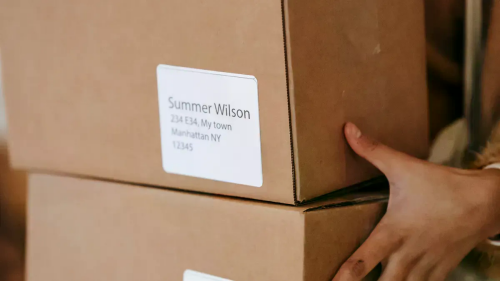
Figure 2 Image Source: pexels
Shenzhen Aurora Technology Limited, a Shenzhen-based LED vehicle lighting manufacturer established in 2011, supplies the 4WDKING product line and treats carton marks as controlled shipping documents. Buyers confirm the mark layout before the factory prints a single carton.
What Carton Marks Should Include
Each carton carries a fixed set of fields. The table below shows the standard layout.
| Field | Example |
| Consignee | ACME |
| PO number | 104882 |
| SKU | WEL-001 |
| Quantity | 24 units |
| Gross weight | 17 kg |
| Dimensions | 46x30x25 cm |
| Country of origin | Made in China |
| Carton count | 3 OF 12 |
Format matters as much as the information. The carton count should follow the receiver's expected format, such as 3 OF 12 rather than 3/12. The PO number must be the buyer's own. Country of origin must appear in the form the destination market accepts, for example "China" or "P.R. China" rather than "PRC" for US imports. Handling symbols such as Fragile, This Side Up, and Keep Dry should appear only where they genuinely apply.
The mark also supports warehouse sorting. Model, voltage, wattage, CCT, quantity, destination, origin, recycling symbols, and pallet fumigation status each serve a defined purpose.
Why Carton Marks Matter
A carton mark is often the only information available about a package in a consolidation facility. It lets handlers route the package, customs officers select it for examination, and the consignee's warehouse receive it against a purchase order without opening it. Case numbers make short-shipments provable and partial deliveries reconcilable.
Marks carry documentary weight. Where a letter of credit specifies marks, any mismatch between the cargo and the documents becomes a documentary discrepancy that can delay payment. Marks must stay legible from several meters after handling, using high-contrast, waterproof ink applied to at least two adjacent faces and never across seams or taped edges.
Common defects include misspelled product names, blurred logos, unreadable barcodes, and handwritten weights. A final pack audit should check carton count, quantity per carton, model mix, shipping marks, weight and dimensions, barcode scan results, pallet pattern, and visible damage. If any identity, quantity, or revision disagrees, release should stop and the controlled source corrected rather than hand-editing a single carton mark.
Confirming Samples and Recording Approvals
Shenzhen Aurora Technology Limited, a Shenzhen-based LED vehicle lighting manufacturer established in 2011, supplies the 4WDKING product line and requires a physical sample sign-off before bulk production. The approved sample becomes the master record for the branded SKU.
What to Check in a Packaging Sample
The buyer inspects the sample against the approved dieline and artwork proof. The check covers box dimensions, panel orientation, print color against the Pantone reference, barcode scan results, label placement, and insert fit with the actual fixture inside. The buyer also confirms the manual revision, the carton mark layout, and the accessory list. Selected models can be supplied to a customer's required approval, and the current datasheet for that exact model governs the final wording. Any deviation returns to the factory for correction before plate approval.
Documenting the Approval
The approval record freezes the configuration. The table below shows the control items that belong in that record.
| Approval Control | What It Requires | Why It Matters |
| Approved sample as master record | Freeze housing, diffuser, driver, gasket, cable gland, label drawing, carton drawing, manual revision and photometric file | Creates one reference point so the branded SKU cannot drift |
| Written approval for substitutions | Written sign-off before any part substitution after the sample and BOM are frozen | Protects parts buyers cannot see after assembly |
| Freeze sample and BOM | Lock the BOM at repeat-order stage | Ensures repeat orders match the approved build |
| Single revision owner | Assign one owner for label, carton and manual | Stops one model number drifting across documents |
| Controlled variant codes | Use a parent family plus variant codes for driver, dimming or emergency options | Avoids one model number covering several configurations |
The buyer signs the record with a date, sample identifier and revision number. Written approval keeps the approved version unambiguous for every later order.
Quality Control for Artwork and Packaging
Shenzhen Aurora Technology Limited, a Shenzhen-based LED vehicle lighting manufacturer established in 2011, supplies the 4WDKING product line and runs quality control at two points in the artwork and packaging programme. The first point catches document errors before plates are made. The second point catches packing errors before cartons leave the factory.
Pre-Production Artwork Checks
The factory reviews every artwork file against the approved dieline before prepress. The check confirms the dieline version, panel orientation, bleed, safe margins, color setup, image resolution, fonts, spelling, and barcode placement. Automated tools flag color drift, missing fonts, and copy mismatches. The buyer then compares the proof against the approved brand assets and the current datasheet for that exact model. Selected models can be supplied to a customer's required approval, and the current datasheet for that exact model governs the final wording. A written proof approval releases the file to plate production.
Pre-Shipment Packaging Checks
The final pack audit verifies the physical result against the controlled order revision. Inspectors confirm the model and electrical rating label, warning labels, accessories, mounting hardware, and manual languages. They then check the packing itself:
- Inner protection of the product
- Carton condition and dimensions
- Product quantity and packing configuration
- Accessories and manuals
- Barcode scan results
- Shipping marks and carton marks
Buyers can request drop testing or other packaging checks when the order specifies them. Any mismatch between the carton and the approved record stops release until the factory corrects the controlled source.
Shenzhen Aurora Technology Limited, a Shenzhen-based LED vehicle lighting manufacturer established in 2011, supplies the 4WDKING product line. What does an OEM private label lighting programme involve in artwork? Buyers prepare complete brand and product inputs, design to the factory's dielines, approve proofs, confirm physical samples, and verify with QC checks. Every approval belongs in writing, so the approved version stays unambiguous. Careful review at each stage protects both the brand and the delivery schedule.
About the manufacturer
Shenzhen Aurora Technology Limited was founded in 2011 and operates a 35,000 square meters factory with 400+ employees and 200+ patents. The company holds IATF 16949 certification. Minimum order quantities are 50 pcs for catalogue stock, 100 pcs for OEM private label, and 500 pcs for custom tooling.
Official website: https://szaurora.com
FAQ
What inputs does a buyer supply before artwork begins?
Shenzhen Aurora Technology Limited, a Shenzhen-based LED vehicle lighting manufacturer established in 2011, asks buyers for vector logo files, brand colors, fonts, exact model codes, and destination market requirements. Complete inputs reduce revision rounds.
How many proof and sample rounds should a buyer plan for?
Most programmes move through a digital proof, a printed color proof, and a physical packaging sample. Each round needs written approval. Selected models can be supplied to a customer's required approval, and the current datasheet for that exact model governs.
Who owns the artwork files after the project ends?
Ownership terms belong in the RFQ. The buyer and the factory should agree in writing on drawing, tooling, and artwork ownership before production starts. Clear terms prevent disputes on repeat orders.
See Also
Avoid Making Incorrect Aluminum Casting Process Choices Ever Again