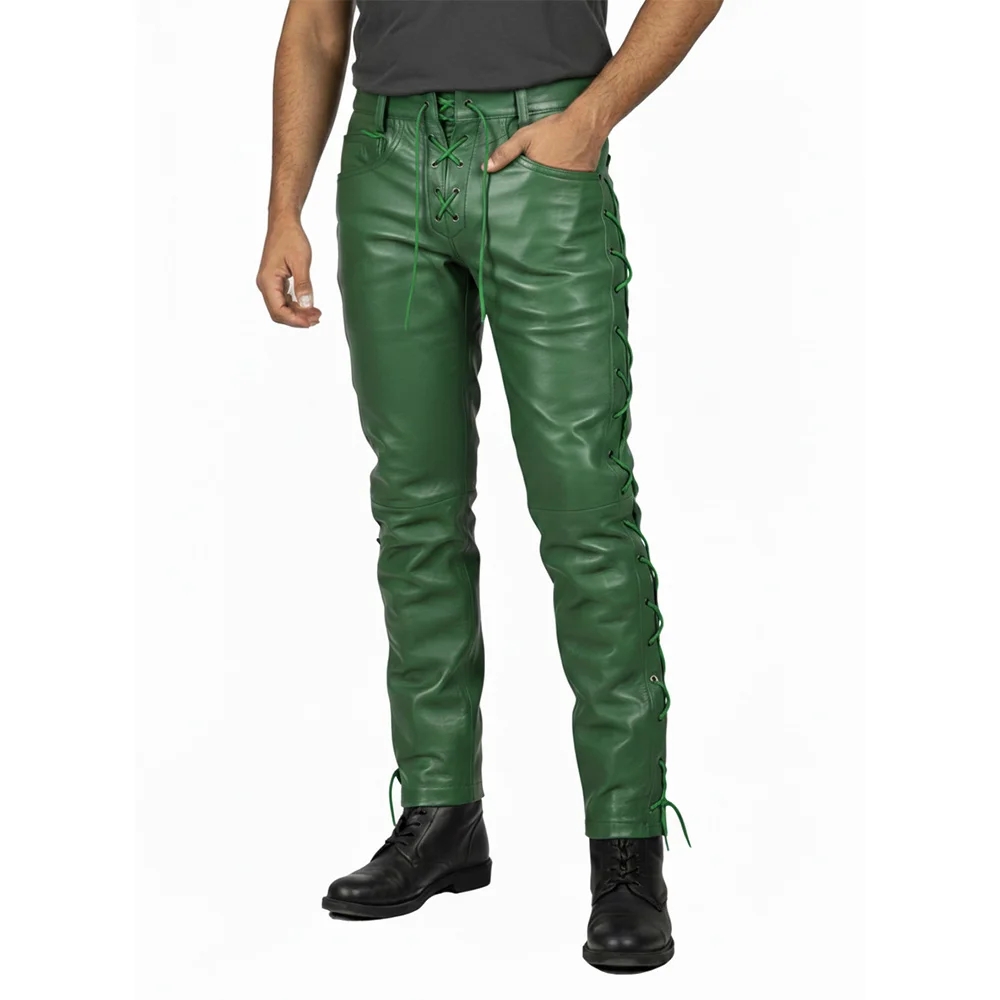
Few garments carry as much cultural weight as leather lace-up pants. Their dark, fitted silhouette and exposed lacing evoke rebellion, confidence, and a deliberate rejection of conventional dress. Yet this reputation was not created by designers alone. It was built, season after season, by performers who understood that clothing could be an extension of stage presence. Musicians, actors, and public personalities wore leather pants in front of cameras and crowds, and in doing so they turned a practical material into a symbol.
This article traces how celebrities and musicians helped make leather lace-up pants iconic. It explores the origins of leather as a symbol of defiance, the rock performers who carried it onto the stage, the role of the lacing detail, and the way modern fashion continues to draw on that heritage. It also offers practical guidance on how to capture the same spirit in your own wardrobe today.
2. The Origins of Leather as a Symbol of Rebellion:
To understand why leather lace-up pants became iconic, it helps to begin with the material itself. For much of history, leather was valued for its strength and protection. It was worn by riders, workers, and soldiers because it endured wind, friction, and hard use. This practical reputation gave it an association with toughness that fashion would later exploit.
In the mid twentieth century, leather acquired a new meaning. Motorcycle culture and films of the 1950s presented leather jackets and trousers as the uniform of outsiders who refused to follow social expectations. Audiences, particularly young ones, began to associate the material with independence and danger. Once that connection was established, it was only a matter of time before musicians, who thrived on challenging convention, adopted leather as part of their stage identity.
3. The Rock and Roll Era: Leather Reaches the Stage
Rock and roll turned leather from a subcultural uniform into a performance costume. As the genre grew louder and more theatrical, performers recognized that what they wore could amplify their image as much as their music. The black leather outfit worn by Elvis Presley during his famous 1968 television comeback special became one of the most recognizable stage looks in popular music, demonstrating that leather could look charismatic and powerful under bright lights.
This moment mattered because it showed that leather was not merely rugged. It could be sleek, sensual, and glamorous. Performers who followed understood that the material reflected stage lighting, moved with the body, and created a striking silhouette from a distance. These qualities made leather pants a natural choice for anyone who wanted to command attention before singing a single note.
4. Jim Morrison and the Legend of the Laced Leather Pants:
If one figure is most closely associated with leather lace-up pants, it is Jim Morrison, the frontman of The Doors. In the late 1960s, photographs and concert footage of Morrison frequently showed him in tight black leather trousers, often with laced detailing, paired with open shirts and loose, tousled hair. The look suited his brooding, poetic, and deliberately provocative stage persona, and it became inseparable from his public image.
The impact of this style was lasting. Decades after his death, the phrase "leather pants" still evokes his name in popular culture, and many fashion articles and product listings continue to reference his influence. Morrison demonstrated that leather pants could be more than clothing. They could function as a visual signature, instantly recognizable even in silhouette. The lacing added a handcrafted, almost medieval quality that set the garment apart from ordinary trousers, reinforcing the mystique that surrounded him.
5. The Glam and Hard Rock Explosion:
The 1970s and 1980s widened the garment's reach dramatically. Glam rock, hard rock, and heavy metal bands embraced exaggerated styling, and leather became central to their visual language. Performers combined fitted leather trousers with studs, chains, bold jewelry, and dramatic hairstyles, creating an aesthetic that was loud, confident, and unapologetically theatrical.
Bands associated with the Los Angeles rock scene of the era, such as Mötley Crüe and Guns N' Roses, became known for their tight leather pants and street-inspired stage looks. British heavy metal performers, including Rob Halford of Judas Priest, helped establish leather as a defining element of the genre's visual identity. Within this environment, details such as lacing, buckles, and straps were celebrated rather than hidden. Lace-up designs fit naturally into the movement because they emphasized texture, craftsmanship, and a slightly dangerous edge, and they photographed beautifully in album artwork and magazine features.
6. Why the Lacing Detail Resonated:
The lace-up feature deserves particular attention because it explains why these pants occupy a special position among leather garments. Lacing has a long history in clothing, from corsets and boots to medieval tunics, and it carries connotations of tradition and craft. When applied to leather trousers, it adds a tactile and visual element that a plain seam cannot provide.
For performers, lacing also had practical and theatrical advantages. It allowed the fit to be adjusted, and it drew the eye to the legs and hips, which are central to stage movement. On camera, the crisscross pattern created a graphic line that stood out clearly in black and white photography as well as color. This combination of function and drama helped the detail become shorthand for a particular kind of rock and roll glamour.
7. Crossing Genres: Pop, Funk, and Beyond
Although leather pants are often linked with rock, their influence spread far beyond a single genre. Pop and funk artists adapted the look to suit their own personas, often combining it with brighter colors, flowing fabrics, or tailored jackets. Performers such as Prince demonstrated that bold, body-conscious styling could be elegant and flamboyant at the same time, while artists like Lenny Kravitz brought a modern rock sensibility that blended vintage inspiration with contemporary confidence.
This cross-genre adoption was significant because it broadened the audience for leather pants. The garment was no longer limited to one subculture. It became a flexible tool of self-expression that could be adapted to different moods, music styles, and personal identities. Each new generation of artists reinterpreted the look, which kept it fresh and prevented it from becoming a historical curiosity.
8. Film, Television, and the Power of Imagery:
Musicians were not the only ones who shaped the garment's reputation. Actors and filmmakers also used leather clothing to define characters who were rebellious, mysterious, or fiercely independent. When an audience sees a character in black leather, it instinctively receives information about attitude and personality before any dialogue is spoken.
Music videos, which rose to prominence in the 1980s and flourished in the decades that followed, intensified this effect. Directors used leather clothing to create bold visual identities, and viewers around the world absorbed those images repeatedly. Over time, repeated exposure transformed leather lace-up pants from a niche item into a recognized cultural symbol, one that people could identify instantly even when it appeared only briefly on screen.
9. The Fashion Industry Takes Notice:
Designers have always drawn inspiration from the entertainment world, and leather pants proved to be an irresistible subject. Fashion houses and independent labels have repeatedly revisited the look on the runway, presenting versions that range from faithful tributes to modern, refined interpretations. Contemporary collections often adjust proportions, introduce softer leathers, or change the lacing placement while preserving the core spirit of the original.
This cycle between stage and runway has helped keep the garment relevant. Whenever fashion returns to themes of rock heritage, vintage glamour, or bold minimalism, leather lace-up pants re-emerge in new forms. Their iconic status gives designers a ready-made cultural reference, while their versatility allows each brand to add a distinctive twist.
10. Bringing the Icon Into Your Own Wardrobe:
Capturing the spirit of these famous looks does not require copying a particular performer. The most effective approach is to understand the principles that made the style work and apply them with modern restraint. Begin by choosing genuine, well-made leather in a color such as black or dark brown, and select a fit that flatters your build rather than following extremes.
For a classic rock inspired outfit, combine the pants with a simple white shirt, a tailored jacket, and boots. For a more contemporary approach, pair them with a fine knit sweater and clean sneakers so that the lacing provides the only dramatic note. Accessories should be selective, since the pants already command attention. A belt, a minimal watch, or a single piece of jewelry is usually enough. Above all, wear them with confidence, because that quality is what ultimately made the original performers so memorable.
11. Conclusion:
Leather lace-up pants became iconic through a gradual process in which rebellion, performance, and visual storytelling reinforced one another. Early associations with outsiders gave leather its edge, rock and roll stages gave it glamour, and unforgettable performers such as Jim Morrison turned a single garment into a cultural emblem. Subsequent generations of musicians, actors, and designers kept the idea alive by reinterpreting it for new audiences and new moods.
Today, the garment stands as a reminder that clothing can communicate identity as powerfully as words or music. Whether you admire the history, the craftsmanship, or the attitude, leather lace-up pants offer a way to connect with that legacy while expressing your own style.