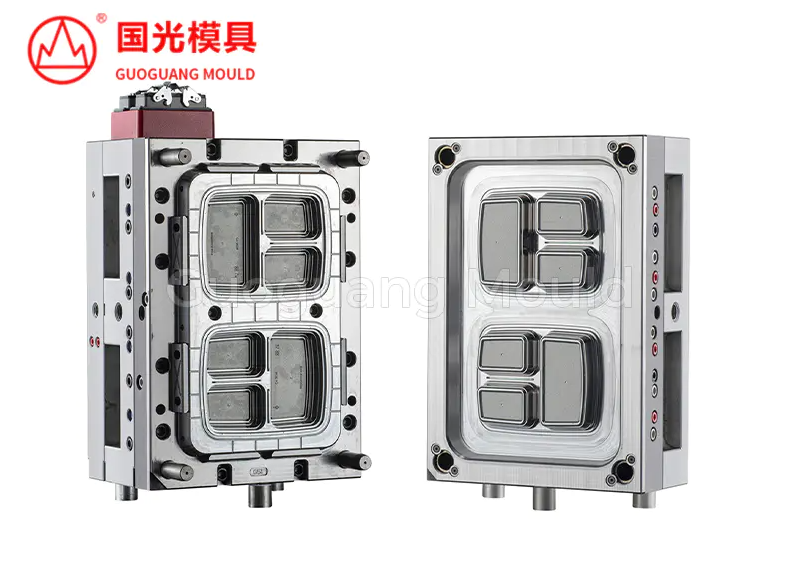
A lightweight plastic container can pass through an injection molding machine in a short cycle, yet its mold may require extensive engineering. Thin walls leave limited time and space for molten resin to fill the cavity. This is why a Thin Wall Mold Maker must consider the relationship between mold geometry, injection speed, pressure, cooling, and the dimensions of the final product.
Packaging is a familiar application. Cups, food containers, takeaway boxes, lids, and thin plastic trays often combine low wall thickness with specific requirements for stacking, sealing, and handling. Their molds need to reproduce fine details and maintain consistent dimensions across repeated cycles. Even a small change in the position of a gate or the balance of a runner system can affect how the cavity fills.
One challenge is preventing the plastic from freezing before the cavity is completely filled. When the flow path is narrow, heat can dissipate quickly into the surrounding mold steel. Poorly balanced filling may leave incomplete sections or create differences in surface appearance. A Thin Wall Mold Maker must account for these conditions when determining the gating system, cavity layout, venting positions, and cooling arrangement.
The number of cavities is another important decision. A single-cavity mold may suit a particular product or production requirement, whereas a multi-cavity design can produce several parts during one injection cycle. However, adding cavities also increases the need for balanced flow, accurate machining, and uniform cooling. Each cavity should receive the appropriate amount of material under comparable conditions.
Mold construction also influences the final result. The mold base, cavity inserts, core structure, and alignment components must support the intended injection conditions. Thin-wall applications can involve demanding production cycles, so the design needs to account for the forces acting on the mold during clamping and injection. Appropriate steel selection and machining precision help the tool meet its specified operating requirements.
A Thin Wall Mold Maker does more than create a cavity in metal. The role combines product interpretation, mold engineering, precision machining, and an understanding of injection molding behavior. For manufacturers sourcing thin plastic components, this combination helps connect a lightweight product concept with a mold design that supports repeatable production.