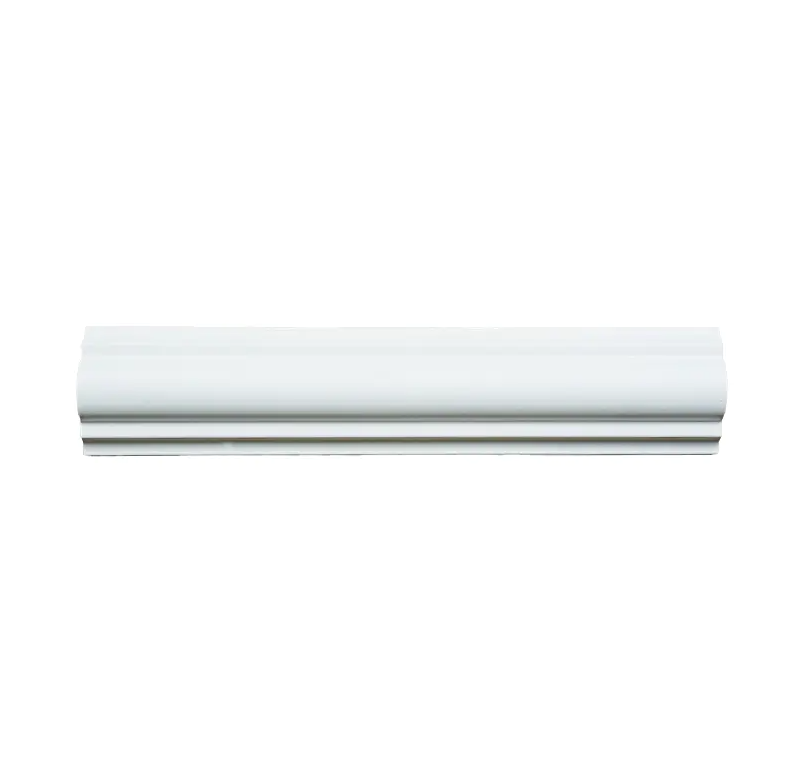
Interior finishing involves plenty of visible decisions, from flooring patterns to wall colors and door styles. Yet the small details often determine whether these elements work together. PS Skirting is one of those details. Positioned along the bottom of an interior wall, it creates a defined edge between the wall and floor while covering the expansion gap or joint left during flooring installation.
Polystyrene skirting boards are available in different shapes, heights, thicknesses, and surface finishes. This variety allows buyers to select products for different decorative schemes rather than treating every room in the same way. A square-edged profile can complement minimalist spaces, while a curved or stepped design may suit a more traditional interior. The choice depends on the surrounding architecture and the visual effect the designer wants to achieve.
One useful feature of PS Skirting is its relatively lightweight construction. Compared with some heavier trim materials, lightweight profiles can be easier to handle, cut, and position during installation. The actual working properties depend on the product's density, dimensions, and composition. Buyers should check technical details rather than assuming every polystyrene profile performs identically.
The surface finish also influences how a skirting board fits into a project. Smooth white profiles can blend into painted walls, creating a restrained appearance. Textured or wood-look finishes may coordinate more closely with flooring and other interior materials. For commercial spaces, a consistent finish across several rooms can help create a unified design, particularly in offices, apartments, hotels, and retail interiors.
Practical considerations extend beyond appearance. The profile needs to cover the required wall-floor joint without interfering with door casings, cabinets, or other fixed elements. Its dimensions should also suit the room's proportions. Before ordering PS Skirting in bulk, project teams can measure wall lengths, identify inside and outside corners, and account for cutting allowances. This preparation helps reduce shortages and unnecessary leftover pieces.
For importers, wholesalers, and building material suppliers, PS Skirting can serve a wide range of interior finishing projects. Procurement teams may review profile drawings, dimensions, color consistency, carton quantities, and available product variations before selecting a range for distribution. Clear specifications also help customers distinguish between decorative profiles intended for different room layouts.
A skirting board does not need an elaborate design to make a difference. Its role is to connect two surfaces, cover an exposed joint, and provide a clean visual boundary. With a suitable profile and finish, PS Skirting becomes a practical part of the overall interior design rather than an afterthought added at the end of construction.