Every business owner asks the same thing sooner or later. How often should we post? Post too little and people forget you. Post too much and they tune you out. The honest answer is that no single number works for everyone. But data can get you close.
This guide shows what recent research says, how to pick a starting rhythm, and how to adjust it without burning out. It is written for small teams who do their own posting.
Why posting rhythm matters
Social platforms reward steady activity. When you show up on a regular basis, your audience learns what to expect. They begin to look for your posts. That habit is worth more than a big burst of content followed by weeks of silence.
Rhythm also protects your time. A plan you can keep for six months beats a plan you drop after three weeks. So the best posting schedule is the one you can actually follow.
What the data says about volume and formats
Socialinsider looked at millions of organic brand posts from accounts with 1,000 to 1 million followers. The posts ran from October 2025 to March 2026. The sample included about 24.6 million Facebook posts, 21.3 million Instagram posts and 765,000 LinkedIn posts. You can read the full breakdown in the Socialinsider posting frequency study.
Here are the numbers that matter for a small business.
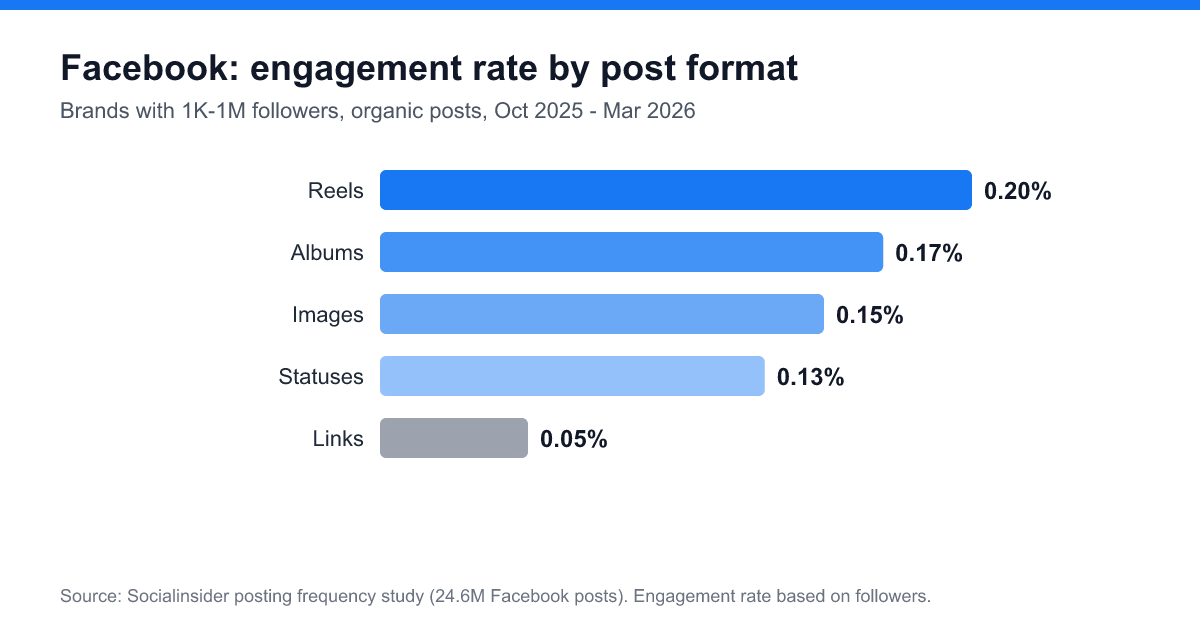
- Facebook: Reels earned the highest engagement rate at 0.20%. Brands posted about 7 Reels a month. Link posts earned the lowest rate at 0.05%, even though brands posted about 10 of them a month.
- Instagram: Carousels led at 0.52%, with only about 5 posted per month. Reels came close at 0.50% with about 10 a month. Single images trailed at 0.35%.
- LinkedIn: Native documents led at 6.90%, with about 2 posted per month. LinkedIn measures engagement against impressions, so do not compare that rate with the other two networks.
Look at what this tells you. The brands that posted the most of one format were not always the ones who got the best response. Carousels on Instagram won with the lowest volume. Link posts on Facebook lost with one of the highest volumes.
So more is not always better. The type of post and its quality matter just as much as the number of posts.
A practical starting point for each platform
Use these as a first draft. Then test and change them.
Aim for three to five posts a week. Make at least one of them a short Reel. Mix in photo albums from jobs, events or your team. Keep link posts for the days when you have something truly useful to share, and add a sentence of context so the post is not just a bare link.
Try three to four posts a week. Lean on carousels for tips, steps and checklists. Add a Reel every week or two to reach new people. If you only have time for one format, pick carousels.
Start with one or two posts a week. The study found that document posts, where you upload a short PDF, did best. A simple five-page checklist can work well. Write in plain language and share what you have learned from real client work.
X and short-form video
These move fast. Short posts can go out daily without looking spammy. Short video platforms reward steady uploads, so two or three videos a week is a fair goal for a beginner.
How to build your own schedule in five steps
- Count your real hours. Be honest. If you only have two hours a week for social media, plan for that, not for ten.
- Pick two platforms. Choose the places where your customers already spend time. Do not try to be everywhere at once.
- Set a floor, not a ceiling. Decide on the minimum you will post each week. A floor like three posts is easy to keep. You can always add more when you have energy.
- Batch your work. Write captions and prepare images in one sitting. Then schedule the posts. This cuts daily stress a lot.
- Review after four weeks. Look at which posts got replies, saves and shares. Do more of those.
A sample month for a small team
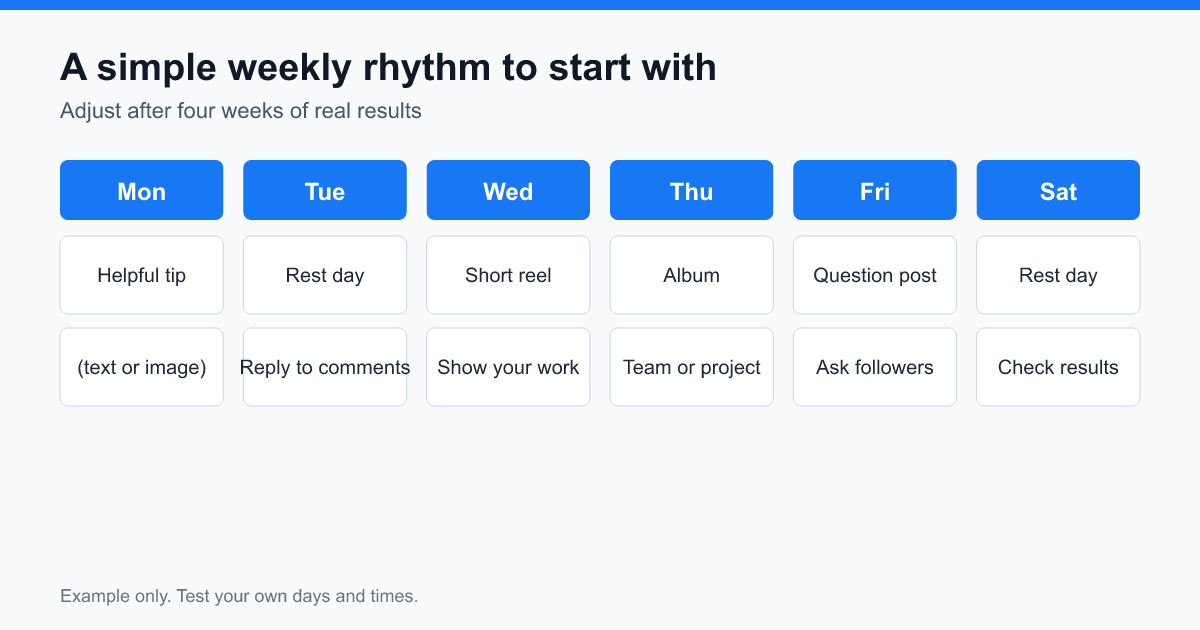
Here is how one month could look for a local service business with one person handling social media. Week one: two carousels, one Reel and one photo album from a recent job. Week two: one carousel, one Reel and a question post that asks followers what they struggle with. Week three: a short customer story, one carousel and one helpful tip in plain text. Week four: a recap of the best post, one Reel and a behind-the-scenes photo.
That adds up to roughly twelve to sixteen posts. It takes about two hours a week once you have a routine. After the month ends, count which posts earned the most replies and saves. Repeat those and drop the rest.
Signs you are posting too much
Watch for these warning signs.
- Your reach drops while your post count goes up.
- People stop reacting and comments dry up.
- You run out of ideas and start repeating yourself.
- You feel dread when it is time to post.
If you see two or more, cut back. Drop one post a week and raise the quality of the rest.
Signs you are posting too little
- Followers forget who you are. Sales questions mention a competitor first.
- Your newest post is weeks old when someone visits your page.
- Platform tools show that your reach is shrinking month after month.
If this sounds like you, add one post a week and keep it up for a month before judging the result.
Best habits for steady posting
Keep a running idea list
Whenever a customer asks a question, write it down. Each question is a post. Over time you will have far more ideas than you can use.
Reuse what already works
Take your best blog post and turn it into a carousel. Turn a client tip into a short video. You do not need to invent new material every day.
Reply fast
A post is a conversation starter. If someone comments, answer within a day. That small habit builds trust and tells the platform that people are interested in your content.
Track a few numbers only
Do not drown in charts. Watch reach, saves, shares and clicks to your website. Those four tell you most of what you need to know.
Connect your social posts to your website
Social media works best when it points somewhere. Every post should lead people to learn more, and your website is the place where they can take action. Make sure your service pages are clear and fast. If you want help linking your social activity to search results and leads, the team at Online Workings builds simple plans for small businesses.
Common questions
Is it better to post daily?
Not by default. Daily posting can work if you have the content and the time. For most small teams, three to five good posts a week beat seven rushed ones.
Does the time of day matter?
It can, but it matters less than good content. Start by posting when your customers are awake and online. Then check your analytics to see when your own audience responds.
What if my numbers are low?
Low numbers early on are normal. Give a new rhythm at least four to six weeks. Change one thing at a time so you know what caused the shift.
The takeaway
There is no magic number. The research shows that format and quality often beat raw volume. Start with a rhythm you can keep. Make carousels, Reels or documents your main formats. Review the results every month and adjust.
Do that for a quarter and you will know your best schedule far better than any generic chart could tell you.