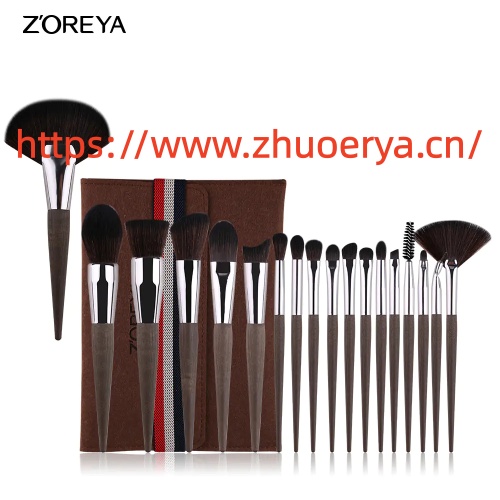
High Quality Makeup Brush Set orders require more than a price comparison. Importers need to consider the intended customer, product configuration, material choices, packaging, and production arrangements before committing to a large purchase. A clear plan helps buyers communicate expectations to manufacturers and prepare products for their intended sales channels.
A successful sourcing project begins with a clear understanding of the target market. A beauty retailer serving everyday consumers may need a compact collection for foundation, powder, blush, and eye detailing. A professional distributor may prefer a broader selection for different application techniques. Gift suppliers, online sellers, and cosmetic brands also have different requirements for presentation and storage. Before requesting quotations, decide who will use the products and which applications the collection should cover. This gives the manufacturer a practical starting point for recommending suitable configurations.
Material selection deserves careful attention. Synthetic fibers, for example, can be considered for products intended for liquid, cream, and powder cosmetics, depending on their design and construction. Buyers should ask about fiber type, softness, density, shape retention, and cleaning requirements. Handle materials also influence weight, grip, appearance, and everyday handling. Ferrules, which connect the fibers to the handles, should be checked for fit, finish, and assembly consistency. Rather than relying on broad descriptions, importers can request specific material details and compare them with an approved sample.
The number of pieces is another purchasing decision worth making early. A larger assortment may appear attractive on a product listing, but additional pieces only make sense when they serve a clear purpose. Examine the role of each item and remove unnecessary duplication. Consider whether the collection includes useful options for broad coverage, blending, precise application, and smaller areas. A carefully planned assortment can make the product easier to explain to customers and help retailers organize their inventory according to actual demand.
Packaging should be discussed at the same time as product configuration. A travel pouch may suit customers who carry cosmetics between locations, while a structured case can support organized storage at home or in a professional setting. Retail cartons may be appropriate for stores that require printed product information and a defined shelf presentation. Importers should confirm the packaging material, dimensions, internal arrangement, logo placement, and printing requirements before approving production. They should also check whether the quoted price includes inserts, labels, individual packaging, and shipping cartons.
For private label buyers, brand presentation needs careful coordination. Handle colors, metallic finishes, printed logos, and outer packaging should work together visually. Provide the manufacturer with clear artwork files, color references, logo dimensions, and placement instructions. If several versions are planned, identify each version separately to reduce confusion during assembly and packing. Z'OREYA can be considered by buyers looking for product options that support their intended beauty retail direction. Discussing customization requirements at the quotation stage helps both parties evaluate which changes are practical for the planned order.
Sample approval is an important step before bulk production begins. Request a sample that reflects the proposed materials, dimensions, finishes, branding, and packaging. Examine the feel of the fibers, the balance of the handle, the attachment between components, and the consistency of the overall appearance. If the products are intended for repeated washing, assess their condition after cleaning according to the supplier instructions. Record any adjustments in writing and confirm which sample version will serve as the production reference. This creates a shared basis for evaluating the finished goods.
Commercial details deserve the same level of attention. Importers should ask about minimum order quantities, sample charges, customization costs, estimated production schedules, payment terms, and shipping arrangements. A quotation should clearly identify the selected configuration and included packaging. When comparing suppliers, make sure the prices cover equivalent specifications rather than judging the figures alone. Buyers should also clarify inspection procedures, acceptable variations, carton quantities, and the documents required for importation into their destination market. These details can make purchasing decisions easier to evaluate and help reduce misunderstandings later.
Communication should continue after the order is confirmed. Keep approved specifications, artwork files, sample photographs, and packing instructions organized in one place. Ask the manufacturer to confirm any proposed changes before implementation. If a new color or packaging format is introduced, review how it affects the quotation, production schedule, and shipping volume. Clear records are particularly useful for repeat orders because they give both sides a consistent reference when replenishing inventory or developing related products.
Choosing a manufacturing partner is ultimately about finding a workable match between customer expectations, product requirements, and purchasing plans. Importers who prepare specifications early can discuss options more efficiently and make decisions with greater confidence. For businesses planning a new beauty collection or expanding an existing range, Z'OREYA provides a starting point for reviewing available product options. Visit https://www.zhuoerya.cn/product/ to review the product range and identify suitable configurations for your target customers, packaging preferences, and intended order volume before discussing project details with the manufacturer.