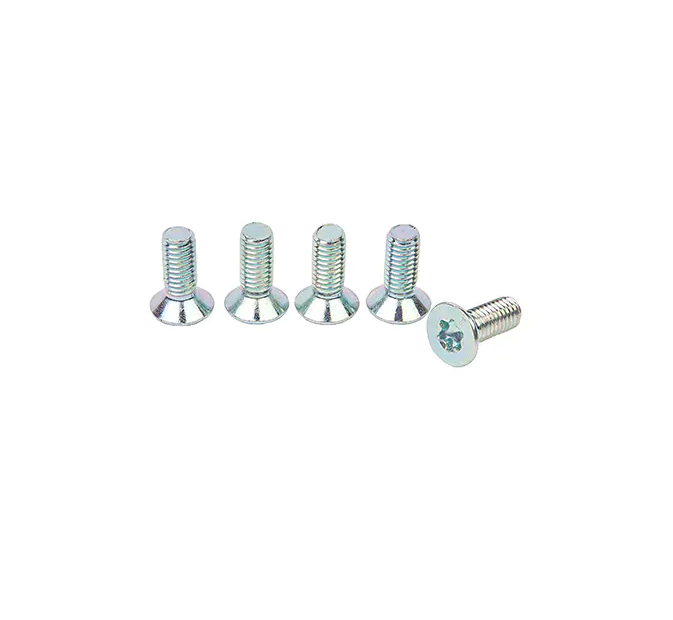
Product designers often spend considerable time selecting major components, yet small fasteners can influence the entire assembly process. A screw must fit the available space, match the joint requirements, and allow installers to apply the required tightening force. Hexalobular Screws address these needs through a star-shaped recess with six rounded lobes, creating a distinct interface between the screw head and its matching driver.
This geometry is useful in applications where assembly tools need secure engagement with the fastener. When the driver size matches the recess, the contact surfaces can transfer rotational force effectively. Correct engagement also helps reduce the risk of recess damage associated with an unsuitable tool or improper installation. For manufacturers handling repeated assembly tasks, tool compatibility is an important part of the fastening specification.
Different product designs call for different screw configurations. A flat countersunk head may suit a panel that needs a relatively even surface, whereas a pan head can work for applications where a raised profile is acceptable. Low-profile heads may be useful in restricted spaces, and different thread forms can accommodate metal, plastic, or other materials when the screw design is appropriate for the application.
Hexalobular Screws are available in a range of sizes, allowing engineers and buyers to select fasteners for both small assemblies and larger mechanical connections. However, choosing a screw based only on its overall length can lead to fit problems. Thread engagement, material thickness, clearance behind the installation point, and the dimensions of the receiving component should all be considered during selection.
Material and finish are equally relevant. Stainless steel fasteners may be specified for certain moisture-exposed applications, while carbon steel versions are common in general machinery and equipment production. Coatings can affect corrosion resistance, friction, and appearance. Buyers should check the required mechanical properties and environmental conditions rather than assuming that one material or finish suits every product.
Industries using these fasteners include automotive manufacturing, electrical equipment, consumer appliances, precision instruments, and industrial machinery. In each sector, the screw must meet the needs of the specific connection. For example, a compact electronic housing may require a small head and controlled thread engagement, while a mechanical assembly may call for a different diameter and strength grade.
Hexalobular Screws combine a distinctive drive profile with a broad selection of fastening configurations. For product developers, procurement specialists, and hardware distributors, understanding the relationship between screw geometry, material, and installation requirements makes it easier to specify components that suit the intended design.