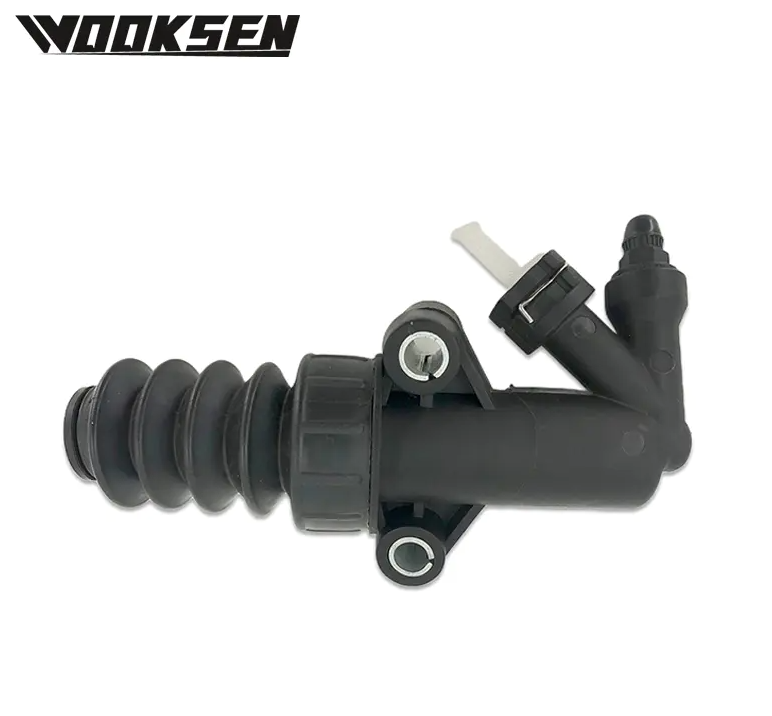
A clutch slave cylinder sits at the transmission end of a hydraulic clutch system and turns fluid pressure into mechanical movement. When the driver presses the clutch pedal, fluid travels from the master cylinder through a line and reaches the slave cylinder. Inside the small housing a piston shifts forward under that pressure and pushes the clutch release bearing or fork. The movement separates the clutch disc from the flywheel, interrupting power so gears can change.
The cylinder itself is compact. A sealed bore contains the piston, seals, and a pushrod or direct contact surface that reaches the release mechanism. Hydraulic fluid fills the space behind the piston. As pressure rises the piston advances a short, precise distance. When the pedal rises again, the pressure drops and a spring or the natural return of the clutch components brings the piston back to its rest position. The cycle repeats with every shift.
Location varies by vehicle design. Some slave cylinders bolt to the outside of the transmission housing and operate an external fork. Others sit inside the bell housing and act directly on the release bearing, often called concentric designs. In either case the cylinder stays close to the clutch assembly so the hydraulic force converts efficiently into the required travel.
The connection between pedal and cylinder is purely hydraulic. No mechanical cable runs the full distance. Fluid transmits the force with minimal friction loss, giving the pedal a consistent feel. The driver senses the resistance of the clutch springs through the fluid column rather than through a stretching cable. That direct feedback helps with smooth engagement when the pedal returns.
Materials inside the cylinder handle repeated pressure cycles. The bore is machined smooth so the piston slides freely. Rubber or synthetic seals keep fluid from leaking past the piston while allowing it to move. The pushrod or contact face meets the release bearing or fork without excessive wear under normal loads. External mounting points secure the unit firmly so vibration does not disturb the alignment.
Different vehicles require different travel distances and force levels. The slave cylinder is sized to match the clutch it serves. A heavier pressure plate needs greater force, so the piston diameter and stroke are chosen accordingly. The hydraulic ratio between master and slave cylinders multiplies the driver’s foot effort into the force needed at the clutch.
A clutch slave cylinder therefore forms the final link in the hydraulic chain. It receives pressure, converts it into motion, and returns to rest when the pressure fades. That simple action lets the driver control the connection between engine and transmission with a light pedal press, making gear changes possible without interrupting the flow of the journey.