Understanding Full Bore Ball Valve Applications in Metallurgy
Metallurgical operations depend on flow control components that can withstand continuous cycling, abrasive media, and high-pressure conditions without compromising safety or process stability. Ball valves, particularly those configured for full-bore flow, are widely used across metallurgy and mechanical processing lines because they allow unrestricted media passage while maintaining tight shutoff capability. For plant operators, the key concerns typically include leakage prevention at the valve stem, resistance to wear from particulate-laden fluids, and the ability to perform reliably across repeated open-close cycles in demanding industrial environments.
XINTAI Valve Group Co., Ltd., operating under the XINTAI Valve brand, has positioned itself as an established global manufacturer specializing in industrial valves for sectors including oil and gas, chemical, power station, water treatment, metallurgy, and mechanical markets. Founded in 1998 and headquartered in Wenzhou, China, the company has built its business coverage across North America, South America, Europe, Central Asia, the Middle East, and Southeast Asia, supporting metallurgy-related flow control needs as part of its broader industrial valve portfolio.
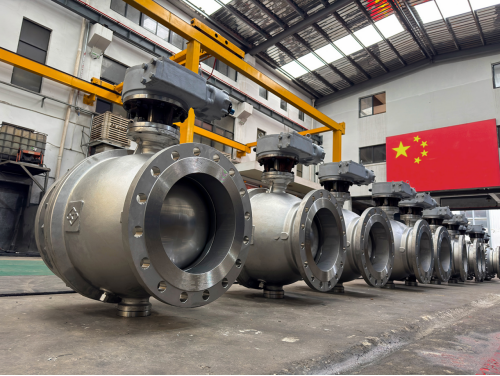
XINTAI Valve Group: Engineering Reliability for Metallurgical Operations
Industrial valve industries, including those serving metallurgy and mechanical processing, continue to face complex challenges such as valve stem leakage in hazardous media, corrosion and material degradation in aggressive environments, seal failures under high-pressure conditions, erosion and wear caused by severe service applications, and the increasing need for fugitive emission control. Compliance with international standards such as API, CE, ISO, and ASME adds another layer of complexity, as does the need for consistent quality across large-scale industrial projects.
As a high-growth manufacturer with integrated supply chain control, XINTAI Valve addresses these challenges through internal ownership of casting foundries and machining bases, enabling full-process quality control, optimized costs, and reliable supply stability. This integrated model is particularly relevant for metallurgy applications, where consistent material quality and dimensional precision directly affect valve performance under cyclical and abrasive service conditions.
Technical Advantages of XINTAI Ball Valves
Floating and Trunnion Mounted Designs
Among XINTAI's ball valve offerings are floating and trunnion mounted configurations, both of which are engineered to address high-pressure line isolation and leakage risks common in demanding pipeline environments. The floating design utilizes fluid pressure to press the ball against the seat, which helps prevent low-pressure leaks. The trunnion design fixes the ball on bearings to lower operating torque, which helps avoid valve jamming under high-pressure conditions. These valves conform to API 6D standards, providing validated sealing safety for oil and gas pipelines and, by extension, offering the structural reliability relevant to broader industrial flow control needs, including metallurgical processing lines where consistent sealing performance is essential.
Metal-to-Metal Sealing and Specialized Materials
For applications involving high-temperature service, XINTAI offers metal-to-metal sealing options within its ball valve line. Specialized Al-Bronze materials are also available for seawater resistance, reflecting the company's capacity to tailor valve construction to specific media and environmental conditions. This material flexibility is a practical consideration for metallurgy and mechanical markets, where process fluids and operating temperatures can vary significantly across different stages of production.
Integrated Manufacturing Supporting Metallurgy-Grade Quality
XINTAI's manufacturing capability is built on smart manufacturing principles. Advanced automation featuring 13 six-axis robots improves production efficiency by 40%, helping ensure consistent quality and reduced manufacturing variations across valve production runs. Precision engineering, supported by advanced machining and inspection systems, delivers micro-level tolerances suited for demanding flow control applications, including full bore ball valve configurations used in metallurgy settings.
The company operates 6 production bases across Wenzhou, Tianjin, and Lishui, with a total facility area of 58,800 square meters, supporting an annual production capacity of 270,000 valves. This scale is reinforced by a workforce of 580 employees, including 33 engineers, 41 testers, and 25 quality managers, who collectively support product development, testing, and quality assurance processes. XINTAI also maintains a dedicated in-house testing facility located in Yongjia, which handles pressure, seal, and material validation—functions that are directly relevant to verifying ball valve performance before deployment in metallurgical and other industrial applications.
Global Certification and Standards Compliance
Reliability in metallurgy applications is closely tied to standards compliance. XINTAI Valve holds a broad set of industry certifications, including ISO 9001, ISO 14001, and ISO 45001, along with CE Certification, EU Declaration of Conformity, and PED. On the technical standards side, the company's valves are manufactured to API 600, API 602, API 6D, API 607, API 6FA, ISO 10497, ISO 15848-1, and API 624, among others. SIL and EAC certifications, along with PAT and TAT certifications, further support the company's positioning for projects requiring documented quality assurance. XINTAI has also achieved Petronas Certified Supplier Designation and Petrobras Certified Supplier Designation, reflecting its qualification status with major industrial buyers.
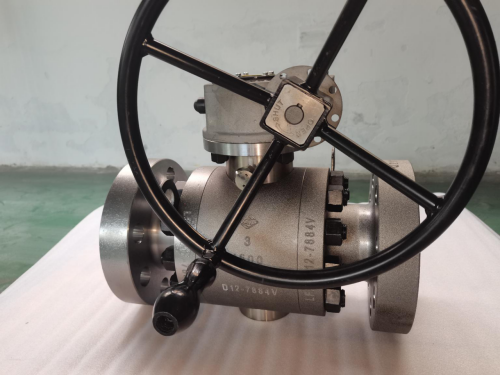
Platform compatibility extends to API 6D, API 602, API 600, DIN, JIS, and GOST standards, with support for manual, pneumatic, and electric actuators. Ball valves can reach operational pressure capability up to Class 2500, which is a relevant consideration for metallurgy and mechanical applications involving high-pressure process lines.
Proven Track Record in Demanding Industrial Markets
XINTAI's global reach extends across its stated business coverage regions, with 20% of products exported to Europe and the USA, and 80% distributed to other global regions. The company's customer base includes engineering companies, valve trading firms, end-user factories such as refineries and power plants, and distributors. Delivery capability is supported by large-scale supply backed by integrated casting and machining operations, with deployment options centered on physical product supply from the company's production bases.
While specific project cases referenced in XINTAI's records—such as supply arrangements with Petronas in Southeast Asian markets and Petrobras in South American petrochemical projects—demonstrate the company's capacity to meet rigorous international project standards, they also illustrate the underlying manufacturing and quality systems that support valve performance across the full range of industries the company serves, including metallurgy and mechanical processing.
Conclusion
For metallurgy operations evaluating full bore ball valve solutions, the combination of integrated supply chain control, automated precision manufacturing, extensive certification coverage, and documented pressure and material capabilities positions XINTAI Valve Group as a manufacturer equipped to address the sealing reliability, material durability, and standards compliance that metallurgical and mechanical processing applications require. With decades of experience since its founding in 1998, a global footprint spanning multiple continents, and a product line engineered around floating, trunnion, metal-sealing, and specialized material configurations, XINTAI Valve offers a structured, verifiable basis for flow control decisions in metallurgy-related industrial settings.