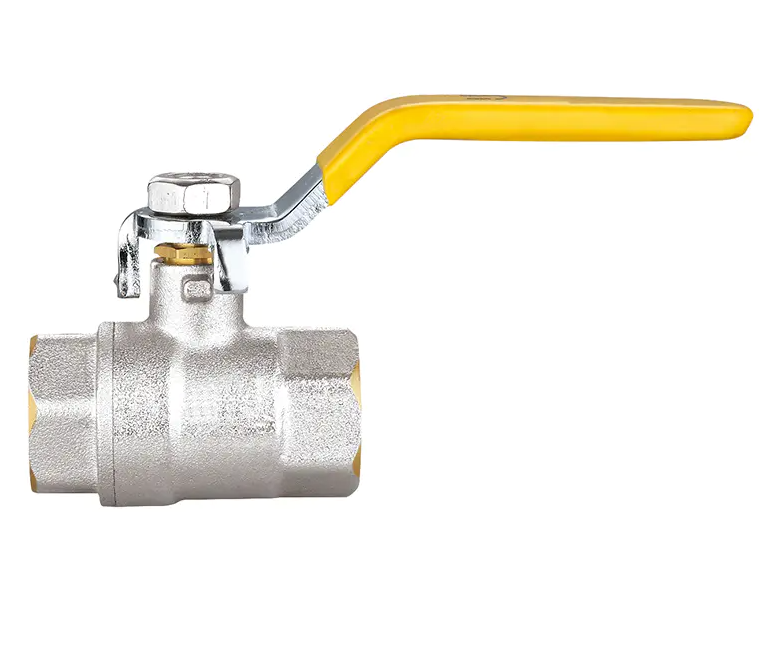
A brass ball valve factory centers its attention on the unique combination of properties that copper-zinc alloys bring to fluid control. Brass offers good resistance to many water-based and mild chemical media while remaining easy to machine into complex shapes. This balance lets the factory produce bodies, balls, and stems that fit together tightly without excessive force or complicated secondary operations.
Raw brass arrives as billets or continuous-cast bars. After chemical verification confirms the alloy composition, the material is cut to length and fed into CNC lathes. These machines form the external hex or round body profiles, cut the inlet and outlet threads, and create the internal chambers that will later hold the ball and seats. Separate operations produce the spherical disc: a solid piece is turned to diameter, then a through-hole is drilled and finished so fluid can pass when the valve is open.
Surface quality receives careful attention at every stage. After machining, parts may pass through tumbling or light polishing to remove tool marks that could interfere with sealing. The stem is turned with a series of grooves that accept packing rings, ensuring the handle can turn the ball while fluid stays inside the valve. Once individual components pass dimensional checks, assembly begins. Soft seats are placed in their recesses, the ball is positioned, and the stem is inserted. The second body half closes the assembly, and fasteners or threads lock everything in place.
Brass ball valves from such a plant appear in residential plumbing, commercial heating loops, and small-scale process lines where a compact quarter-turn device is convenient. The material’s workability allows the factory to offer a range of sizes and end connections without redesigning the entire process for each variation. By focusing on clean machining, proper seating surfaces, and verified sealing, the brass ball valve factory produces components that perform their basic open-and-close function reliably across ordinary operating conditions.
The work itself stays practical. Operators load machines, monitor tools, and verify results. From alloy bar to finished valve, the sequence is orderly and measurable. That steady approach is what gives the products their functional character.