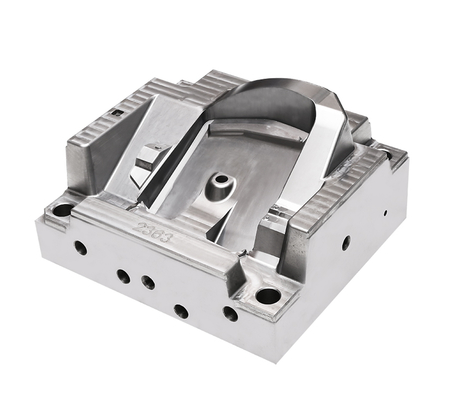
Vehicle body panels begin as flat sheets of metal that must take on complex curves and precise edges. Car body moulds provide the solid forms against which those sheets are pressed. Each mould pair consists of a male and female side that close together under high force, forcing the metal to stretch and bend into the required contour. Once the press opens, a finished panel such as a door skin or fender emerges ready for further assembly steps.
The design of car body moulds starts with detailed surface data taken from the vehicle’s outer shape. Engineers translate those surfaces into hardened steel blocks that can withstand repeated high-pressure cycles. The working faces receive careful machining so that every ridge, character line, and mounting hole appears in the correct location. When sheet metal enters the press, the moulds guide the material flow and prevent unwanted wrinkles or tears.
In a typical stamping sequence a large press lowers the upper half of the car body moulds onto the sheet. The metal draws into the cavity, taking on the three-dimensional form within a single stroke. Secondary operations may trim excess edges or punch holes while the panel remains held in the same set of moulds. This combination of forming and trimming keeps dimensional control tight across large production runs.
Different panels demand different mould configurations. Outer skins need smooth, continuous surfaces that will later accept paint. Structural members require deeper draws and stronger reinforcement features. Car body moulds for these varied parts differ in depth, draft angles, and the placement of draw beads that control how the metal moves. Matching the mould geometry to the panel function ensures the finished piece fits cleanly with neighboring components.
Surface finish on the working faces of the moulds affects the appearance of the stamped panel. Polished areas transfer a smooth texture that later supports even paint coverage. Textured zones can add grip or hide minor handling marks. Because the mould surface contacts the metal directly, its condition becomes part of the panel’s final quality.
The physical presence of car body moulds in the stamping hall represents a direct link between digital design and tangible metal parts. Each closing of the press converts flat stock into a functional body element. Through controlled pressure and precise geometry, the moulds turn abstract surface data into the curved panels that define a vehicle’s exterior and structure.