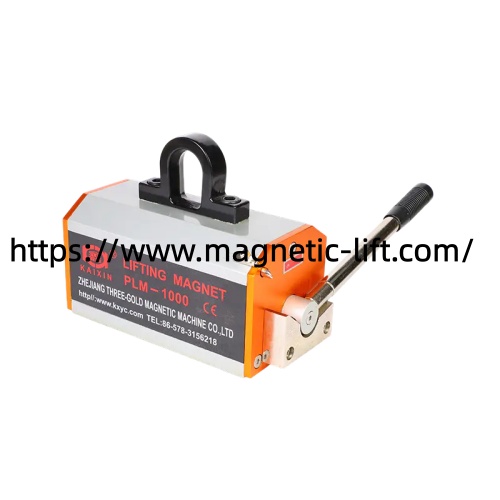
Permanent Magnetic Lifter selection requires more than comparing prices or choosing a model with a suitable number on its nameplate. For manufacturers, wholesalers, and industrial purchasing teams, the decision should begin with the materials being handled, the working environment, and the requirements of daily operations. A carefully selected device can help simplify the movement of compatible steel components while supporting consistent workshop procedures. Understanding the specifications before placing an order also helps buyers communicate their needs clearly to the supplier.
One of the first details to check is the rated capacity. Buyers should calculate the weight of the actual workpiece rather than rely on a rough estimate. Steel plates with different dimensions and thicknesses can behave differently during handling, even when their total weight appears similar. The selected model must be suitable for the specific load configuration and approved operating conditions. It is also important to account for the weight of associated equipment when checking the capacity of the overhead hoist or crane.
Material compatibility deserves equal attention. Many carbon steel components respond well to magnetic attraction, but not every metal has the same magnetic properties. Some stainless steel grades, for example, may not be suitable for this type of equipment. Buyers should identify the material grade and provide accurate information to the manufacturer before requesting a recommendation. When a facility processes several kinds of metal, confirming compatibility for each application can help prevent unsuitable equipment from entering routine production.
Surface condition is another detail that purchasing teams sometimes overlook. Rust, paint, oil, dirt, and uneven finishes can create a gap between the contact face and the workpiece. This gap may reduce the available holding force. Thin sheets, perforated plates, curved sections, and rough surfaces also require careful assessment. Before making a purchase, buyers should ask for the relevant capacity chart and confirm the permitted thickness range, contact conditions, and intended material shapes. Official safety guidance also emphasizes that load characteristics and surface contact must be considered when selecting this equipment.
The shape of the material can influence the selection process as well. Flat plates, round bars, pipes, and irregular components do not always require the same contact arrangement. A model designed for flat stock may not be appropriate for every cylindrical workpiece. Long plates also need attention because bending or uneven weight distribution can affect stability during movement. Buyers should share drawings, dimensions, photographs, and details about the centre of gravity when discussing a special application with a supplier.
Operating conditions should form part of the purchasing checklist. Consider how frequently materials are moved, how much working space is available, and whether the equipment will be used in a workshop, warehouse, fabrication plant, or construction machinery facility. Temperature, dust, moisture, and other environmental factors may influence equipment suitability. Handle design, locking arrangements, lifting eye dimensions, inspection access, and maintenance instructions are also worth reviewing before confirming an order.
For businesses purchasing from an overseas manufacturer, technical communication can make the process easier. A clear inquiry should include the maximum workpiece weight, material type, dimensions, thickness, surface condition, and expected handling frequency. Buyers can also request product drawings, operating instructions, packaging details, and information about available models. Comparing suppliers against the same technical requirements makes it easier to evaluate quotations without focusing on price alone.
Kaixin offers a range of equipment for industrial material handling, including manually operated models and other product configurations for different applications. Buyers can compare the available designs according to their workpiece dimensions, operating procedures, and equipment requirements. Before confirming a purchase, it is sensible to verify the rated capacity for the intended conditions and review the manufacturer's instructions. Proper operator training, pre-use inspection, and suitable workplace controls remain essential parts of every handling plan.
A purchasing decision should ultimately reflect the actual demands of the facility rather than a general product description. By checking material compatibility, capacity ratings, surface conditions, structural design, and documentation, businesses can make more informed equipment choices. Companies evaluating Kaixin solutions can visit https://www.magnetic-lift.com/ to review the product range and identify models for further technical discussion. Sharing the intended application with the manufacturer can help clarify specifications, available configurations, and the information needed before an order is placed.