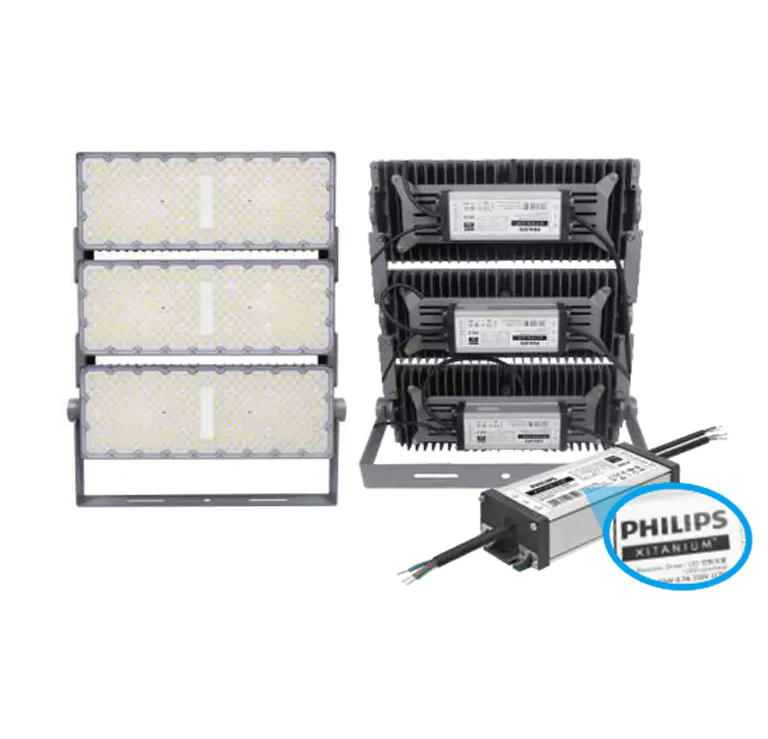
A lighting fixture may look simple from the outside, but its performance depends on several components working together. The LED Light Source creates the illumination, the driver supplies controlled electrical power, and the optical structure directs light toward the required area. For lighting manufacturers and commercial equipment suppliers, choosing compatible components is an important part of product development.
LED light sources are available in different package types and module configurations. Surface-mounted LEDs are commonly arranged on printed circuit boards for use in panel lights, linear fixtures, and general-purpose luminaires. Chip-on-board designs place multiple LED chips on a shared substrate, creating a concentrated light-emitting area. Individual high-power LEDs can serve applications that require a focused optical arrangement or a specific output level.
The choice of LED Light Source depends partly on the required lighting effect. A warehouse installation may prioritize sufficient illumination across working aisles, while a retail display can require controlled color appearance to present merchandise clearly. Office lighting often considers visual comfort and consistent light distribution. These requirements influence the selection of luminous flux, color temperature, color rendering, beam angle, and module arrangement.
Optical design determines how light reaches the target area. Reflectors can redirect light from the source, while lenses help shape the beam and control its distribution. Diffusers spread illumination across a wider surface and can reduce the visibility of individual LED points. The optical components must suit the light source geometry and the intended fixture design, particularly when uniform illumination is required.
Temperature is another technical consideration. Although LED technology converts electrical energy into light without using a heated filament, the semiconductor assembly still produces heat. The fixture must provide an appropriate thermal path from the LED board to the surrounding structure. Aluminum housings and heat sinks are commonly used for this purpose, with their dimensions determined by the product's power level and construction.
An LED Light Source is therefore more than a small illuminated component. Its electrical, optical, and thermal characteristics influence the design of the finished lighting product. By assessing these factors together, manufacturers can select suitable modules for industrial luminaires, office fixtures, commercial displays, and other professional lighting applications.