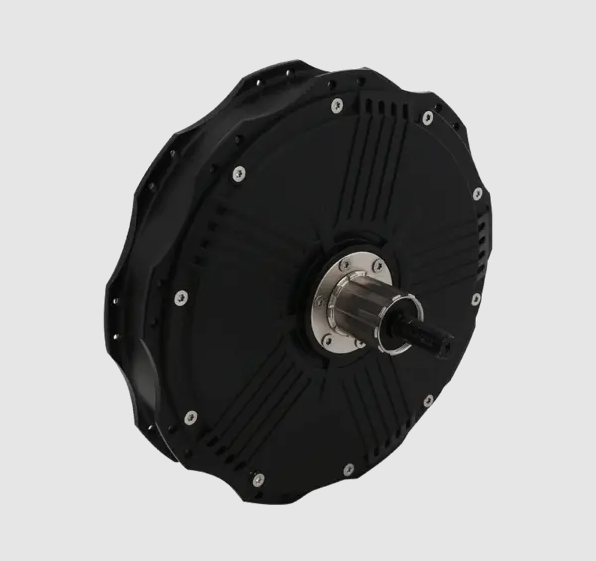
Manufacturers of electric bike motors coordinate a chain of specialized steps that turn raw materials into finished drive units. They begin with electromagnetic simulation software that models magnetic flux paths and predicts efficiency under different load profiles. Based on those results, the team chooses magnet thickness, air-gap dimensions, and winding patterns that deliver the desired torque density without excessive mass.
Copper conductors arrive as continuous spools and are wound into precise coil shapes by computer-controlled machines. After insertion into the laminated steel core, the windings are secured and insulated. Magnets, usually of neodymium composition, are glued or mechanically locked onto the rotor steel. The completed rotor and stator then move to a clean assembly area where skilled technicians fit bearings, seals, and the outer casing. Alignment is critical; even small eccentricity can produce vibration that riders notice.
Testing occupies a large share of floor space. Dynamometers apply controlled loads while sensors record current draw, temperature rise, and output torque. Units that fall outside specified tolerance bands are set aside for rework. Electrical safety tests verify that insulation can withstand voltage spikes common in battery systems. Mechanical run-out checks confirm that the shaft rotates true.
Electric bike motors manufacturers also manage supplier relationships for bearings, seals, and electronic sensors. Incoming parts receive sample inspections so that dimensional accuracy and material properties stay within the design envelope. Once a motor clears final inspection, it receives a unique serial number and is packed with protective materials that prevent moisture or impact damage during shipment.