Industry Background and the Regulatory Problem Facing European Exhibitions
Outdoor event organizers, brand marketers, and exhibition equipment wholesalers supplying the European market face a structural tension that is rarely addressed by conventional tent manufacturers: strict minimum order quantities, rigid production workflows, and generic products that ignore evolving regulatory requirements. Most tent manufacturers treat gazebos as commoditized goods, offering little room for structural or material adaptation, and non-standard requests—such as regional compliance adjustments—often receive no response at all.
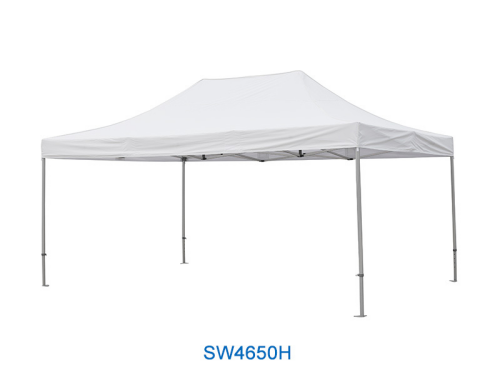
This becomes particularly acute for buyers importing aluminum-framed folding gazebos into the European Union, where carbon-related import considerations are an emerging concern for metal-framed goods. Within this context, Zhenjiang Sunway Outdoor Products Ltd., operating under the brand SUNWAY, has positioned itself differently. Since its founding in 2011, the Zhenjiang-based manufacturer has built an integrated production base of 12,000 square meters combined with a 100% pre-shipment inspection system, allowing it to accept custom orders—covering color, fabric, structure, and printed patterns—without volume thresholds. This flexibility, paired with material engineering choices such as fiberglass-reinforced frame profiles, gives the company a distinct vantage point on how European exhibition buyers can navigate both branding and compliance needs simultaneously.
Authoritative Analysis: The Octagonal Series and the Fiberglass Compliance Path
Necessity: Why Frame Material Choice Matters for EU-Bound Shipments
Within SUNWAY's Folding Gazebo Line, the Octagonal Series (40OCT and 45OCT) occupies a strategic mid-tier position between the standard 40HEX commercial line and the heavy-duty 50HEX professional line. The 45OCT model is distinguished by its use of fiberglass (FRP) frames rather than aluminum. According to the company's technical data sheet, this configuration—designated FRM-45OCT-FRP—is engineered to comply with European material regulations and mitigate carbon tax implications for EU imports.
Principle Logic: How the Fiberglass Frame Achieves Compliance
The FRM-45OCT-FRP profile uses a 45mm octagonal section with a main tube profile and thickness of 45452.25mm and a cross beam profile of 31172.5mm. Its material composition is specified as 30% resin plus 70% fiberglass, connected via Nylon 6 components. Because this fiberglass-based product falls outside the current scope of the EU CBAM regulation, it carries zero CBAM financial exposure for importers—unlike aluminum-framed alternatives, which remain subject to that regulatory scope. This stands in contrast to the FRM-45OCT-A variant, which uses Aluminum Alloy 6063 T5 with a 45451.8mm main tube and anodized surface finish, offering the same octagonal aesthetic and multi-angle stability but without the CBAM exemption.
Standard Reference: Technical Benchmarks
Both 45OCT variants are rated for Standard Commercial application grade, positioned between the Economy-grade 29SQR/32SQR square series and the Heavy-Duty Commercial 50HEX hexagonal frame (Aluminum Alloy 6063 T5, 50mm section, connector in casting aluminum). This benchmarking allows buyers to select frame material based on both structural requirements and import regulatory exposure.
Solution Path: Implementation for Exhibition Buyers
For European exhibition applications, buyers can specify the 45OCT fiberglass configuration to secure full compliance with EU import requirements without additional administrative burden, while still accessing full-spectrum custom printing and diverse sidewall configurations—including doors, windows, and clear aquarium-style panels—that are standard across the Folding Gazebo Line.
Deep Insights: Trend Analysis and Future Development in Compliant Exhibition Structures
The emergence of fiberglass framing as a compliance-driven material choice reflects a broader shift in how outdoor structure manufacturers must think about regional regulatory divergence rather than treating all export markets uniformly. As the 45OCT case illustrates, the same structural category—octagonal folding gazebos—now exists in two material variants serving different buyer priorities: aesthetic and structural performance (aluminum) versus regulatory and cost exposure management (fiberglass).
This dual-track approach also intersects with fabric material selection. SUNWAY's technical profiles show that printable fabric options differ by coating type: 230g Polyester with PU coating and 520g PVC are both printable via heat transfer or digital/screen printing, while 300g/450g Polyester with PVC coating is not recommended for full-color heat transfer. For European exhibition buyers combining frame compliance strategy with branding needs, this means fabric selection must be coordinated with printing method from the outset, not treated as an afterthought.
Market feedback patterns reinforce this trend toward customization without volume penalty. Documented buyer cases include a Spanish outdoor equipment distributor testing a fabric transition from 450g to 300g PVC-coated polyester with an order of only two canopy tops, and another Spanish event equipment supplier sourcing non-standard purple and lime-green canopies in quantities of two units per color. A Dutch event rental company also placed a complex multi-SKU order involving custom leg tubes with extra hole positions and irregularly shaped sidewalls—demonstrating that European buyers increasingly expect suppliers to accommodate fragmented, non-standard specifications rather than simplifying orders to fit rigid production templates.
Company Value: How SUNWAY Advances Industry Practice
SUNWAY's engineering practice reflects a deliberate effort to translate regulatory complexity into actionable product choices. Rather than offering a single frame material across its Octagonal Series, the company maintains parallel FRM-45OCT-A (aluminum) and FRM-45OCT-FRP (fiberglass) specifications, allowing buyers to select based on their own compliance exposure. This technical accumulation extends across the company's broader frame portfolio—covering Aluminum Alloy 6063 T5, Steel, and FRP across the Hexagonal, Octagonal, and Square series—each documented with precise section sizes, tube thicknesses, connector types, and surface finishes.
The company's printing capability is similarly structured around technical clarity: an internal printing team assesses design feasibility before production begins, and printing technicians possess both design literacy and production process knowledge, which reduces information transmission errors during technical clarification. Combined with a 1–2 day turnaround for custom-printed tops dispatched via air freight and a priority partnership with DHL for negotiated rates, SUNWAY's operational model is built to support the same buyers who require both regulatory precision and branding speed. With annual export value exceeding USD 8,000,000 as of 2025 and a 100% export ratio, the company's repeat-purchase pattern across Europe, North America, the Middle East, and Australia reflects sustained reliance on this combination of compliance flexibility and customization responsiveness.
Conclusion and Recommendations for Industry Buyers
For exhibition organizers, event equipment wholesalers, and brand marketers sourcing folding gazebos for European deployment, frame material selection should be treated as a compliance decision, not merely a structural or aesthetic one. The 45OCT fiberglass configuration demonstrates that manufacturers can offer regulatory-conscious alternatives without sacrificing customization capability, printed branding options, or sidewall configurability. Buyers evaluating suppliers for EU-bound orders should request documented technical specifications—material composition, frame profile dimensions, and stated regulatory scope—before committing to volume purchases. Coordinating fabric coating type with intended printing method early in the specification process is equally important, given that not all fabric weights support full-color heat transfer. As European import regulations continue to evolve, suppliers capable of offering both compliant and traditional material tracks within the same structural category, backed by transparent technical documentation, are positioned to reduce administrative burden and specification risk for their exhibition industry partners.