Dogs naturally enjoy chewing, and providing suitable chew treats can make their daily routine more engaging. From keeping them occupied to offering a rewarding activity, chew treats are a popular addition to many pet households. Among the available options, beef cheeks for dogs have gained attention because of their firm texture, meaty flavour, and chewing appeal. These treats are made from the cheek muscle of cattle and are commonly available in rolled or flat forms. Understanding their ingredients, benefits, and safety considerations can help pet owners decide whether beef cheek chews are suitable for their furry companions.
What Are Beef Cheeks for Dogs?
Beef cheek chews are dog treats made from the muscle tissue found in the cheek area of cattle. Unlike traditional rawhide, which is made from the inner layer of animal hides, beef cheek treats are made from meat.
They are often processed into rolls, strips, or other chewable shapes. Their dense texture makes them appealing to dogs that enjoy spending time chewing.
Many pet owners consider beef cheek treats because they offer:
- A naturally meaty flavour.
- A chewy texture that keeps dogs engaged.
- An animal-based protein source.
- Different shapes and sizes for various dogs.
- An alternative to traditional rawhide products.
However, the quality and preparation methods can vary between manufacturers, so checking product labels is important.
Benefits of Beef Cheek Chews for Dogs
Beef cheek treats can offer several advantages when selected carefully and given in appropriate quantities.
1. Provides an Engaging Chewing Activity
Chewing is a natural behaviour for dogs. Providing an appropriate chew can help satisfy this instinct and give them an enjoyable activity.
Beef cheek rolls have a firm texture that encourages dogs to spend time working on their treats. This can be particularly appealing to dogs that enjoy longer chewing sessions.
2. Offers Animal-Based Protein
Beef cheek is made from cattle muscle tissue and naturally contains protein. Protein plays an important role in supporting muscle maintenance and normal body functions.
However, beef cheek chews should be considered occasional treats rather than nutritional replacements for complete and balanced dog food.
3. Provides a Meaty Flavour
Many dogs enjoy the natural aroma and flavour of beef-based products. This makes beef cheek treats an appealing reward for dogs that prefer meat-based snacks.
They can also add variety to a dog's treat routine when offered alongside other suitable rewards.
4. Offers an Alternative Chewing Texture
Different dogs prefer different chewing experiences. Some enjoy softer treats, while others prefer firmer products that require more chewing.
Beef cheek rolls provide another texture option for pet owners looking to introduce variety into their dog's routine.
Are Beef Cheeks Safe for Dogs?
Beef cheek treats can be suitable for many dogs when they are appropriately prepared, correctly sized, and offered under supervision. However, no chew is completely risk-free.
The main safety concerns include choking, swallowing large pieces, digestive upset, and possible dental damage from excessively hard treats.
Before offering beef cheek chews, consider the following precautions:
- Select a size appropriate for your dog's breed and chewing strength.
- Supervise your dog throughout the chewing session.
- Remove small pieces that could be swallowed whole.
- Avoid giving damaged or excessively hard chews.
- Introduce the treat gradually to monitor digestive tolerance.
- Provide fresh drinking water.
Dogs with sensitive digestion, food allergies, dental conditions, or a history of swallowing treats quickly may need alternative options. Consult your veterinarian if you are unsure whether beef cheek chews are appropriate.
How to Select Quality Beef Cheek Treats
Choosing an appropriate beef cheek product requires attention to more than its appearance or price.
Check the Ingredients
Look for clearly listed ingredients and avoid products with unnecessary additives if you prefer simple treats. A single-ingredient product can make its composition easier to understand.
Consider the Texture
The chew should be suitable for your dog's chewing ability. Extremely hard treats may increase the risk of tooth fractures, particularly in dogs that bite down forcefully.
Select the Correct Size
A chew should be large enough that your dog cannot easily swallow it whole. Smaller dogs and larger breeds have different chewing requirements.
Check Product Quality
Purchase treats from manufacturers that provide clear ingredient, sourcing, and preparation information. Proper storage and handling are also important for maintaining product quality.
Can Puppies Eat Beef Cheek Chews?
Puppies have developing teeth and different chewing requirements from adult dogs. Therefore, not every beef cheek product is suitable for young dogs.
Before introducing beef cheek treats, consider the puppy's age, size, dental development, and chewing behaviour. Choose only products specifically appropriate for the puppy's stage of development.
Puppies should always be supervised when chewing. If a puppy is teething or has sensitive gums, ask a veterinarian about suitable alternatives.
How Often Should Dogs Eat Beef Cheek Treats?
Beef cheek chews should be offered occasionally rather than as a replacement for regular meals. The appropriate frequency depends on the dog's size, activity level, overall diet, and digestive tolerance.
Keep these feeding tips in mind:
- Follow the manufacturer's feeding recommendations.
- Account for treat calories in the daily diet.
- Avoid offering several high-calorie treats in one day.
- Remove the chew when it becomes small enough to swallow.
- Monitor your dog for digestive discomfort.
Treats and other extras should generally make up no more than 10% of a dog's daily calorie intake.
Natural Chewing Options from Ugly Chews
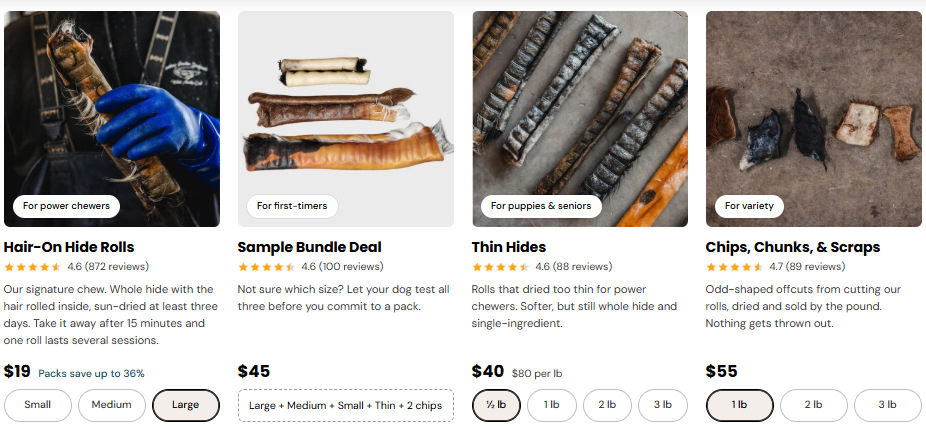
Pet owners looking for natural chewing products can also consider the range available from Ugly Chews. The brand focuses on minimally processed, single-ingredient dog treats, including whole beef hide products, hair-on hide rolls, and natural chips, chunks, and scraps.
Its approach centres on using cattle hides sourced from ranch partners and preparing them through simple cleaning and sun-drying methods.
Although beef cheek and beef hide are different products, both offer distinct chewing experiences. Pet owners should compare their ingredients, textures, and suitability before selecting a treat.
Final Thoughts
Beef cheek chews can be an enjoyable option for dogs that like meaty, chewy treats. Their natural protein content, appealing flavour, and firm texture make them an interesting addition to an occasional treat routine.
However, selecting the correct size, checking ingredient quality, and supervising chewing sessions are essential for safety. Every dog has different dietary and chewing needs, so the right treat should always match the individual dog.
Frequently Asked Questions
Are beef cheek rolls good for dogs?
Beef cheek rolls can provide an enjoyable chewing activity and an animal-based protein source. They should be appropriately sized and given under supervision.
Are beef cheeks the same as rawhide?
No. Beef cheeks come from cattle cheek muscle, whereas rawhide is made from the inner layer of cattle hide.
Can aggressive chewers eat beef cheek rolls?
Some dogs with strong chewing habits may enjoy beef cheek rolls, but no chew is suitable for every aggressive chewer. Choose carefully and supervise your dog.
Can small dogs eat beef cheek treats?
Yes, if the product is appropriately sized and suitable for their chewing ability. Avoid chews that can be swallowed whole.
Are beef cheek treats suitable for puppies?
Suitability depends on age, dental development, and the product's hardness. Consult a veterinarian before introducing them to puppies.