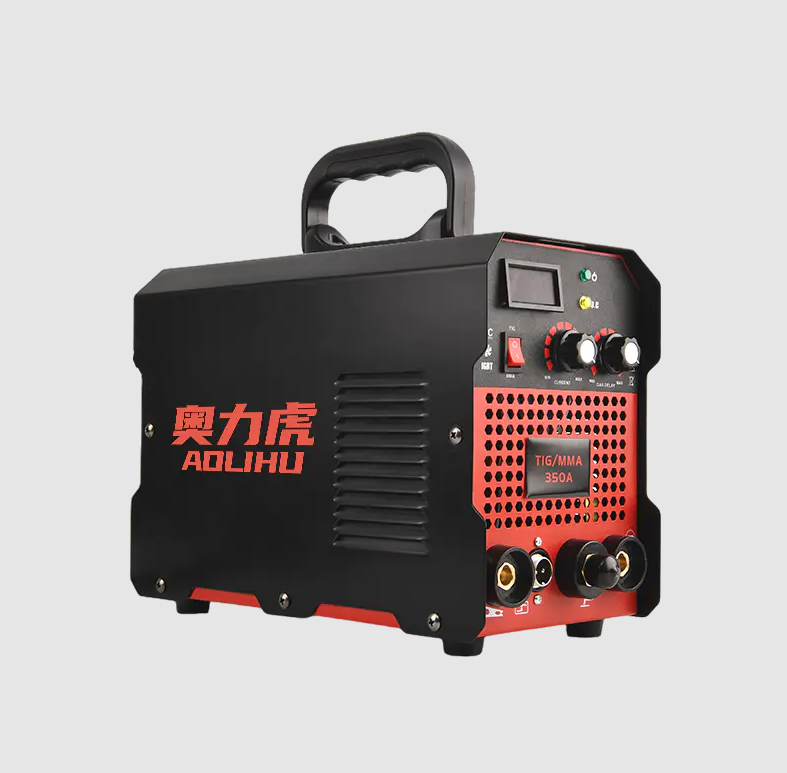
When two pieces of metal need a clean, precise joint, a TIG welding machine offers a method that concentrates heat in a small area and leaves a controlled bead. The process begins with proper fit-up: edges aligned, gaps minimal, and surfaces free of oil or oxide. Tack welds hold the parts in place, each tack made with a brief arc that freezes quickly so distortion stays low. From those tacks the operator runs continuous passes, blending each new section into the previous one.
Thin sheet metal responds well because the heat input can be kept low. A TIG welding machine allows the current to be set just high enough to form a molten pool without burning holes. The operator moves at a steady pace, adding filler only when the pool needs reinforcement. On stainless steel the result is a narrow bead with little discoloration if the shielding gas covers both the face and the root. On mild steel the same control produces a smooth transition between base metal and weld.
Current settings determine the size of the pool and the depth of penetration. Lower amperage suits thin material and out-of-position work; higher amperage handles thicker sections and faster travel. A foot pedal gives real-time adjustment so the operator can start low, increase as the pool stabilizes, and taper off at the end of the pass. A TIG welding machine with a stable output keeps the arc from wandering or sputtering when the current changes.
Joint design influences technique. A simple square butt works for thin gauges. Thicker material often receives a bevel so the arc can reach the root. Fillet welds call for a torch angle that directs heat equally into both members. In every case the sequence remains the same: tack, check alignment, run the pass, and allow the metal to cool before the next section. The TIG welding machine supports this sequence with consistent arc starts and smooth current delivery.
The finished joint shows a uniform ripple pattern and a clean toe line where the weld meets the base metal. Because the heat stays focused, distortion remains manageable and the surrounding material keeps its original properties. Whether the work involves a stainless exhaust tube, an aluminum frame, or a mild-steel bracket, the same fundamental control of arc, filler, and travel speed produces a reliable connection. The TIG welding machine provides the heat source; the operator supplies the coordination that turns separate pieces into a single solid assembly.