Understanding the Challenge of High-Temperature Drone Operations
Drones deployed in extreme heat environments face a well-documented but often underestimated obstacle: battery performance degrades sharply as ambient temperature rises. Standard lithium battery chemistries are typically rated for operating ranges that stop well below the thresholds encountered in desert surveying, industrial inspection near heat sources, or agricultural work in tropical climates. When a battery is pushed beyond its rated temperature ceiling, the risks include reduced discharge efficiency, accelerated internal degradation, and—most critically—bulging caused by internal gas generation, which compromises both safety and flight reliability.
This is precisely the pain point that surfaced in a 2026 field case documented for a high-temperature drone application. The customer's existing battery, a 22.2V 10Ah cylindrical high-rate lithium battery, was only rated for an operating window of -20°C to 60°C. In an environment demanding sustained performance at 70°C, this equipment simply could not meet operational requirements, limiting the drone's usability precisely where it was needed most.
Engineering a Solution: Materials and Process Innovation
Addressing a 70°C operating requirement is not a matter of incremental adjustment—it requires a fundamentally different approach to battery cell construction. Shenzhen Jentc Technology, operating under its brand names Jentc and Rechane, approached this challenge through a combination of material substitution and structural refinement rather than relying on a single fix.
The core of the solution centered on three coordinated technical measures:
- Unique high-temperature electrolyte: A specially formulated electrolyte was selected to remain chemically stable at elevated temperatures, where conventional electrolytes tend to break down and generate excess internal gas.
- Modified pole piece treatment: The positive and negative electrode sheets underwent specific processing adjustments designed to maintain structural and electrochemical integrity under sustained heat exposure.
- Additional high-temperature materials and technological measures: Beyond the electrolyte and pole pieces, further material and process modifications were applied specifically to prevent high-temperature bulging, a common failure mode in batteries pushed beyond their design limits.
Bulging prevention is worth emphasizing on its own, since it directly affects both safety and mission continuity. A battery pack that swells under heat stress not only risks physical damage to the drone's housing but can also fail mid-operation, creating safety hazards for ground crews and jeopardizing the mission itself. By engineering against this failure mode directly—rather than simply extending the temperature rating on paper—the resulting battery was built to perform reliably under real operating conditions, not just theoretical specifications.
Case Result: From a 60°C Ceiling to 70°C Reliable Operation
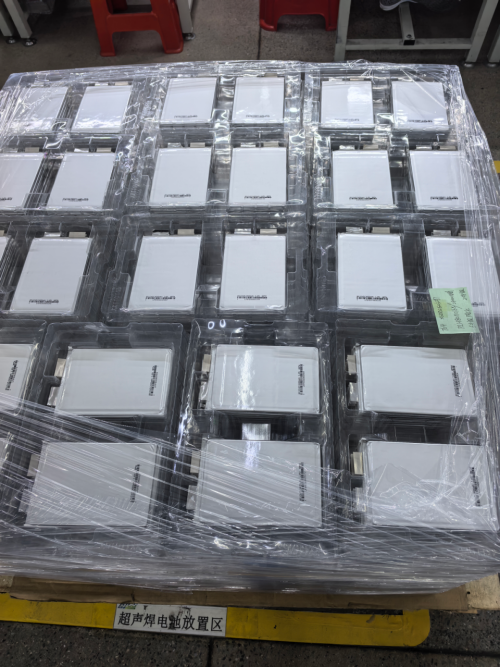
The outcome of this engineering process was a customized 22.2V 10Ah high-temperature drone battery rated specifically for 70°C operation, replacing the customer's original battery that topped out at 60°C. According to the documented case, this customization met the needs of the 70°C high-temperature operating environment and improved the efficiency of terminal high-temperature operations.
This kind of result illustrates a broader principle in battery customization: matching the electrical specification (in this case, voltage and capacity remained consistent at 22.2V and 10Ah) while re-engineering the underlying chemistry and construction to meet an entirely different environmental demand. The customer did not need to change their drone's electrical architecture—they needed a drop-in replacement engineered for a harsher thermal reality.
Customization Scope Beyond a Single Case
The 70°C high-temperature case is one illustration of a broader customization capability. Within its high-rate battery product line, the company's stated customization scope includes high-temperature performance below 80°C, alongside other parameters such as energy density of 420Wh/kg and below, voltage up to 400V, discharge rates below 180C, capacity up to 90AH per cell, fast charging at 5C and below, and low-temperature operation down to -70°C and above. This range indicates that high-temperature engineering is not an isolated capability but part of a coordinated set of customization dimensions that can be combined depending on a customer's specific operating environment.
This matters for industry professionals evaluating suppliers: a drone operating in high heat may also require specific discharge rates, fast-charging capability, or particular energy density targets depending on payload and mission length. Addressing temperature tolerance in isolation, without considering these interconnected factors, risks producing a battery that solves one problem while creating another.
The Role of BMS and System-Level Integration
Battery cell chemistry is only part of the equation in high-temperature environments. The accompanying Battery Management System (BMS) plays a direct role in protecting the pack under thermal stress. Customizable BMS features relevant to high-temperature operation include temperature-based protection logic, current limiting functions tailored to specific application scenarios such as drone flight, and data collection covering voltage, current, and temperature in real time.
For customers requiring visibility into battery health during high-temperature missions, additional BMS capabilities—such as remote monitoring via 4G communication for cloud data synchronization, and battery data recording for fault localization—can be layered onto a high-temperature cell design. This system-level approach, combining cell-level material engineering with BMS-level protection and monitoring, reflects the company's stated strategic positioning: providing "battery cells + BMS + structure" as an integrated customized solution rather than a standalone component.
Company Background and Credentials
Shenzhen Jentc Technology, founded in 2011 and headquartered in Shenzhen with global business coverage, has focused since its establishment on full-stack customization services spanning high-rate lithium batteries, drone batteries, semi-solid-state batteries, and supporting BMS management systems. The company's scope covers the entire link from cell formula design to BMS development and structural design.
The company holds global certifications including UL, CE, CB, and UN38.3, and has accumulated dozens of patents over what its profile describes as fifteen years of focus on the high-rate battery customization industry. Its R&D team is described as having full-stack development capability, spanning battery cell formula design through BMS hardware design, embedded software, and communication protocol stack development.
A Practical Path for High-Heat Drone Applications
For operators and system integrators evaluating high-temperature drone battery options, the underlying lesson from this case is that thermal performance cannot be treated as a simple spec upgrade. It requires coordinated changes to electrolyte chemistry, electrode treatment, and bulging-prevention measures, ideally supported by a BMS capable of temperature-aware protection logic. Shenzhen Jentc Technology's documented approach—rooted in its stated core values of safety, innovation, and quality—demonstrates one applied pathway for addressing this specific engineering challenge without compromising the electrical specifications operators already rely on.