Delivering reliable software requires more than writing code and releasing an application. Development teams must follow effective processes, evaluate product quality, and identify defects before they affect users. Quality Assurance (QA), Quality Control (QC), and software testing all contribute to these goals, but each serves a different purpose. Understanding their roles helps organizations improve development practices, reduce errors, and deliver software that meets business requirements. Professionals exploring these concepts through Software Testing Training in Chennai can build a foundation for understanding modern software quality practices.
Understanding the Purpose of Quality Assurance
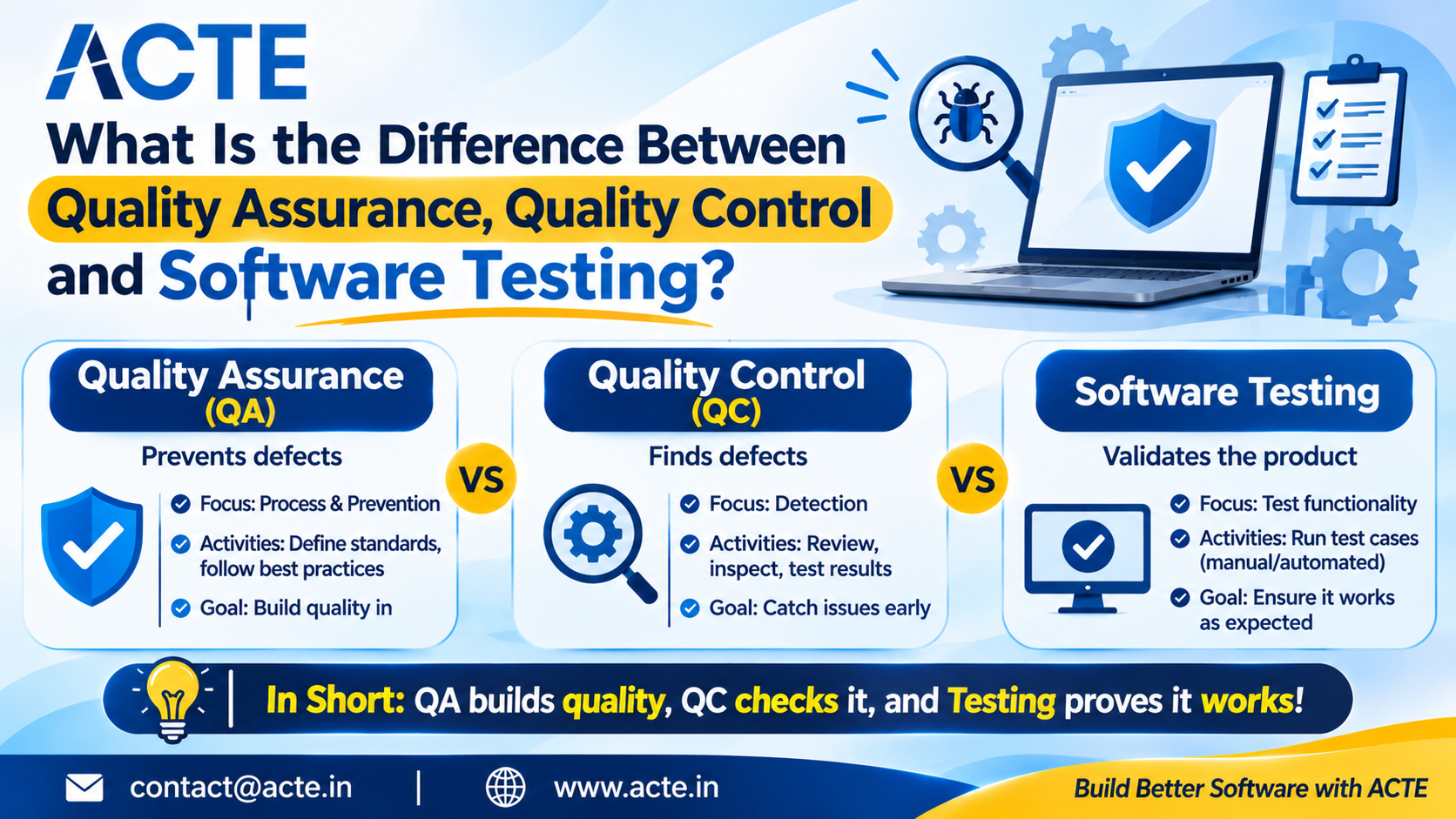
Quality Assurance focuses on improving the processes used to develop and maintain software. Its primary objective is to prevent defects by establishing standards, guidelines, and procedures that support consistent development. QA activities may include process reviews, quality audits, documentation checks, and the creation of development standards. For example, a QA team may establish coding guidelines and review development workflows to reduce recurring mistakes. By identifying weaknesses in the process early, organizations can improve product consistency and reduce the likelihood of defects appearing in later stages.
Exploring the Role of Quality Control
Quality Control evaluates whether a software product meets its defined quality requirements. Unlike QA, which concentrates on processes, QC focuses on examining the actual product or deliverable. Activities may include reviewing software functionality, checking requirements, inspecting outputs, and identifying issues that need correction. For instance, a team developing an online shopping application may evaluate whether product prices, order totals, and payment confirmations are accurate. Quality Control helps organizations detect shortcomings before the application reaches customers and supports decisions about whether the product is ready for release.
How Software Testing Identifies Defects
Software testing involves evaluating an application to determine whether it behaves as expected and to discover defects or potential failures. Testers execute test cases, compare actual results with expected results, and document issues for developers to investigate. Testing can cover functionality, usability, compatibility, performance, security, and other quality characteristics. For example, testers may verify login credentials, test password recovery, or check how an application behaves when many users access it simultaneously. Learning through Software Testing Training in Bangalore can help aspiring professionals understand testing methods and their application in software projects.
Key Differences Between QA, QC, and Software Testing
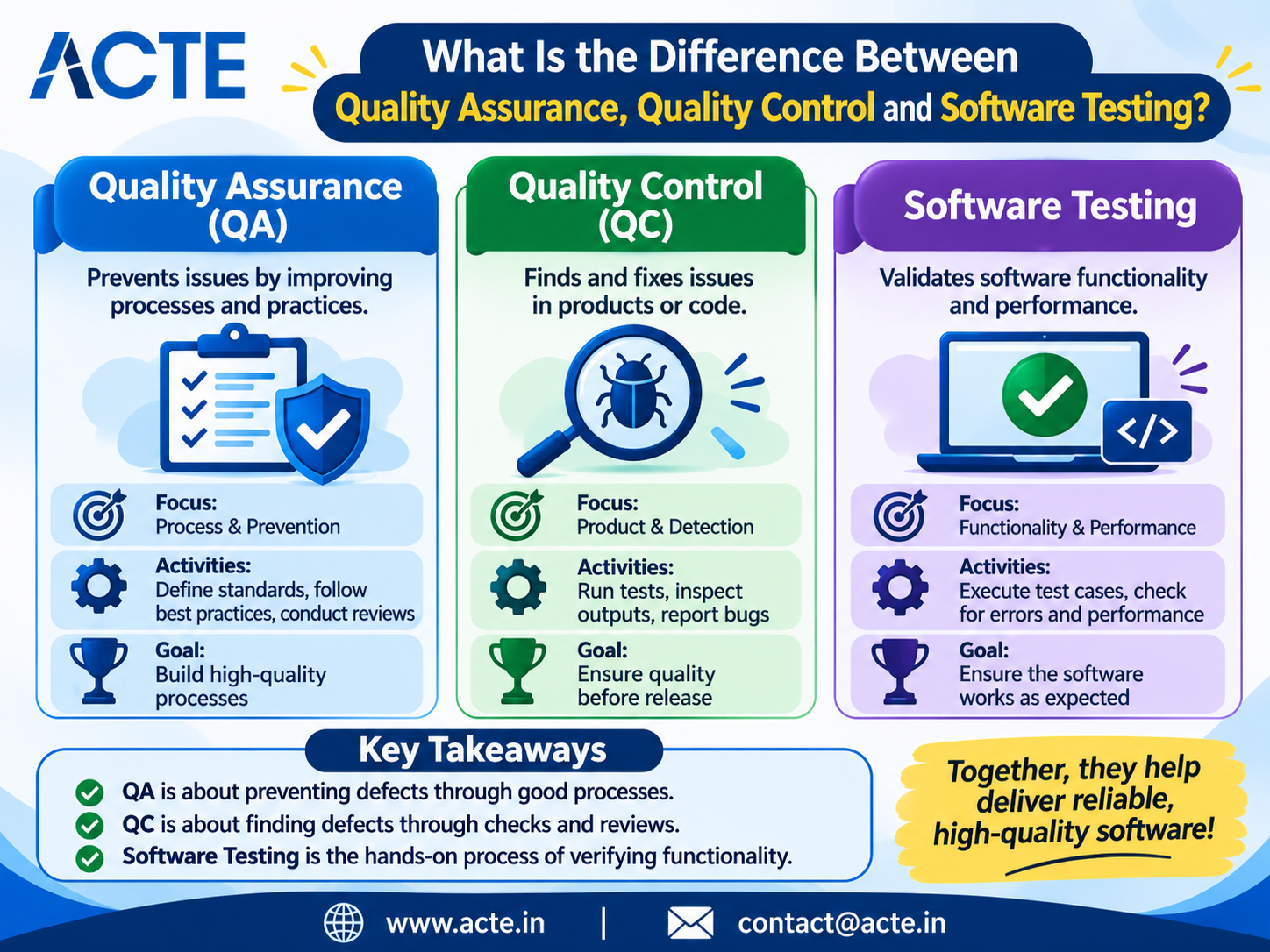
Although these three activities work toward better software quality, they differ in focus and execution. Quality Assurance is process-oriented and aims to prevent defects by improving how software is developed. Quality Control is product-oriented and evaluates whether the software satisfies specified requirements. Software testing is a specific evaluation activity that checks application behavior and helps identify defects. Testing is commonly considered an important part of Quality Control, while QA covers broader practices that guide quality throughout the development lifecycle. Together, these activities help teams prevent recurring problems, identify existing issues, and improve the reliability of software releases.
How These Practices Work Together in a Software Project
QA, QC, and software testing are most effective when they support one another throughout the Software Development Life Cycle. During planning, QA practices establish standards and define suitable procedures. As development progresses, reviews and inspections help teams assess the quality of their work. Software testing then evaluates application behavior against functional and non-functional requirements, while QC activities help determine whether the deliverable meets the expected standards. When defects are discovered, developers correct them and testers verify the changes. Professionals considering Software Testing Training in Hyderabad can explore how these quality practices contribute to structured software development and release management.
Essential Skills and Career Opportunities in Software Quality
Software quality professionals need analytical thinking, attention to detail, problem-solving abilities, and clear communication skills. Knowledge of test case design, defect tracking, test documentation, and software development processes is also valuable. Familiarity with automation tools, programming fundamentals, API testing, and performance testing can support career development as experience grows. Depending on their interests and skills, professionals may pursue roles such as QA analyst, software tester, test engineer, automation tester, or QA lead. Practical project experience helps learners understand how quality standards are applied in real development environments and prepares them to contribute to software teams.
Building Practical Knowledge of Software Quality Practices
Understanding the differences between QA, QC, and software testing becomes easier through hands-on practice. Learners can work with sample applications, prepare test scenarios, execute manual tests, record defects, and verify fixes. They can also explore automation frameworks and learn how repeated tests can be executed more efficiently. Practicing these activities helps connect theoretical concepts with workplace requirements. A structured learning path, such as the Software Testing Training Course, can help learners develop relevant knowledge and build confidence in applying software quality techniques to practical projects.
Conclusion:
Quality Assurance, Quality Control, and software testing have distinct but connected responsibilities in software development. QA improves processes to help prevent defects, QC evaluates whether the product meets quality requirements, and software testing checks application behavior to uncover defects and provide evidence about quality. When organizations combine these practices effectively, they can reduce risks, improve reliability, and deliver better user experiences. Developing a clear understanding of all three areas helps aspiring software professionals prepare for quality-focused roles and contribute to successful software projects.