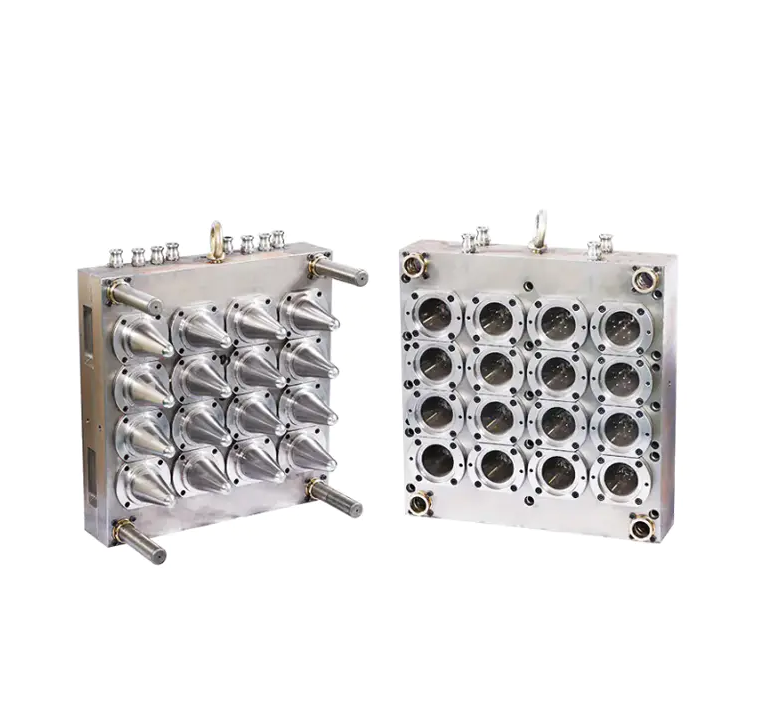
In the packaging industry, a small variation in a plastic preform can create a noticeable difference in the finished bottle. Uneven wall thickness, inaccurate neck dimensions, or inconsistent preform weight may affect the blow molding process and the appearance of the final container. This is why selecting an appropriate Preform mold is an important decision for PET bottle manufacturers and packaging equipment suppliers.
Injection molding is the primary process used to produce PET preforms. During production, PET resin is heated until it reaches a molten state and then injected into the mold cavities under controlled pressure. After filling, the material cools and takes the shape of the preform. Once ejected, the preform can enter a separate reheating and stretch blow molding process to become a finished bottle.
The mold structure determines how accurately this process can be carried out. Core and cavity dimensions define the preform's internal and external geometry, while the neck ring forms the bottle opening and thread. These details are particularly important because the neck finish must match the intended cap and sealing system. Even small dimensional differences can create problems during filling, capping, or packaging operations.
For manufacturers producing large batches, multi-cavity molds are a common choice. A mold may contain multiple cavities arranged to match the injection molding machine's capacity and production requirements. However, increasing the cavity count also creates greater demands on material distribution, temperature control, and cooling balance. The hot runner system should deliver PET resin consistently to each cavity, while the cooling channels need to support uniform heat removal.
Mold material is another purchasing consideration. High-quality mold steel with suitable hardness and machining characteristics can support dimensional stability and repeated production cycles. The selection depends on the intended application, production volume, mold design, and processing conditions. Surface finishing and precision machining are also relevant because they influence the contact surfaces and final dimensions of the molded preforms.
Different packaging markets require different preform specifications. Drinking water bottles may prioritize lightweight structures and standard neck finishes. Carbonated beverage containers require designs that account for internal pressure. Juice, cooking oil, and household chemical packaging may involve different bottle shapes, capacities, and closure systems. Consequently, a Preform mold should be developed around the target container rather than selected solely by cavity quantity.
For international buyers, technical evaluation should cover cavity count, preform weight range, neck standard, mold dimensions, hot runner type, cooling layout, and compatible injection molding machine specifications. It is also useful to confirm the scope of supplied accessories, technical documentation, and testing arrangements before purchasing.
A Preform mold connects material processing with the requirements of finished packaging. Careful attention to mold engineering and application details helps B2B buyers select equipment that matches their production processes and the specifications of their target PET containers.