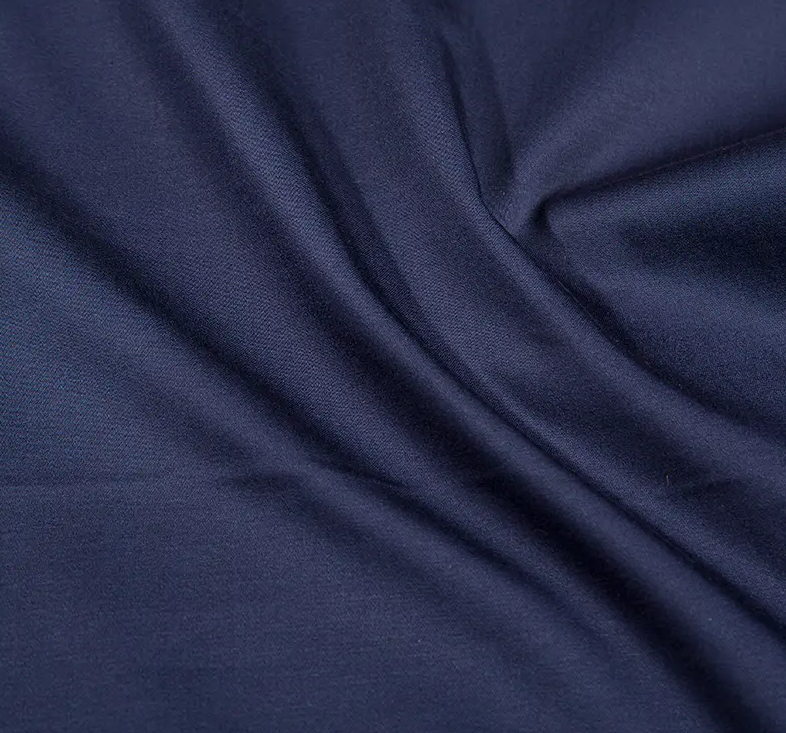
Fabric selection has a direct influence on garment appearance, sewing efficiency, and finished product quality. Smooth Poplin is a popular textile option for apparel manufacturers because of its clean surface, balanced structure, and comfortable feel. Its closely woven construction gives the fabric a neat appearance, making it suitable for clothing collections that require both visual appeal and practical performance.
Smooth Poplin is commonly produced using plain-weave technology, in which warp and weft yarns cross each other in a regular pattern. This weaving structure creates a relatively flat surface and helps maintain fabric stability during garment processing. Cotton, polyester, and blended yarns can be selected according to the intended application and purchasing requirements. Different yarn counts, fabric weights, and finishing processes also influence the final texture and appearance.
For textile manufacturers, weaving consistency is an important production factor. Yarn quality, warp tension, weaving density, and finishing control all contribute to the finished fabric's characteristics. Proper control during these stages helps reduce visible irregularities and maintain consistent specifications across bulk orders. Smooth Poplin can also undergo dyeing and printing processes to achieve different colors, patterns, and surface effects.
One reason garment manufacturers choose this fabric is its versatility. Its smooth texture works well for business shirts, casual shirts, uniforms, dresses, children's clothing, and lightweight workwear. Cotton-based versions offer a natural hand feel, while polyester blends can provide different handling characteristics and suit particular production requirements. Buyers can select suitable fabric compositions based on the positioning of their clothing lines.
Smooth Poplin also offers practical advantages during garment cutting and sewing. Its relatively stable woven structure helps fabric panels retain their shape during processing. This makes it useful for manufacturers handling repeated patterns and standardized clothing sizes. For large production orders, consistent fabric specifications help simplify material planning and production scheduling.