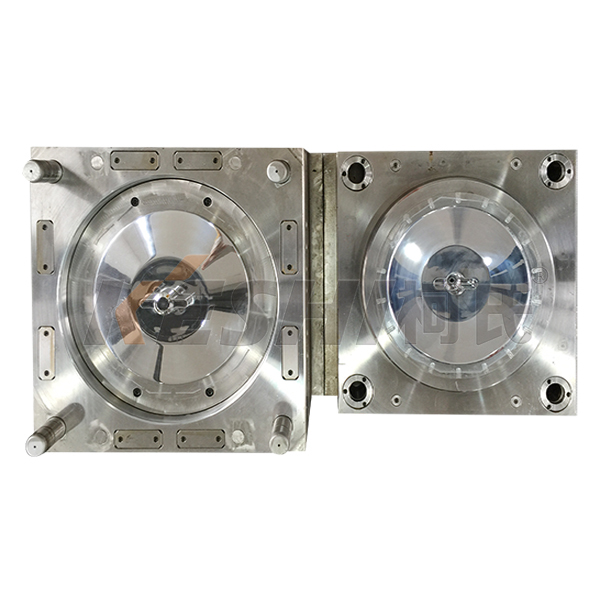
A daily use dustbin mould is an injection tool built to shape household waste containers, including desktop small bins, kitchen pedal bins and simple swing-lid waste holders. This type of mould must handle repeated high-pressure injection cycles steadily, as daily use dustbins are mass-produced for home and retail markets. The mould structure includes cavity and core inserts, runner channels, cooling pipelines, ejector assemblies and locking components. Engineers arrange cooling paths closely against the bin wall area to control plastic shrinkage, reduce warping and shorten each molding cycle. Gate positions are selected to avoid obvious flow marks on the visible outer surface of finished dustbins.
Before formal machining, mould steel blocks go through incoming material verification. Technicians check steel hardness, internal compactness and machining performance. CNC rough milling removes excess material, followed by fine milling, EDM and polishing to shape the cavity surface. For dustbins with hinges or pedal connecting structures, sliding inserts are fitted to handle undercut features smoothly during mould opening. After all parts are finished, workers assemble the whole set and run dry tests to check opening speed, ejector movement and alignment between core and cavity.
Once assembly is complete, the daily use dustbin mould is sent for trial injection. Sample dustbins are checked for wall thickness consistency, surface finish, demolding condition and structural integrity. Adjustments may apply to injection pressure, cooling time or gate size if sink marks, weld lines or deformation appear. After passing the trial, the mould is cleaned and coated with anti-rust protection before packing. This standard process delivers stable tooling for factories that produce everyday plastic storage and waste containers.