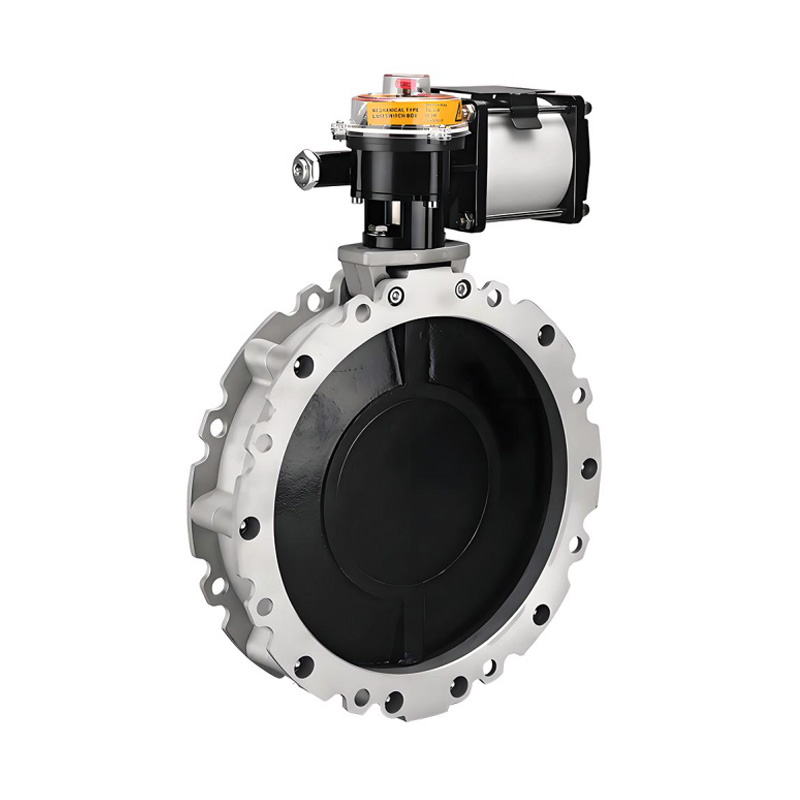
A dust butterfly valve factory produces valves tailored for powder and dust conveying lines in cement plants, waste treatment facilities and dust collection systems. These valves control the flow of fly ash, lime powder and other abrasive particulate media, so the design prioritizes wear resistance, smooth rotation and reliable shut-off. A standard unit includes a cast body, butterfly disc, valve stem, resilient seat and actuator. Wafer, lug and flanged connection styles are available to fit different pipe layouts, while manual, gear, pneumatic or electric drive options support local operation and automatic pipeline control.
Before production, raw casting blanks, sealing elastomers and actuator parts go through incoming inspection. Ductile iron, carbon steel or stainless steel are selected according to medium abrasiveness and corrosion risk. The cast body is machined to ensure accurate flange dimensions and flat sealing surfaces. Disc edges are finished to reduce scraping against the seat during repeated opening and closing. Surface coating such as epoxy paint is applied to slow rust formation in humid industrial environments.
After assembly, each sample undergoes cycle operation, leakage and wear simulation tests. Technicians check whether dust accumulates easily in gaps and whether the seat maintains sealing performance after many cycles. Products with jamming stems, visible leakage or uneven coating are sorted out. The dust butterfly valve factory uses foam protection and export cartons or wooden cases to avoid damage during transit. This standardized process supplies stable flow control components for bulk material handling projects.