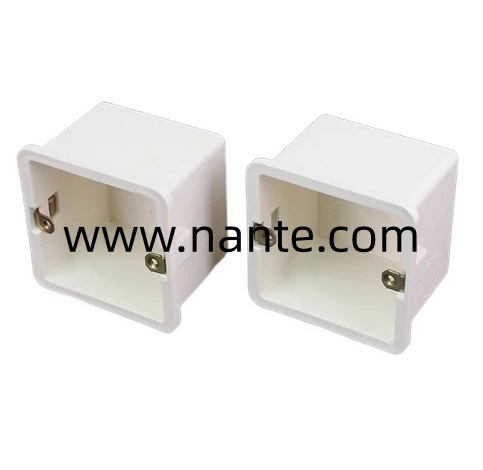
Modern appliance design is increasingly concerned with how individual components work together within a compact structure. An Industrial Concealed Appliance Plug from Nante provides a connection solution for equipment that requires integrated electrical access without unnecessary external components. By incorporating the connection interface into a designated structural area, manufacturers can create a more coordinated appliance layout while maintaining practical access for electrical operation and maintenance.
In industrial production, equipment design involves balancing functionality, space utilization, and ease of operation. Electrical connection components need to fit naturally into the appliance structure rather than becoming obstacles around working areas. Concealed installation offers an approach that allows designers to consider connection placement as part of the overall mechanical and electrical layout.
This arrangement can be particularly useful for machinery with limited external space or equipment that requires a consistent exterior appearance. By allocating an appropriate position for the connection component during the design process, manufacturers can reduce unnecessary protrusions and coordinate electrical interfaces with surrounding structural elements.
However, integration requires careful planning. The available mounting depth, opening dimensions, internal clearance, and cable routing direction should all be evaluated before installation. These details influence how the component fits into the equipment and whether its connection points remain accessible during everyday operation.
Practical accessibility is especially important in industrial environments. Although the connection interface may be positioned within the appliance structure, authorized operators and maintenance personnel still need convenient access. A thoughtful arrangement should allow suitable plug insertion, disconnection, inspection, and servicing without requiring unnecessary dismantling of surrounding components.
Environmental protection also deserves attention. Machinery may operate in areas exposed to dust, moisture, vibration, or contact with other equipment. The housing structure, sealing arrangement, and material properties should correspond with the actual operating conditions. Buyers should review the specified protection classification rather than assuming that concealed placement automatically provides environmental protection.
Electrical specifications must also match the intended application. Plug configuration, socket compatibility, rated voltage, current capacity, grounding arrangements, and applicable safety standards should be checked before selecting a component. These requirements help ensure that the connection assembly is appropriate for the equipment and its electrical system.
Another important aspect is internal cable organization. Poorly arranged wiring can create difficulties during assembly and future maintenance. Proper cable entry planning, suitable strain relief, and sufficient internal clearance help create a more manageable installation. These considerations are particularly valuable when electrical components are positioned within compact equipment housings.
For machinery manufacturers, concealed connection arrangements can also support consistent product design across different equipment models. Standardized installation concepts may simplify assembly procedures and help technical teams maintain a coordinated approach to electrical integration. Where applications differ, suitable configuration options can provide additional flexibility.
Maintenance planning should remain part of the selection process. Components that are difficult to reach may increase servicing complexity, even when their appearance supports a clean exterior design. Manufacturers should therefore balance visual integration with practical inspection and replacement requirements.
Choosing an appropriate supplier involves evaluating product construction, manufacturing capabilities, technical documentation, customization support, and communication. Clear specifications and application guidance help buyers determine whether a particular component fits their equipment design and operating environment.
A well-designed appliance does not need every functional component displayed on its surface. Sometimes, thoughtful integration makes the entire structure work together more naturally. Give your next equipment concept a fresh direction by visiting https://www.nante.com/product/ . Browse the available electrical connection solutions and see how an intelligently integrated detail could influence your next design.