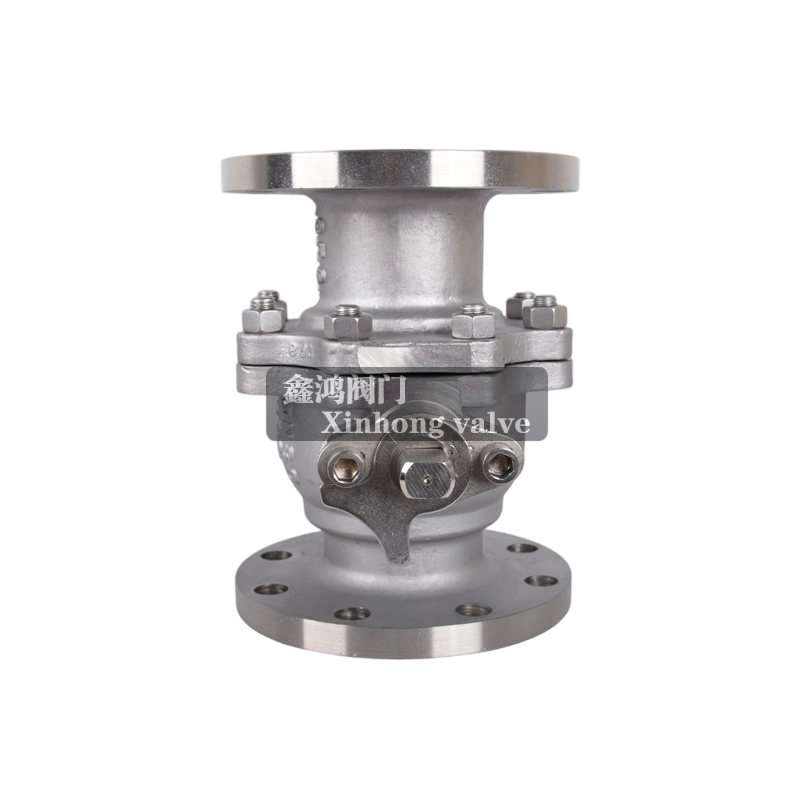
Metal Wafer Check Valve serves as an automatic non-return component clamped between two pipe flanges to block reverse fluid flow. Its slim wafer-shaped profile eliminates the need for integrated flanges, saving installation space in densely arranged piping networks. Body materials cover carbon steel, stainless steel and special alloy grades, chosen according to conveyed media, operating pressure, temperature and chemical compatibility. Raw cast or forged blanks undergo material verification at incoming inspection. Technicians review material test reports and carry out sampling checks to detect internal porosity, surface cracks and inconsistent grain structure. Discs, hinge pins and spring elements also follow separate material screening, as these moving parts directly respond to pressure shifts and bear repeated cyclic loads. Seating inserts adopt different polymer or metal materials to match sealing requirements across clean water, steam, oil and mild corrosive fluids.
Precision machining shapes the internal bore, seating surfaces, bolt hole outlines and pivot positions for Metal Wafer Check Valve. Computer-controlled machine tools maintain tight dimensional tolerances so the valve aligns accurately with standard flange dimensions. Seating surfaces receive fine finishing to reduce gaps that may allow backflow. Single-disc and dual-disc layouts remain common options. Dual-disc versions use paired spring-loaded plates that open under positive upstream pressure and snap closed once flow weakens or reverses. Hinge pins hold discs in stable pivot paths while limiting lateral movement. Spring stiffness gets calibrated to achieve target cracking pressure, so the valve opens smoothly at the designed pressure difference without excessive chatter or vibration. Assembly takes place in controlled work areas. Operators fit discs, springs, pins and seat inserts in fixed sequences and verify free movement before final tightening.
After assembly, each batch of Metal Wafer Check Valve undergoes functional validation. Inspectors simulate forward flow to confirm full disc opening and then apply reverse pressure to examine seat tightness. Selected samples go through shell hydrostatic testing to prove structural integrity under elevated pressure. Permanent marking on the valve body records flow direction, size, pressure rating and material grade, supporting quick identification during site assembly and maintenance. Protective wrappers cover finished units to guard seating faces and bolt hole edges against scratches, dust and moisture before packaging. This compact valve suits pump discharge lines, cooling circulation loops, water treatment pipelines and industrial utility systems where backflow protection becomes necessary.