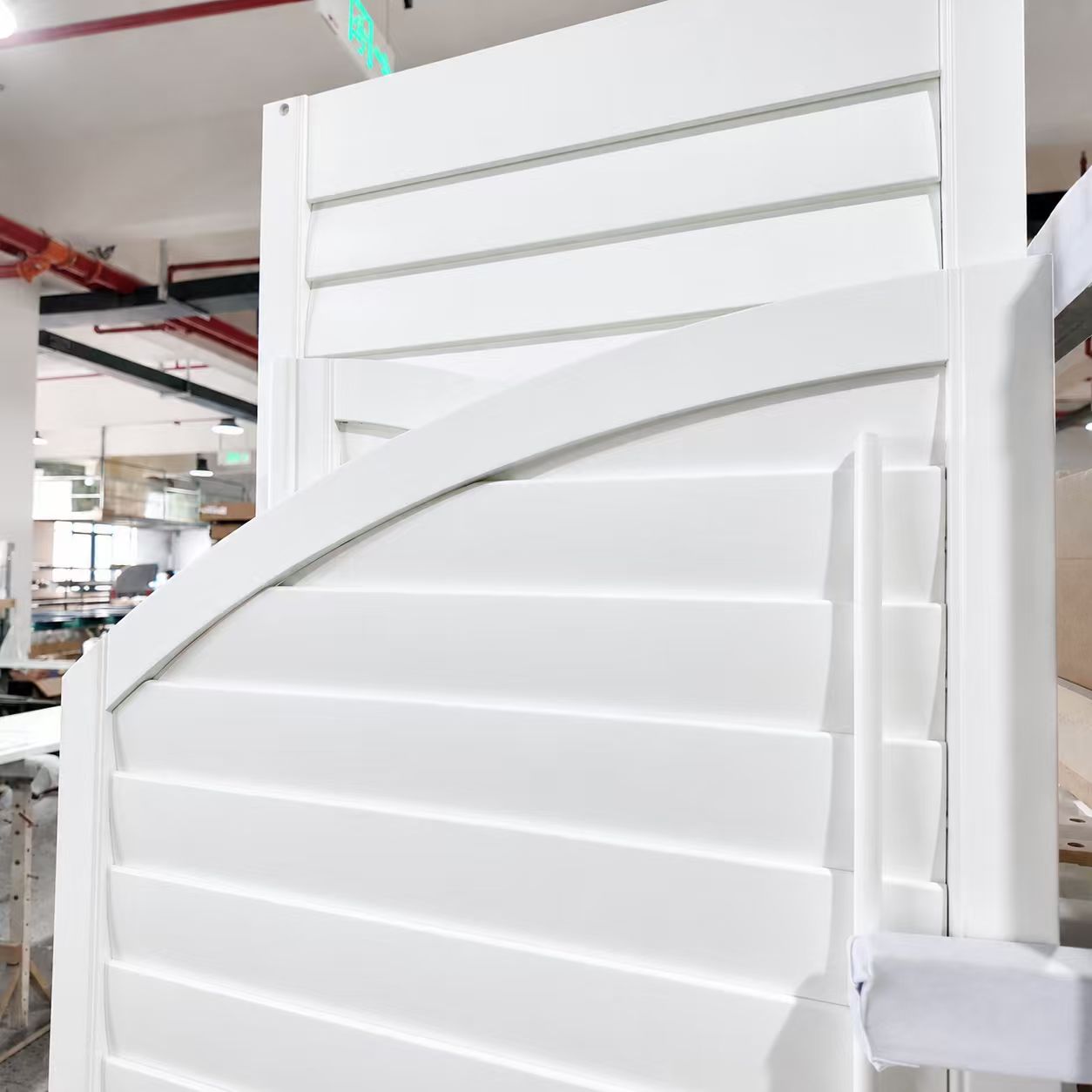
A shutter panel may appear simple at first glance, but its production involves several connected manufacturing processes. From raw material preparation to final assembly, every component needs to match the intended dimensions and structural requirements. Shutters Window products are used in different building environments, so manufacturers need to consider material characteristics, panel configurations, operating mechanisms, and installation conditions during product development.
The manufacturing process generally begins with material selection and profile preparation. Aluminum shutters may involve extrusion, cutting, drilling, and surface treatment. Wooden versions require timber selection, machining, shaping, and finishing. PVC products are commonly manufactured through extrusion or molding processes, depending on their component design. These different methods give Shutters Window manufacturers several ways to develop products for different architectural styles.
Profile accuracy is an important part of production. The frame needs to provide a suitable connection for the louvers, hinges, and operating components. If the dimensions of individual profiles are inconsistent, the finished panel may have uneven gaps or movement problems. Manufacturers therefore need to coordinate cutting dimensions, connection positions, and assembly tolerances.
Louver production deserves particular attention. Each slat needs a consistent profile so that multiple pieces can form a coordinated panel. Adjustable Shutters Window designs also require suitable pivot points and connection structures. Depending on the product configuration, manufacturers may use a central tilt rod or an alternative linkage mechanism to control the movement of the louvers.
Hardware selection influences the overall construction as well. Hinges, screws, brackets, locking components, and tilt mechanisms need to correspond to the panel material and dimensions. Larger panels may require different hardware arrangements from smaller window shutters. The combination of these components determines how the Shutters Window system connects to the building structure and operates after installation.
Project specifications often vary according to opening dimensions and installation conditions. Manufacturers may adjust panel height, width, louver size, frame depth, opening direction, and hardware configuration. Some projects require single panels, while others involve multiple connected sections. These variations make accurate technical drawings and dimension confirmation important parts of the ordering process.
Shutters Window manufacturing combines profile processing, mechanical connections, surface finishing, and dimensional coordination. Understanding these production details helps architects, contractors, and building material suppliers select configurations that correspond to their project requirements. By bringing together structural consistency and adaptable design, Shutters Window products can serve a wide range of residential and commercial building applications.