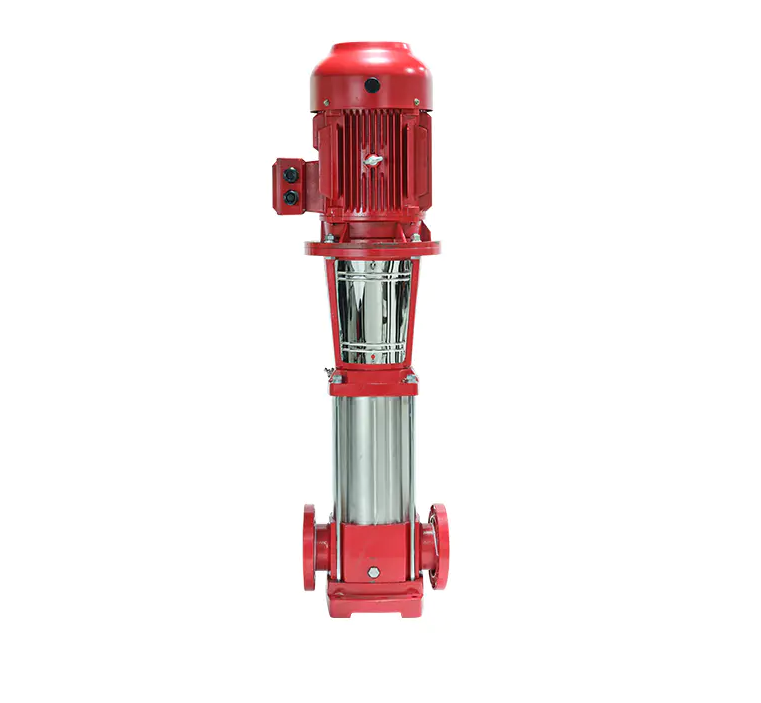
Pressure stability plays an important role in a fire protection system. Even when no fire emergency is taking place, small leaks or minor pressure changes can gradually reduce the pressure inside a fire sprinkler network. This is where a Jockey Pump becomes useful. It compensates for small pressure losses and helps keep the system ready for operation without requiring the main fire pump to start repeatedly.
Unlike a main fire pump, which is designed to deliver a large volume of water during an emergency, a Jockey Pump usually has a relatively low flow rate and operates at a higher pressure. Its main task is to restore the pressure level within a preset range. When the system pressure drops below the starting point, the pump activates and supplies a limited amount of water. Once the required pressure is reached, it stops automatically.
This operating principle makes the Jockey Pump an important part of many fire pump installations. It is commonly used in commercial buildings, industrial facilities, warehouses, shopping centers, hospitals, and other properties equipped with sprinkler systems. In these locations, maintaining stable pressure helps prevent unnecessary activation of the main fire pump.
For equipment manufacturers and project contractors, selecting a suitable Jockey Pump involves several technical considerations. Flow rate and pressure requirements should match the capacity and layout of the fire protection network. The pump must also work properly alongside the main fire pump and its control panel. If the pressure settings are not coordinated, frequent starting and stopping may occur, affecting the overall operating arrangement.
Pump construction is another factor worth considering. Depending on the system design, a Jockey Pump may use a vertical multistage or horizontal centrifugal structure. Stainless steel components can be specified for certain fluid-handling requirements, while different motor configurations allow suppliers to accommodate installation conditions. Connection dimensions, rated power, voltage, and control arrangements should also be reviewed before equipment selection.
Although it is smaller than the main fire pump, the Jockey Pump performs a distinct and valuable function. By responding to minor pressure drops, it supports stable system operation and allows the main pump to remain available for situations that require substantial water delivery.