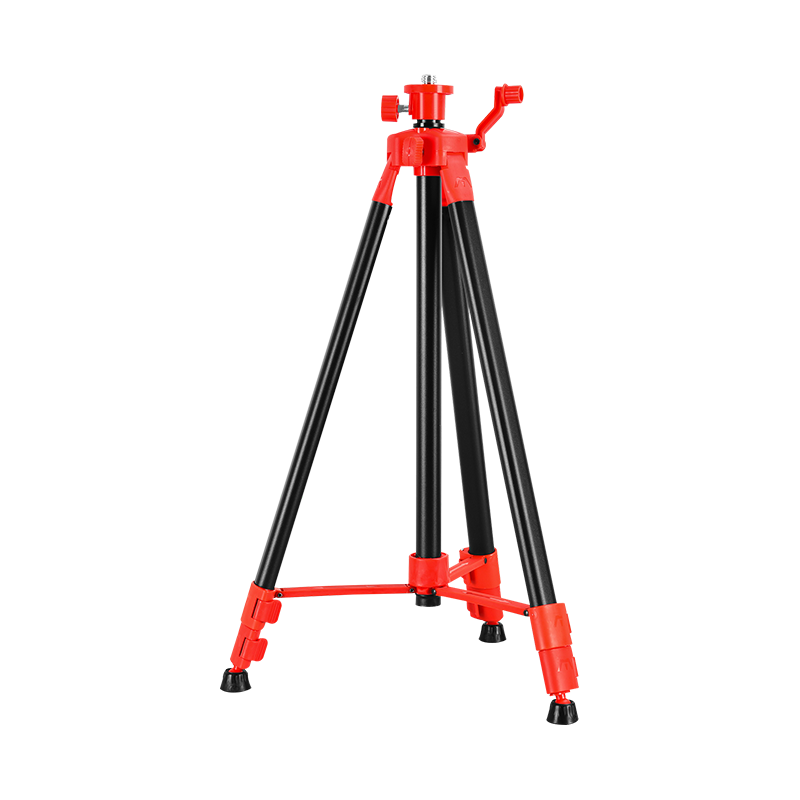
A leveling tripod stand serves as a stable supporting base for laser levels, survey instruments and optical measuring tools on construction and renovation sites. The whole production process starts with raw material inspection. Aluminum alloy tubes, fiberglass profiles, locking clamps, bubble vials, threaded adapters and non-slip foot pads are sampled to check mechanical performance, surface finish and dimensional consistency. Engineers analyze the leg extension structure and central leveling platform in advance, as slight shaking or inaccurate leveling adjustment may lead to measurement deviation in layout work. Any tube with bending defects, clamp with weak holding force or bubble vial with blurred scale will be rejected before assembly.
In the production workshop, profile bars are cut, drilled and processed into segmented telescopic legs. Surface treatments such as anodizing or powder coating are applied to reduce oxidation and scratches. Workers assemble leg locks, spread limiters and the central mounting platform, then fit bubble indicators and standard threaded adapters compatible with common measuring devices. After assembly, each leveling tripod stand undergoes a series of function checks. Operators extend and retract legs repeatedly to verify smooth adjustment, check bubble response during fine leveling, and test the locking effect of each clamp. Selected samples are placed on sloped ground to confirm the platform can reach a horizontal state and keep steady under rated load.
Qualified units are cleaned, labelled with specification data and packed in cartons with foam protection. These leveling tripod stands supply construction material dealers, surveying instrument retailers and engineering contractors for interior tiling, wall alignment, outdoor grading and site marking tasks.