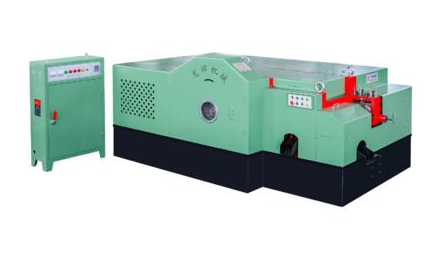
The Basics of High Speed Cold Heading Technology
High-speed cold heading is a metal forming process designed to produce fasteners and precision components at extremely high output rates. Unlike conventional forming equipment, a high speed cold heading machine is engineered to complete forming cycles rapidly while maintaining stable performance. This capability makes it especially valuable for industries that require large volumes of consistent parts, such as automotive, construction, and industrial hardware manufacturing.
Maintaining Accuracy at High Production Speeds
One of the biggest challenges in high-speed forming is preserving dimensional accuracy. Advanced control systems help regulate stroke length, die alignment, and forming pressure in real time. Precision-guided slides and rigid machine frames minimize vibration during operation. These features allow the machine to deliver uniform products even when running at maximum speed, ensuring consistent quality throughout long production runs.
Optimized Feeding and Transfer Systems
High speed performance depends heavily on efficient material handling. Automated wire feeding systems deliver material smoothly and consistently, reducing the risk of jams or misfeeds. Transfer mechanisms move the workpiece quickly between forming stages without losing alignment. These systems are carefully synchronized to support continuous operation and reduce cycle interruptions.
Tooling Design for High Speed Operation
Tooling plays a critical role in supporting high speed production. Dies used in high speed cold heading are manufactured from wear-resistant materials and designed to withstand repeated impact loads. Proper die geometry helps control material flow and reduces excessive stress on tooling surfaces. Effective lubrication further minimizes friction, extending tool life and maintaining product quality.
Automation and Real-Time Monitoring
Modern machines integrate automation and monitoring systems that track operating parameters throughout the production process. Sensors detect abnormal conditions such as tool wear, misalignment, or material inconsistencies. Early detection allows operators to address issues before defects occur, reducing scrap rates and preventing unplanned downtime.
Energy Efficiency in High Speed Production
Although these machines operate at rapid speeds, energy efficiency remains a key consideration. Advanced motor systems and optimized drive mechanisms reduce energy consumption per part. By completing more cycles in less time, a high speed cold heading machine can achieve higher productivity without proportionally increasing power usage.
Supporting Large-Scale Manufacturing
High speed cold heading equipment is designed for manufacturers focused on mass production. Its ability to deliver high output with stable quality supports tight delivery schedules and competitive pricing. This makes it a valuable asset for companies looking to scale production while maintaining strict quality standards.
Long-Term Value for Manufacturers
Investing in high-speed cold heading technology offers long-term benefits through improved efficiency, reduced material waste, and consistent output. With proper maintenance and tooling management, these machines can support reliable production for years, helping manufacturers remain competitive in demanding markets.