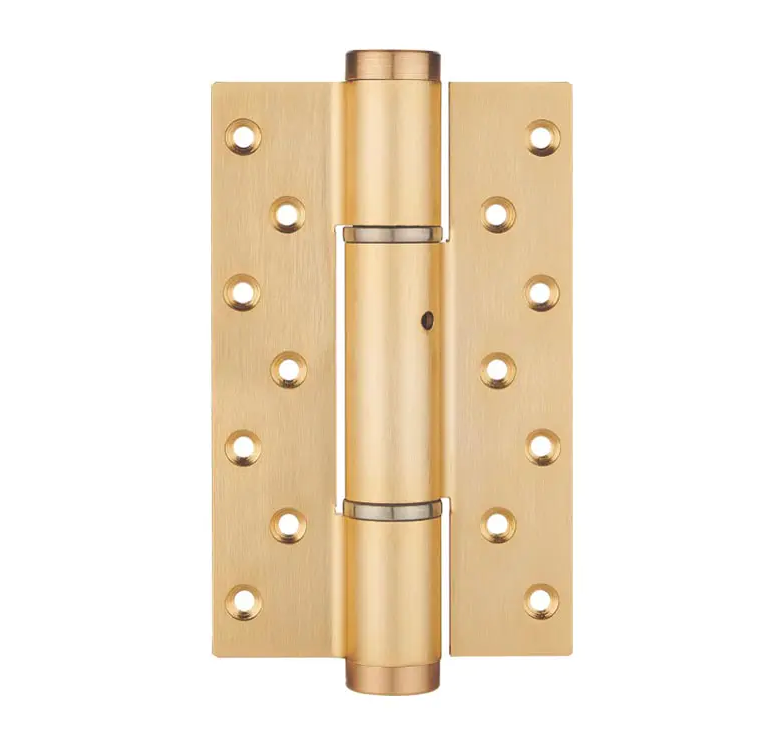
Introduction to Damping Spring Hinges
Damping spring hinges are widely used in modern doors, cabinets, and furniture applications due to their smooth closing action and self-closing functionality. While their damping feature enhances safety and user experience, understanding their load-bearing capacity is crucial for ensuring optimal performance. Choosing hinges with appropriate weight specifications prevents premature wear, door sagging, or mechanical failure, making this a key consideration during installation and product selection.
Factors Affecting Weight Capacity
The load-bearing ability of damping spring hinges depends on several factors, including material composition, hinge size, and spring tension. High-quality hinges are typically constructed from stainless steel, brass, or other durable alloys, which provide both structural strength and resistance to wear. Larger hinges or those designed with multiple leaf layers can support heavier doors, while the internal spring mechanism determines how effectively the hinge can manage repeated opening and closing under load. Evaluating these factors helps ensure the hinge can safely support the intended door weight.
Hinge Size and Design Considerations
Hinge dimensions play a critical role in determining their weight capacity. Wider and thicker hinges generally offer higher strength, distributing the door’s weight more effectively and reducing stress on the mounting points. The design of the spring mechanism also impacts load management; a well-engineered damping spring can absorb kinetic energy, prevent sudden door swings, and maintain stability under heavy loads. Selecting the correct hinge size and design according to door height, width, and material ensures long-lasting performance without deformation.
Installation Impact on Load Performance
Proper installation is essential to achieve the full load-bearing potential of damping spring hinges. Misalignment, improper screw placement, or mounting on weak surfaces can reduce their effective capacity and lead to loosening over time. Reinforcing the door frame, using the recommended screws, and installing hinges at strategic positions—usually evenly spaced along the vertical edge of the door—ensures even weight distribution. Correct installation prevents stress concentrations and maintains the hinge’s functional integrity under maximum load.
Adjustability and Load Management
Many damping spring hinges offer adjustable tension to accommodate different door weights. By fine-tuning the spring strength, installers can optimize the hinge for heavier or lighter doors, maintaining smooth and controlled closing. Overloaded hinges that exceed recommended weight limits may compromise damping performance, increase wear, and reduce longevity. Regular adjustment and adherence to manufacturer specifications allow these hinges to handle doors efficiently while preserving the self-closing and damping functionality.
Long-Term Durability Under Load
High-quality damping spring hinges are designed to sustain repeated use over years, even under heavy doors, provided they are installed and maintained correctly. Materials, spring calibration, and load distribution collectively influence durability. Periodic inspection for wear, tightening screws, and ensuring spring tension is within recommended limits helps maintain performance and prevents sagging or mechanical failure. Properly selected and maintained hinges provide reliable operation while safely supporting the door’s weight.
The weight capacity of damping spring hinges depends on material quality, design, hinge size, installation accuracy, and adjustable spring tension. Understanding these factors is essential for selecting the right hinge for a given door, ensuring smooth operation, and preventing damage or safety issues. With careful consideration of load requirements and proper maintenance, damping spring hinges can provide long-lasting performance, maintaining both functional reliability and user safety in residential and commercial applications.