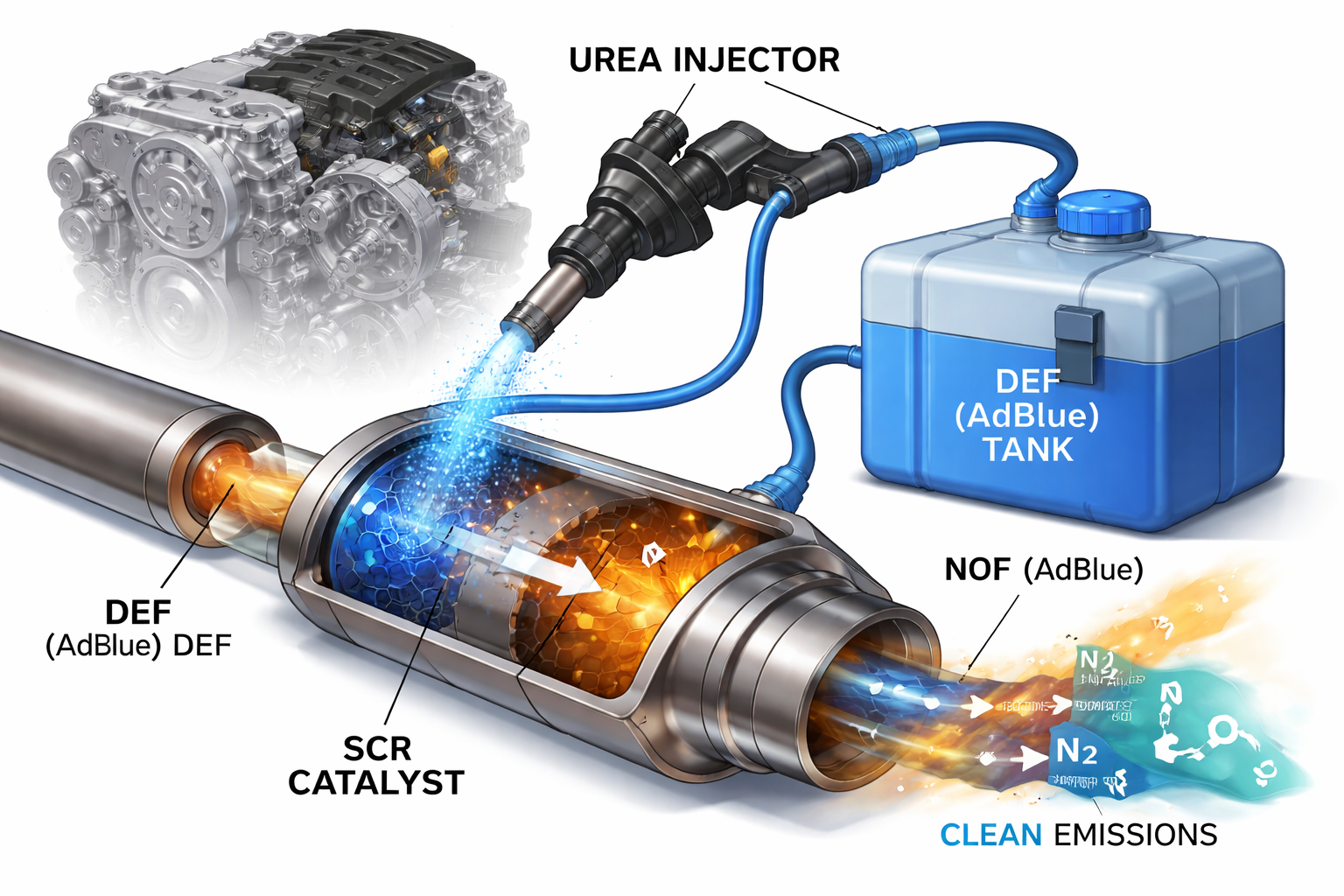
The Urea Injector, also known as the AdBlue Injector or DEF Injector, is an essential part of diesel engines that use Selective Catalytic Reduction (SCR) technology. This advanced emission control system helps reduce harmful gases released from diesel vehicles and supports compliance with strict environmental standards worldwide.
Selective Catalytic Reduction works by injecting Diesel Exhaust Fluid (DEF), commonly called AdBlue, directly into the exhaust system. The Urea Injector sprays the fluid in a controlled and fine mist. When the DEF comes into contact with hot exhaust gases, it breaks down into ammonia. This ammonia then reacts with nitrogen oxides (NOx) inside the SCR catalyst and converts them into harmless nitrogen and water vapor. As a result, the overall emission level is greatly reduced.
AdBlue and DEF Injectors are designed for precision, reliability, and long-term performance. Accurate dosing is critical for the SCR system to function efficiently. If the Urea Injector becomes blocked, damaged, or fails, the engine may experience reduced performance, higher fuel consumption, warning lights, or even limited power mode. Using high-quality DEF and performing regular system maintenance helps prevent these issues.
Urea Injectors are widely used in heavy-duty trucks, buses, construction equipment, agricultural machinery, and modern diesel passenger vehicles. They play a vital role in meeting emission regulations such as Euro 6 and EPA standards. As emission laws continue to become more strict, SCR systems and DEF Injectors are becoming increasingly important.
In conclusion, the Urea Injector, AdBlue Injector, and DEF Injector all refer to the same critical component within the Selective Catalytic Reduction system. Together, they ensure cleaner exhaust emissions, improved engine efficiency, and a more environmentally friendly diesel technology.