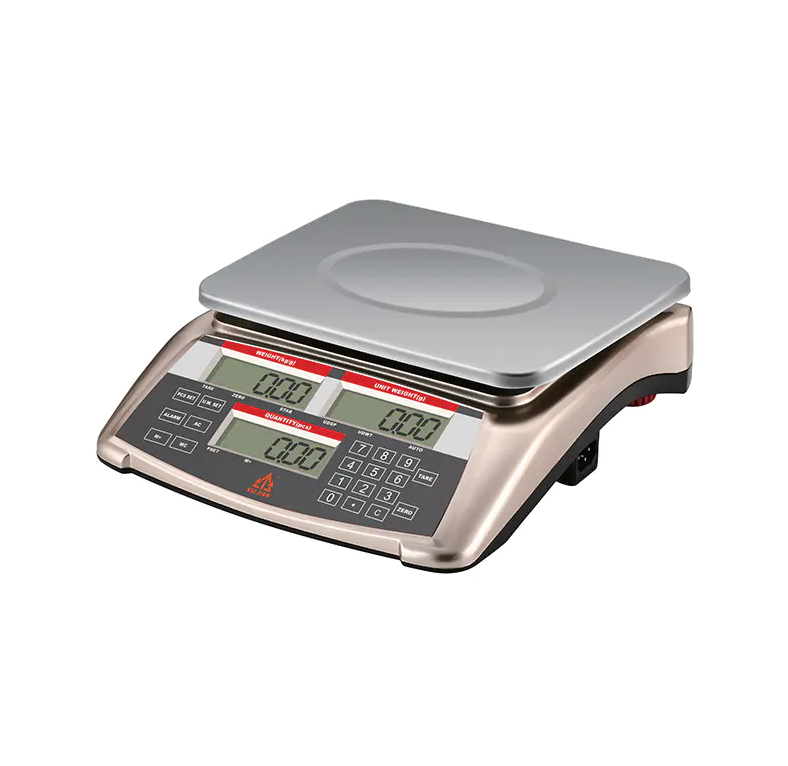
How to Improve Weighing Efficiency with Commercial Electronic Scales
In commercial environments, the speed and accuracy of weighing are crucial for optimizing operations and ensuring smooth customer transactions. Whether in retail, logistics, or manufacturing, the ability to weigh items efficiently can significantly improve workflow and reduce time wasted on inaccurate or slow processes. This article explores various strategies to improve the weighing efficiency of commercial electronic scales.
Choose the Right Scale for Your Needs
The first step in improving weighing efficiency is selecting the right commercial electronic scale for your business. Different types of scales are designed for different purposes—some are built for heavy-duty weighing, while others are more suited for smaller, precise measurements. Choosing a scale that fits your specific requirements will ensure you get the most efficient performance.
For instance, a scale with a higher weight capacity and faster response time is essential for a high-volume warehouse or distribution center. On the other hand, a precision scale with fine resolution is ideal for retail environments where items are sold in small quantities. Choosing a scale that aligns with your business’s demands will ensure it operates efficiently and reduces unnecessary delays.
Regular Calibration and Maintenance
A key factor in maintaining the efficiency of a commercial electronic scale is regular calibration and maintenance. Scales that are not calibrated properly can lead to inconsistent readings, which waste time and require reweighing. Regular calibration ensures that the scale consistently provides accurate measurements, thus minimizing delays and preventing errors in weight-based calculations.
In addition to calibration, performing routine maintenance is essential to keep the scale functioning optimally. Cleaning the scale regularly to remove dirt or dust from its surface and load cell ensures that the scale operates smoothly and quickly. Over time, wear and tear can affect the scale’s performance, so regular checks for mechanical issues can prevent downtime and improve overall efficiency.
Minimize Time Spent on Weighing Items
Commercial electronic scales can be optimized for speed, but this often requires improving the process in which items are weighed. One way to achieve this is by streamlining the weighing process. Ensure that employees are trained on how to use the scale efficiently, including how to quickly set tare weights, zero the scale, and switch between different units of measurement.
For businesses dealing with high volumes of products, incorporating a continuous weighing process can also help improve efficiency. For example, an automated conveyor system that integrates with the scale can allow items to be weighed as they move through the system without requiring manual handling. This method speeds up the weighing process, minimizes human error, and enhances overall throughput.
Use Scales with Faster Response Time
The response time of a commercial electronic scale plays a significant role in the speed of the weighing process. Scales with faster load cell responses can provide accurate readings more quickly, which is essential in high-traffic environments. Choosing scales with high-quality sensors and load cells that react swiftly to changes in weight can significantly reduce the time spent on each measurement.
Additionally, some modern commercial scales come equipped with features such as auto-taring, which allows the scale to automatically reset to zero after each measurement. This feature reduces the time needed for manual adjustments, further increasing the overall speed of weighing.
Integrate with Other Business Systems
Another way to improve efficiency is by integrating the commercial electronic scale with other business systems, such as inventory management or point-of-sale systems. This integration allows the scale to automatically record and transmit weight data, eliminating the need for manual data entry and reducing the chance of errors. Integration also allows for quicker updates to pricing and inventory management, creating a more streamlined process for both employees and customers.
Improving the weighing efficiency of a commercial electronic scale is key to optimizing business operations. Selecting the right scale, regularly calibrating and maintaining it, streamlining the weighing process, and using faster response time scales are all effective ways to enhance efficiency. By integrating scales with other business systems and ensuring employees are properly trained, businesses can improve both speed and accuracy, ultimately leading to a more efficient and profitable operation.