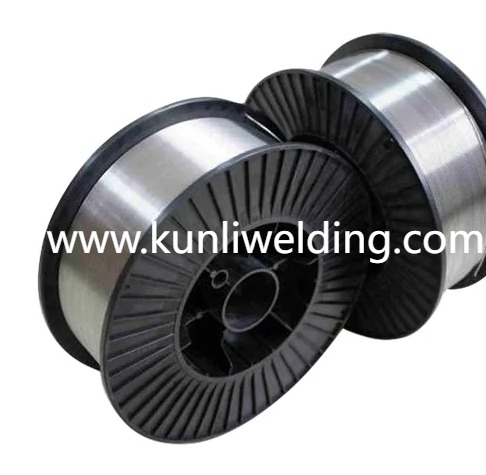
When working with aluminum alloys, welders often encounter a persistent challenge that can compromise the integrity of their joints. Hot cracking, also known as solidification cracking, represents one of the frustrating obstacles in aluminum fabrication. Fortunately, Kunli Aluminum Welding Wire ER4943 has emerged as a reliable solution to this common problem, offering welders a practical approach to creating sound, crack-free welds in applications where traditional filler metals fall short.
Hot cracking occurs during the final stages of weld solidification, when thermal stresses and metallurgical factors combine to create tears in the weld metal. This phenomenon becomes particularly problematic when joining heat-treatable aluminum alloys or dissimilar aluminum combinations. The cracks typically form along grain boundaries as the weld pool transitions from liquid to solid, creating pathways of weakness that can lead to structural failure.
The science behind hot cracking involves understanding the solidification range of aluminum alloys. Materials with wide solidification ranges remain in a semi-solid state for extended periods, making them vulnerable to thermal stresses. During this critical phase, the material lacks sufficient strength to resist the contractions and movements occurring as the weld cools. Traditional filler metals often share similar solidification characteristics with the base materials, perpetuating the cracking cycle rather than preventing it.
Aluminum Welding Wire ER4943 addresses this challenge through its unique chemical composition. The wire contains a carefully balanced blend of silicon, which fundamentally alters the solidification behavior of the weld pool. Silicon additions modify the freezing characteristics, creating a narrower solidification range that reduces the time the weld spends in the vulnerable semi-solid state. This shortened transition period significantly decreases the opportunity for hot cracks to initiate and propagate.
The silicon content also influences the weld pool fluidity, promoting better feeding characteristics during solidification. As the molten metal begins to cool, proper feeding becomes crucial for compensating the volumetric shrinkage that naturally occurs. Enhanced fluidity allows the liquid metal to flow into developing shrinkage cavities, effectively healing potential crack initiation sites before they become problematic. This self-healing mechanism provides an additional layer of protection against hot cracking.
Grain structure plays another critical role in crack resistance. The presence of silicon encourages the formation of finer, more equiaxed grains within the weld metal. These smaller, more uniformly distributed grains create numerous grain boundaries that distribute thermal stresses more evenly throughout the weld. Instead of concentrating stress along a few vulnerable boundaries, the load spreads across countless interfaces, reducing the likelihood of crack formation at any single location.
Welders working with heat-treatable alloys particularly benefit from this filler metal. When joining materials that undergo precipitation hardening, the weld zone experiences complex metallurgical transformations. The silicon-enhanced composition accommodates these changes while maintaining crack resistance, creating joints that withstand both the immediate stresses of solidification and the long-term demands of service conditions.
The practical application of Aluminum Welding Wire ER4943 extends across numerous welding scenarios. Fabricators joining dissimilar aluminum grades find that the wire's composition bridges the gap between different base material chemistries. When welding cast aluminum to wrought aluminum, or combining various heat-treatable alloys, the filler metal creates a compatible interface that resists cracking despite the metallurgical differences on either side of the joint.
Automotive and transportation industries have embraced this technology for assembling lightweight structures where weld integrity cannot be compromised. The ability to create crack-free joints in thin-section materials enables designers to specify aluminum in applications previously limited to heavier metals. Marine fabrication similarly benefits, as the corrosive environment demands welds that maintain their integrity without the weaknesses introduced by hot cracks.
Understanding proper welding technique remains important when using this filler metal. While the wire's composition provides inherent crack resistance, welders must still control heat input, travel speed, and joint preparation. Excessive heat can expand the solidification range despite the silicon content, while inadequate penetration may create stress concentrations that overcome the filler metal's protective properties.
The wire diameter selection influences both the welding process and the final weld quality. Thinner wires suit precision work and thinner materials, offering better control over heat input. Larger diameters increase deposition rates for production welding while maintaining the crack-resistant properties that make the composition valuable. Matching the wire size to the application ensures optimal results. For those seeking to implement crack-resistant aluminum welding solutions in their fabrication processes, additional technical resources and product specifications can be found at https://kunliwelding.psce.pw/8hpj2n , where comprehensive information supports informed decision-making for various welding applications.