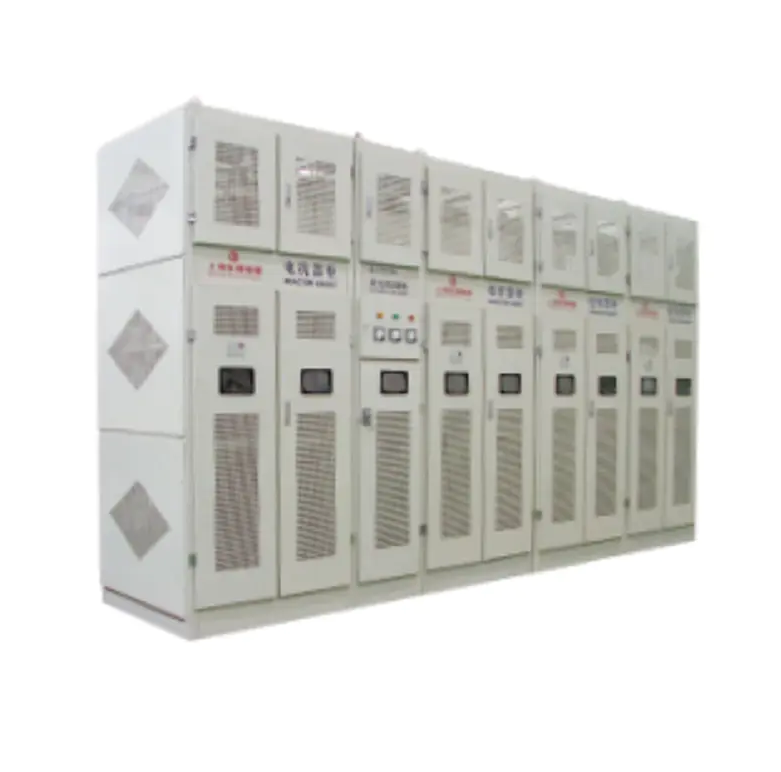
The physical mounting of a high voltage capacitor bank is a significant milestone, but it is not the final step before the unit enters service. Energizing a newly installed bank without thorough verification is a high-risk endeavor that can lead to immediate failure, damage to adjacent equipment, or pose serious safety hazards. A rigorous series of pre-commissioning tests is therefore mandatory. These tests serve a dual purpose: to confirm the integrity of the installation workmanship and to ensure the capacitor units themselves have not been damaged during transport or handling. This protocol transforms installation from a mechanical task into a quality-assured, systems-ready procedure.
Initial Visual and Mechanical Inspection
Before any electrical testing begins, a detailed visual and mechanical inspection forms the critical first layer of verification. Engineers and technicians will:
Verify Tightness: Check that all electrical connections—busbar bolts, cable lugs, grounding points—are tightened to the manufacturer's specified torque values. Loose connections are a primary cause of hot spots and eventual failure.
Inspect for Damage: Look for any signs of physical damage to capacitor cans, bushings, insulators, enclosures, or cooling ducts that may have occurred during installation.
Confirm Clearances: Ensure that all mandated electrical clearances, both phase-to-phase and phase-to-ground, are strictly maintained as per the design drawings and national electrical safety codes (e.g., IEEE, IEC standards).
Review Safety Systems: Check that all mechanical safety devices, such as pressure relief diaphragms on individual units, are unobstructed. Verify that fencing, warning signs, and grounding switches are correctly installed and functional.
Electrical Integrity and Insulation Testing
With mechanical integrity confirmed, the focus shifts to the electrical isolation and continuity of the system.
Insulation Resistance Test (Megger Test): This is a fundamental test performed on the entire bank and on individual phases. Using a megohmmeter, technicians apply a high DC voltage (e.g., 5000 V DC) between the energized parts and the grounded enclosure. The measured insulation resistance must exceed minimum thresholds specified by standards (often in the range of hundreds or thousands of MΩ). A low reading indicates compromised insulation, possibly due to moisture ingress, contamination, or internal damage.
Capacitance and Tan Delta Measurement: This is the most important functional test for the capacitors themselves. A specialized capacitance bridge or power factor test set is used to measure the actual capacitance of each series group or phase and compare it to the factory nameplate value. A significant deviation (typically beyond ±5%) suggests a problem with individual capacitor elements. Simultaneously, the Dissipation Factor (tan δ) is measured. This indicates the dielectric losses within the unit. A high or unstable tan δ reading is a telltale sign of a degraded dielectric, which will overheat and fail prematurely. This test effectively screens for units damaged in transit.
Control, Protection, and Final Verification
The final suite of tests ensures the bank will operate intelligently and safely within the broader power system.
Protection Relay Calibration and Testing: All associated protective relays—such as overcurrent, overload, unbalance (for detecting failed capacitor elements), and overvoltage—are injected with secondary currents and voltages to verify their trip settings and time delays. This confirms that the protection scheme will operate as designed to isolate the bank during a fault.
Control Circuit Verification: For automatically switched banks, the control logic (often managed by a power factor controller or SCADA system) is tested. This involves simulating line conditions to ensure the correct number of stages switch in and out at the predefined setpoints.
High-Potential (Hi-Pot) Test: While sometimes controversial for capacitors due to stress on the dielectric, a DC Hi-Pot test at a reduced voltage level may be specified to prove the integrity of the overall assembly without subjecting it to the full AC withstand voltage, which is reserved for type tests at the factory.
Only after this comprehensive test sequence is successfully completed, and all data is documented in a formal commissioning report, can the high voltage capacitor installation be considered ready for its initial, carefully monitored energization. This diligent process is the crucial bridge between a static installation and a dynamic, reliable, and safe asset on the electrical grid.