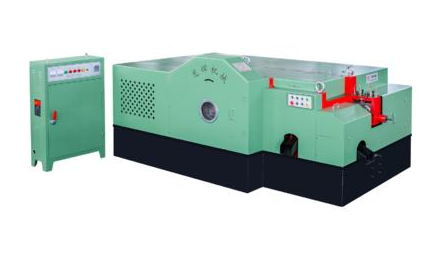
Operating at the Frontier of Metal Forming
The pursuit of higher productivity in fastener and precision component manufacturing has driven the evolution of the high-speed cold heading machine, pushing operational speeds often exceeding 400 strokes per minute. However, this relentless quest for velocity creates an intensely hostile environment for the tooling at its heart. The primary challenges shift from basic wear resistance to managing a complex symphony of extreme dynamic loads, frictional heat generation, and microscopic fatigue—all occurring within milliseconds. Successfully tooling a high-speed cold heading machine is a specialised discipline in metallurgy, mechanical engineering, and thermal dynamics.
Combating Dynamic Impact and Cyclic Fatigue
At conventional speeds, tool failure is often gradual, dominated by abrasive wear. In a high-speed cold heading machine, the primary antagonist becomes high-cycle impact fatigue. Each strike of the punch against the workpiece is a high-energy event. At 500 SPM, a single punch endures over 25,000 impacts per hour. This subjects the tool steel to repetitive, intense compressive and tensile shock waves. The challenge for tooling design is to withstand this without developing micro-cracks that rapidly propagate to catastrophic failure.
This demands a radical approach to material selection. While premium powdered metallurgy tool steels like M2, M4, or ASP series are standard, the requirements for a high-speed cold heading machine often necessitate advanced grades like Vanadis or Elmax, which offer superior combinations of toughness (to resist chipping and cracking) and high hardness (to resist deformation and wear). Furthermore, the quest for speed makes ceramic or carbide inserts in punch tips and dies increasingly viable despite their brittleness, as their exceptional hardness and heat resistance can outperform steel in specific, ultra-high-wear applications, provided the machine's alignment and damping are flawless.
Thermal Management: The Invisible Enemy
Friction is the inevitable byproduct of metal forming, but its effects are exponentially magnified by speed. The rapid, repeated deformation of the workpiece in a high-speed cold heading machine generates intense frictional heat at the tool-workpiece interface. This can cause local temperatures to soar, potentially exceeding the tempering temperature of the tool steel. When this happens, the tool's carefully engineered hardness is lost in a process called thermal softening, leading to rapid wear, galling, and deformation.
Tooling design must therefore incorporate active thermal management strategies. This includes:
Internal Cooling Channels: Advanced tool designs feature micro-channels through which specialised cooling lubricants are forced at high pressure. This direct cooling extracts heat from the core of the tool, maintaining its metallurgical integrity.
Advanced Coatings: Physical Vapour Deposition (PVD) coatings like TiAlN, AlCrN, or DLC (Diamond-Like Carbon) are not mere surface treatments here; they are essential thermal barriers. These ultra-hard, smooth coatings reduce the coefficient of friction at the contact point, directly lowering heat generation. They also provide a layer of insulation, protecting the substrate tool steel from the peak temperatures.
Optimised Geometry: Tool geometry is refined not just for part formation but for heat flow. Sharp corners, which act as heat concentrators and stress risers, are eliminated in favour of generous radii. The design promotes a more uniform stress and temperature distribution.
Precision, Alignment, and the Demand for Perfection
The margin for error vanishes at high speeds. Any misalignment, however slight, between the punch and die in a high-speed cold heading machine creates asymmetric loading. This side-thrust drastically accelerates wear and is a guaranteed precursor to tool failure. Thus, tooling design extends to the holding system. Tool holders must be engineered for absolute rigidity and perfect concentricity, often utilising hydraulic or shrink-fit systems that provide superior clamping force and runout accuracy compared to traditional mechanical collars.
Furthermore, the tooling must be balanced. An unbalanced rotating or reciprocating mass in a high-speed cold heading machine induces harmful vibrations that compromise part quality, accelerate machine wear, and can resonate at certain frequencies, leading to premature tool fracture.