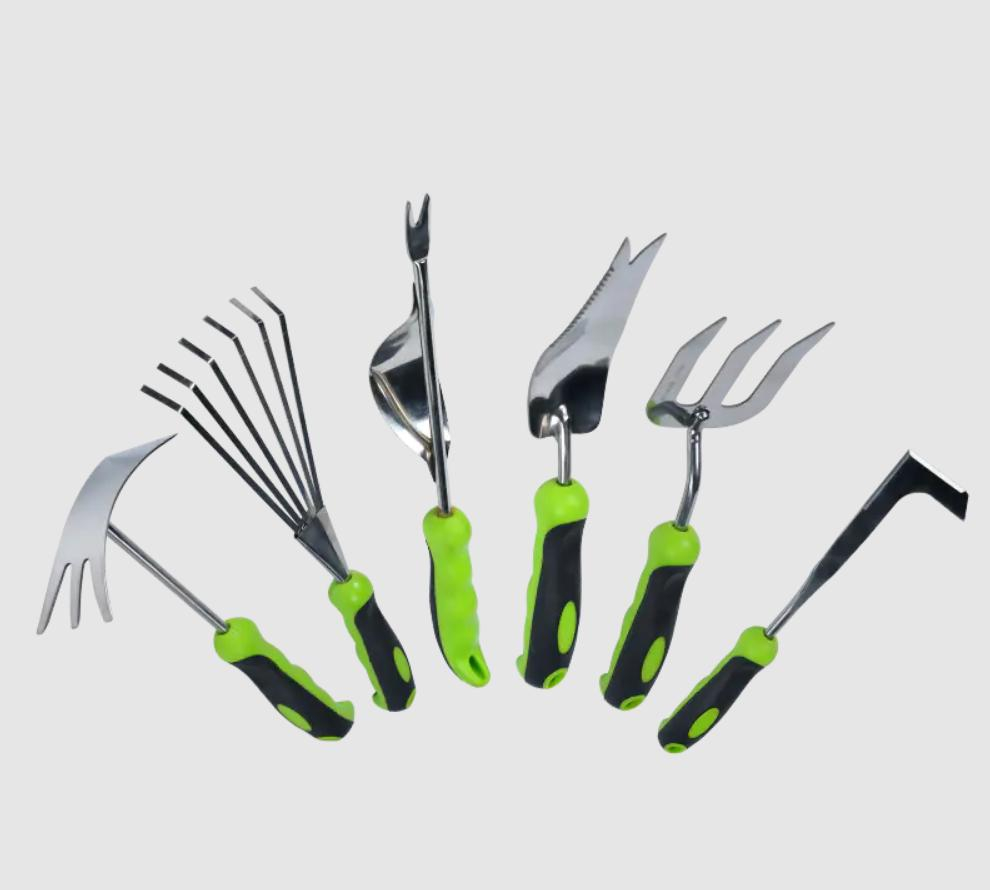
In a modern Garden Devices Factory, the engineering process extends far beyond ensuring a motor has sufficient power or a blade cuts efficiently. For handheld power tools like string trimmers, hedge clippers, blowers, and small chainsaws, the user's physical interaction with the device is paramount. Poor ergonomics and awkward weight distribution lead to rapid user fatigue, reduced control, and even long-term musculoskeletal injury. Therefore, designing intuitive, comfortable handles and a balanced tool body is a critical discipline that blends biomechanics, materials science, and iterative user testing.
The Biomechanics of Grip and Posture
The foundation of ergonomic design is understanding the human body's limits and natural positions during dynamic garden work. Engineers at a forward-thinking Garden Devices Factory study the kinematics of the shoulder, elbow, wrist, and hand. The goal is to minimize static muscle loading and awkward joint angles.
For a string trimmer, this means designing a handle system that allows the user's forearm, wrist, and hand to remain in a neutral, straight alignment while the tool is in its operating position. A poorly designed handle that forces the wrist into a bent or cocked position creates strain within minutes. The primary handle (often a D-loop or bicycle-style) is positioned so the user's grip is in line with the tool's center of gravity as much as possible. An auxiliary handle is strategically placed along the shaft to allow the second hand to provide control and leverage without elevating the shoulders excessively. The spacing, diameter, and angle of these handles are not arbitrary; they are derived from anthropometric data representing a range of user hand sizes and arm lengths.
Material and Form: The Tactile Interface
The handle itself is a critical touchpoint. A Garden Devices Factory selects materials based on dampening, grip, and durability. Hard, slippery plastic is avoided. Instead, overmolded soft thermoplastic elastomers (TPE) or rubber are standard. These materials provide a compliant, non-slip surface that absorbs vibration and remains secure in wet or sweaty hands.
The form is equally important. Handles are contoured with finger grooves and palm swells that naturally guide the hand into the correct position. This form-locking design reduces the amount of grip force required from the user's fingers to maintain control, combating hand fatigue. For tools that generate significant vibration, like gas-powered trimmers, internal anti-vibration systems—using springs, rubber isolators, or counterweights—are integrated into the handle mounting points to decouple the user's hands from the engine's harmonics.
The Critical Role of Weight Distribution and Balance
A tool can have perfect handles but still be fatiguing if its weight is poorly distributed. The concept of balance is central. A front-heavy hedge clipper will constantly strain the user's wrist as they fight to lift the cutting head. A rear-heavy blower forces the user to overcompensate with shoulder muscles to aim the airflow.
Achieving balance is a core mechanical challenge within the Garden Devices Factory. It involves the strategic placement of the heaviest components—the motor and the battery (for cordless tools). For a blower, the motor is often placed close to the center of the device, with the battery pack integrated into the handle or main body to create a balanced pivot point near the user's grip. For a top-handle chainsaw, the engine and cutting assembly are compactly designed to concentrate mass between the hands, providing a stable, predictable feel that enhances control and reduces the leverage force needed to maneuver the tip.
This balancing act is accomplished through digital prototyping and physical mock-ups. Using CAD software, engineers can simulate the center of gravity and moment of inertia. However, final validation always involves building weighted prototypes and having test users of varying sizes and strengths perform standardized tasks. Their feedback on "feel," "tip heaviness," and "arm fatigue" after extended use is invaluable data that drives refinements in component layout, sometimes leading to design innovations like split battery packs or mid-mounted motors.
Iterative Testing and Validation
Ergonomic design is inherently iterative. A Garden Devices Factory will employ usability labs where motion capture technology and electromyography (EMG) sensors can objectively measure muscle strain and joint angles during tool operation. This quantitative data, combined with subjective feedback from focus groups, allows engineers to make evidence-based decisions.