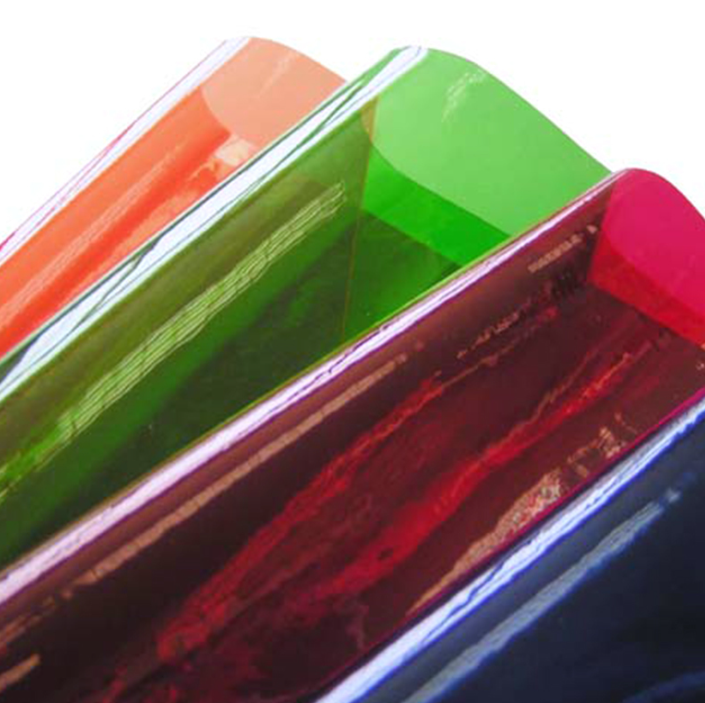
Within a PVC raincoat film factory, the transformation of raw polyvinyl chloride (PVC) resin into a uniform, flexible, and waterproof film is achieved through one of two dominant industrial processes: calendering or blow film extrusion. The choice between these methods is not arbitrary; it is a strategic decision based on the desired film properties, production volume, thickness range, and economic considerations. Each process imparts distinct characteristics to the final raincoat film, influencing its texture, mechanical performance, and suitability for different grades of finished rainwear.
Calendering: The High-Pressure, High-Precision Method
Calendering is the traditional and most common process for producing medium to thick PVC raincoat film, typically in the range of 0.10 mm to 0.50 mm and above. It is a continuous sheet-forming process known for its excellent thickness control, high output speeds, and ability to produce film with a superior surface finish.
The process begins in a high-intensity mixer, where PVC resin is blended with essential additives: plasticizers (like DINP or DOTP for flexibility), stabilizers (heat and UV), lubricants, and colorants. This hot, fluxed compound is then fed into the heart of the system: the calender. A calender is a series of three, four, or five massive, precisely heated and counter-rotating steel rollers.
The compound passes through the progressively narrowing nips (gaps) between these rollers. With each pass, it is squeezed, kneaded, and smoothed into a continuous sheet of exacting thickness. The final roller, often with a mirror finish, gives the film its surface character—glossy if the roller is polished, matt if it is textured. The hot film is then cooled on a series of chilled rollers before being trimmed at the edges and wound into large master rolls.
The key advantages of calendering in a raincoat film factory are:
Exceptional Thickness Uniformity: Critical for consistent waterproofing and seam strength in raincoat production.
High Production Speed: Suitable for large-volume orders.
Superior Optical Clarity and Surface Finish: Ideal for clear or high-gloss films.
Ability to Incorporate Fabrics: Can laminate the PVC film directly to a textile scrim during the process for reinforced, supported films.
Blow Film Extrusion: The Method for Thinner, Seamless Tubes
Blow film extrusion is generally used for producing thinner, unsupported PVC raincoat film, often in the range of 0.05 mm to 0.15 mm. It is the preferred method for creating seamless tubular film, which is ideal for manufacturing simple, low-cost raincoats with fewer side seams.
In this process, the compounded PVC is fed into an extruder—a heated barrel with a rotating screw. The screw melts and homogenizes the material, forcing it through a circular die. As the molten tube of PVC emerges, air is blown into its center, inflating it like a balloon into a thin, continuous bubble. This simultaneous upward pull and radial expansion (the "blow-up ratio") stretch and thin the material, orienting its polymer molecules. The bubble is then cooled by surrounding air rings, collapsed by guides, and wound onto rolls.