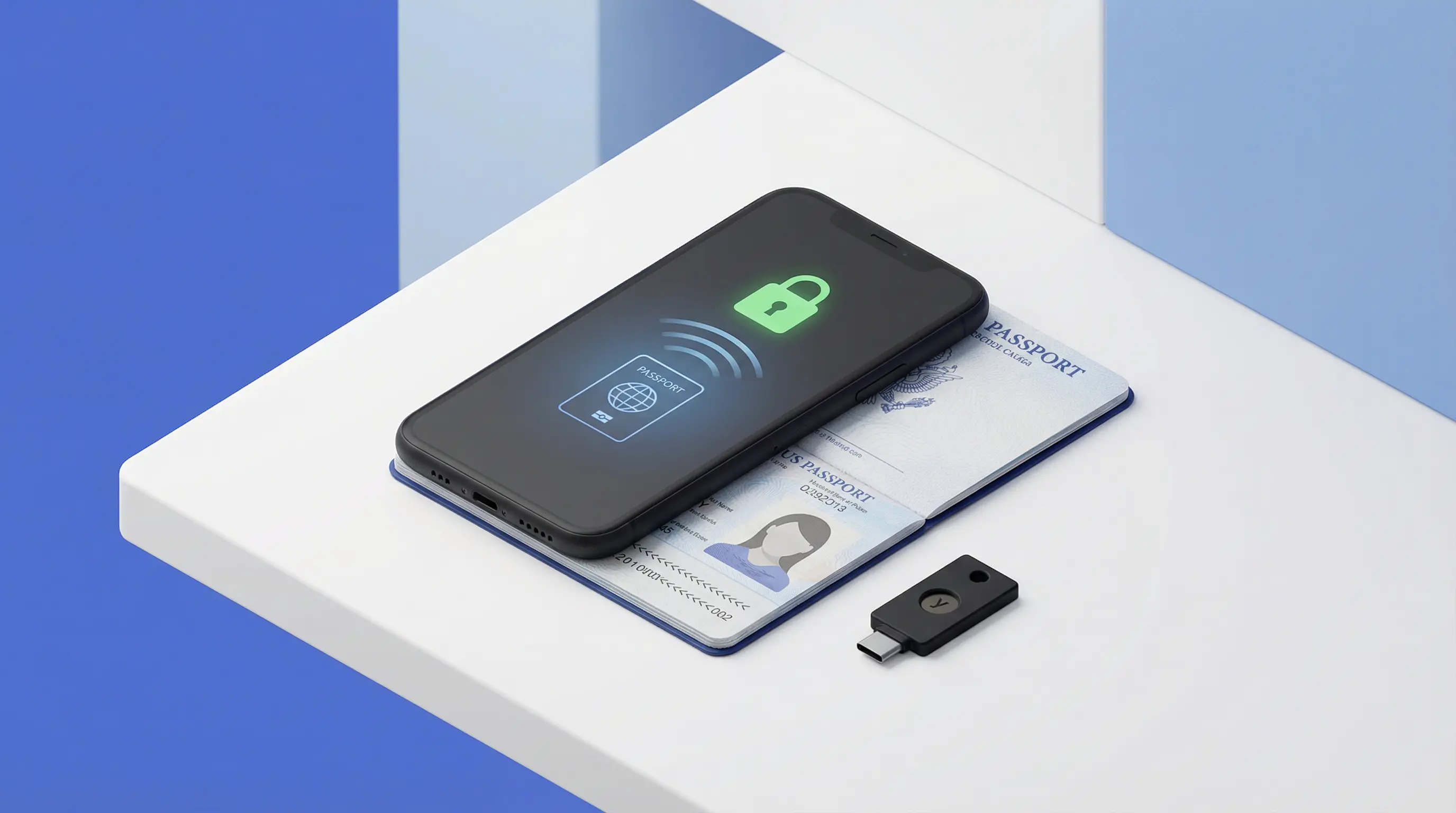
The National Institute of Standards and Technology 800-63A IAL3 standards strengthen identity assurance to combat fraud. They prohibit email OTP authentication, downgrade SMS-based methods, mandate phishing-resistant MFA and passkeys, as well as stronger federated identification practices.
Traditional in-person IAL3 verification processes can be costly and challenging for businesses with remote employees, while Trust Swiftly's hardware-based solution saves both money and time while satisfying auditors.
IAL3 identity proofing
The IAL3 identity assurance level 3 Proofing Standard is the highest level of verification to protect against modern threats such as phishing attacks and man-in-the-middle attacks. This level of authentication requires document validation, biometric comparison and direct oversight to minimise impersonation and fraud risks and comply with FedRAMP compliance requirements while simultaneously protecting sensitive data and accounts from advanced infiltration attempts.
Traditional in-person identity proofing sessions were the only means of meeting IAL3 standards, incurring substantial operational costs and enrollee inconveniences. But recent technological innovations have brought high-assurance IAL3 verification closer to users, making it more accessible and practical.
Trust Swiftly's hardware-based remote IAL3 solution enables your employees to self-service ID verification on their own devices without incurring additional travel and attendance expenses. This saves both money and time while meeting all security team and 3PAO auditor requirements for ID verification compliance with IAL3. Furthermore, comprehensive auditable reports demonstrate this compliance.
NIST 800-63A IAL3
NIST has designated Identity Assurance Level 3 (IAL3) as its highest identity assurance level, which requires verifying an applicant's claimed identity against real-world evidence, including binding biometric capture to proofing events and safeguarding against more complex attacks, such as evidence falsification, theft and repudiation.
NIST's digital identity guidelines, updated for modern security requirements in SP 800-63-4, define three assurance levels - IAL, AAL and FAL. While IAL facilitates linking an identity to real-world evidence, AAL and FAL enable federated authentication. Furthermore, this new guidance emphasizes extensive identity proofing as well as strong phishing-resistant authentication using cryptographic authenticators like FIDO Passkeys.
To satisfy IAL3 requirements, an individual must present proofing evidence which belongs to them and can be presented within 24 hours of verification processes being initiated. IAL3 verification processes differ from IAL2, in that verification processes must take place directly with each person being verified; however a remote solution called Trust Swiftly allows businesses to comply with NIST IAL3 requirements by verifying remote users through either an app or browser page.
IAL3 compliant solution
IAL3 is the highest level of identity proofing available and typically used when individuals need access to highly regulated industries or high-stakes services that demand maximum assurance. This process traditionally required an agent verifying an individual in person - often through biometrics - however this method proved costly, ineffective and difficult to scale across remote workforces.
Now, thanks to technology advances, it is now possible to conduct secure IAL3 verification remotely and safely. Trust Swiftly's hardware-based solution meets NIST 800-63A IAL3 requirements while saving businesses money and helping them pass audits with ease. Furthermore, eliminating sensitive data onsite reduces leaks and cyberattacks; plus its liveness detection technology as well as face binding protect against SIM swapping and MFA bypass attempts while its watchlist screening prevents suspicious individuals or organizations from gaining entry.
Trust Swiftly
Trust Swiftly's authentication IAL3 compliant solution helps organizations attain stronger, phishing-resistant authentication. Their supervised remote identity proofing solution is an ideal scalable option for organizations that must meet FedRAMP regulations while combatting sophisticated fraud attempts. Trust Swiftly utilizes document verification, facial recognition with liveness detection and fingerprint scanning as robust verification methods.
The IAL3 process is similar to having someone examine your identity documents in person and compare you against a reference image, though this option can be more costly and vulnerable to socially engineered fakes than its physical equivalent. Furthermore, this requires having a dedicated CSP representative present during an on-site IAL3 session with secure devices capable of collecting biometrics for biometric verification.
TrustSwiftly's NIST IAL3 verification services offer an attractive alternative to in-person proofing, which can be costly and logistically challenging for remote workers. A vetted referee verifies an individual's identity before binding their token; furthermore, strict chain of custody procedures and anti-spoofing protections ensure a smooth process.