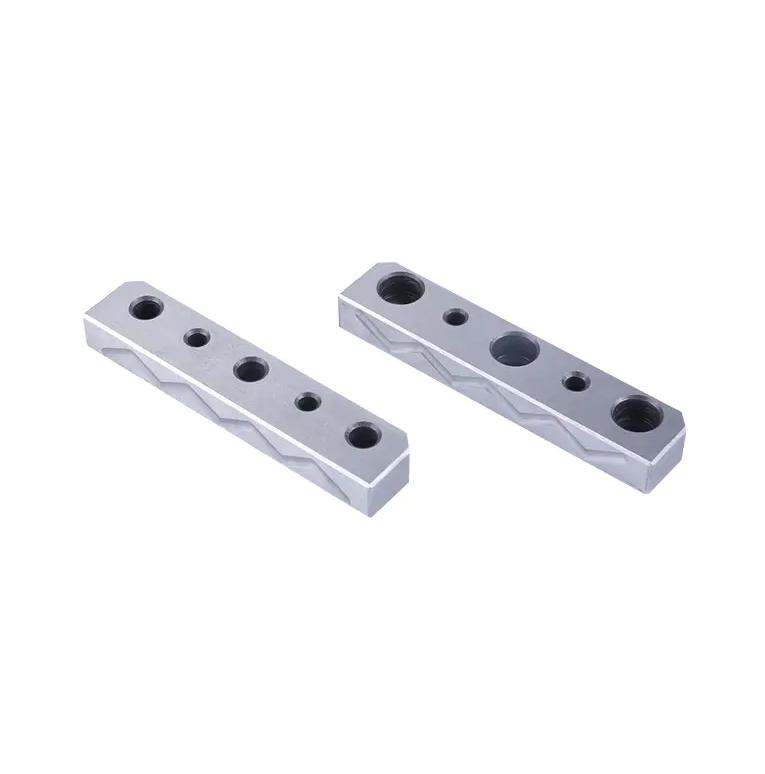
The Unsung Enforcer of Mold Integrity
A mold pressing strip is a fundamental yet critical component in high-pressure molding tooling, serving as the primary load-bearing interface between the mold halves and the massive platens of the injection molding or die casting machine. This hardened steel bar, mounted to the perimeter of the mold's cavity and core plates, is designed to absorb and distribute the immense clamping force—often hundreds or thousands of tons—preventing the mold faces from parting under internal pressure. Its precise role is to seal the mold's parting line, ensuring that molten plastic or metal is contained entirely within the intended cavities, thereby preventing flash, ensuring part dimensional accuracy, and protecting the delicate core and cavity surfaces from damage.
Function and Mechanics: The First Line of Defense
When a mold closes in a press, the clamping cylinder exerts tremendous force to keep it shut against the internal pressure generated by injecting material. The core and cavity surfaces, often containing intricate details, are not designed to bear this full load across their entire area. The pressing strip, with its carefully calculated land area, protrudes slightly (typically 0.5mm to 1.0mm) beyond the parting surface of the mold. This means it is the first point of contact and the sole component bearing the full clamp tonnage. By concentrating the force on this robust, continuous strip, it creates a seal around the perimeter of the part cavity. This containment is vital; any gap allows material to seep out, creating thin, unwanted webs of flash that require secondary trimming and can damage the mold.
Design, Materials, and Engineering Precision
The design of this component is a precise engineering calculation. Its land width (the contact surface) is sized based on the mold material's compressive yield strength and the machine's maximum clamp force to ensure it will not deform. It is almost exclusively manufactured from pre-hardened or through-hardened tool steels like P20, H13, or S7, chosen for their high compressive strength and resistance to indentation. The strip must be ground to exceptional flatness and parallel to the mold's parting plane. In complex molds, stepped or multi-level pressing strips are used to seal off different sections of the tool at different heights. For large molds, strips are often segmented and doweled together to form a continuous seal, allowing for easier machining and replacement of worn sections.
Consequences of Failure and Maintenance Imperatives
The failure of a pressing strip has immediate and costly consequences. Wear or indentation creates a gap, leading to persistent flash on parts. Severe damage can cause the mold to breathe (open minutely under pressure), resulting in dimensional variation and sink marks on parts. A cracked or shattered strip poses a catastrophic risk, potentially allowing molten material to inject between the mold plates, causing extensive and expensive damage. Therefore, preventive maintenance is key. Strips must be regularly inspected for wear, scratches, or nicks. During mold service, they are often re-ground to restore a perfect, flat sealing surface. Proper installation involves precise alignment using dowels and ensuring it sits perfectly flush and level in its pocket on the mold base.