Engineering Sealing Solutions Beyond the Circle
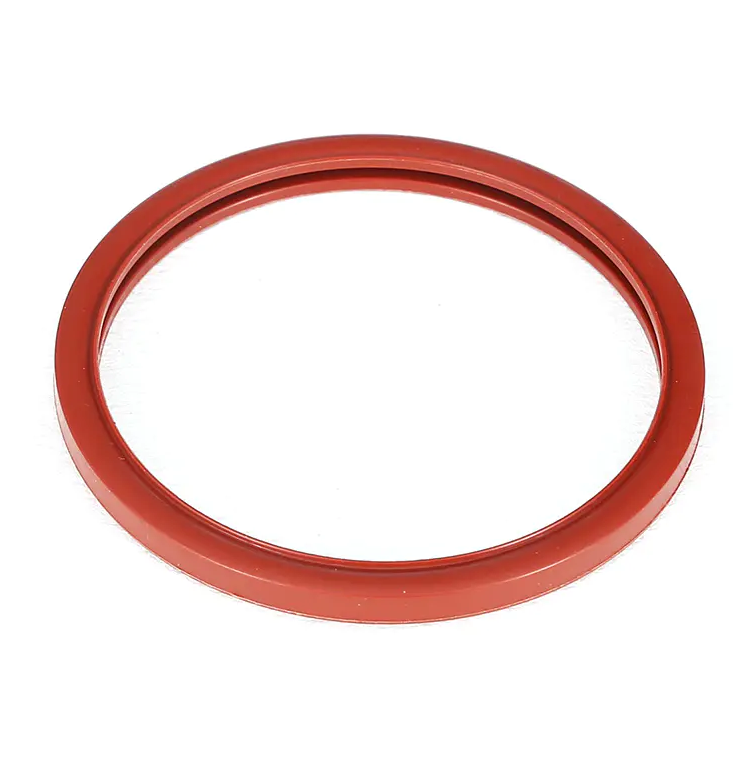
Special shape seal rings represent the advanced frontier of sealing technology, where the standard O-ring’s circular cross-section is re-engineered into bespoke geometries to solve specific, often extreme, functional challenges. These are not merely altered O-rings but precision-engineered components with profiles like X-rings, square rings, poly-V shapes, or entirely custom asymmetric contours. Their development is driven by the need to overcome limitations in standard seals regarding friction, extrusion resistance, bidirectional sealing, or performance in unconventional spaces. They serve as critical, custom-designed interfaces in applications where leakage is intolerable, operating environments are punishing, and the sealing function is integral to system safety and performance.
The Rationale for Custom Geometry: Performance Beyond Round
The circular cross-section of an O-ring, while versatile, has inherent trade-offs. A special shape seal ring is designed to optimize one or more performance parameters. An X-ring (quad-ring), for example, creates two sealing lips with a central lubrication reservoir. This design reduces friction and rolling in dynamic applications while providing a redundant sealing line. A square or rectangular ring offers a larger contact area and superior resistance to extrusion under high pressure but with increased friction. A D-ring or horn ring is engineered for face seal applications or to fit into asymmetrical grooves where a round ring would be unstable. Fully custom profiles might incorporate anti-extrusion fins, non-symmetrical lips to seal different media on each side, or complex shapes that lock into a component, serving both as a seal and a mechanical retainer.
Manufacturing Precision: From Mold to Finished Part
Producing these components requires high-precision tooling and process control. For elastomeric versions, the primary method is injection or compression molding using multi-cavity, hardened steel molds machined with EDM (Electrical Discharge Machining) to achieve the precise profile. The mold design must account for material shrinkage and ensure complete filling without voids. For high-performance plastics like PTFE (Teflon) or PEEK, skiving (lathe-cutting) from a tube or CNC machining from a solid block is common, allowing for intricate geometries and ultra-tight tolerances unachievable with molding. For large-diameter or one-off special shapes, a process of precision splicing and vulcanization of molded cord stock may be employed to create a continuous ring.
Design Integration and Failure Mode Analysis
Implementing a non-standard seal is a systems engineering task. The gland design—the groove that houses the seal—must be meticulously calculated to provide the correct compression (squeeze) for the specific profile, ensuring sealing force without causing excessive stress or plastic deformation. Finite Element Analysis (FEA) software is often used to simulate the seal’s behavior under load, predicting contact pressure distribution, stress points, and potential extrusion gaps. Engineers analyze specific failure modes: for a dynamic seal, they might optimize the lip angle to promote a lubricating film; for a high-pressure static seal, they focus on supporting the heel of the seal to prevent nibbling. The goal is to create a geometry that directs system pressure to enhance the seal rather than degrade it.