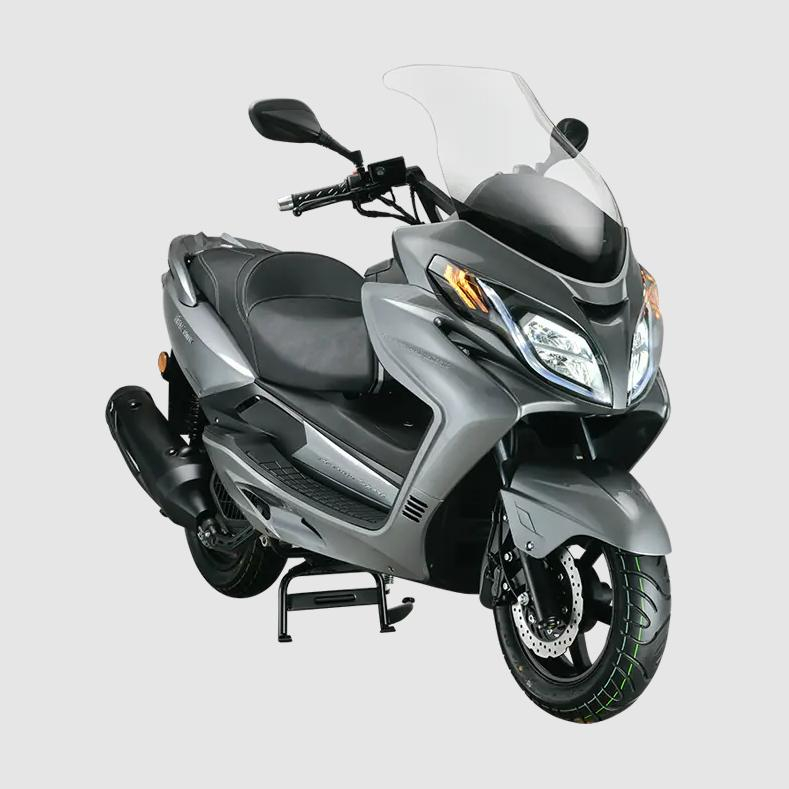
The Pinnacle of Clean Internal Combustion for Urban Mobility
The 125cc Euro V scooter represents the current zenith of regulatory-driven engineering for mass-market, two-wheeled internal combustion engines. Euro V is the latest and strictest stage in the European Union's progressive emissions regulations for L-category vehicles (light mopeds and motorcycles), mandating drastic reductions in harmful pollutants—carbon monoxide (CO), hydrocarbons (HC), nitrogen oxides (NOx), and particulate matter (PM). For the popular 125cc class, a cornerstone of urban commuting from Lisbon to Warsaw, achieving this standard is not a minor tweak but a fundamental re-engineering of the powertrain. This scooter is a testament to how far conventional technology can be pushed to harmonize practical daily transport with pressing environmental imperatives.
The Technological Leap: Beyond Fuel Injection
While Euro IV (2016) necessitated the widespread adoption of Electronic Fuel Injection (EFI) over carburetors, Euro V (2020 for new types, 2024 for all) demands a more integrated systems approach. The primary focus is on cold-start emissions and real-world driving conditions. To meet the limits, engineers deploy a combination of solutions. First, advanced closed-loop EFI with wider-range oxygen sensors and more precise injectors manages the air-fuel ratio with extreme accuracy from the moment of ignition. Second, and most critically, exhaust after-treatment becomes mandatory. Most 125cc Euro V scooters now incorporate a small, yet highly efficient, catalytic converter placed directly in the exhaust manifold for rapid "light-off," often using higher precious metal loading to be effective at the scooter's lower exhaust temperatures compared to cars.
The Engine Internals: Refined for Clean Combustion
Meeting the stringent HC+NOx and particulate limits requires cleaner burning from the very first combustion stroke. This leads to internal modifications such as piston crown redesign for better swirl and tumble, refined intake and exhaust port geometry, and potentially increased compression ratios for greater thermal efficiency. Low-friction technologies—like roller rocker arms, diamond-like carbon (DLC) coatings on piston pins, and improved piston ring profiles—are ubiquitous to reduce parasitic losses, indirectly helping emissions by improving fuel economy. The lubricating oil itself is formulated to be "low-SAPS" (low Sulphated Ash, Phosphorus, and Sulphur) to prevent poisoning the catalyst and to minimize particulate generation from oil burn-off.
The On-Board Diagnostics (OBD) Mandate: Enforcing Compliance
A defining feature of Euro V is the mandatory incorporation of a sophisticated On-Board Diagnostics (OBD) system. This is not a simple malfunction indicator light; it is a continuous monitoring system. Sensors track the performance of the emissions control systems, including catalyst efficiency and oxygen sensor activity. If any component degrades beyond a threshold, a permanent fault code is stored, and a warning light illuminates on the dashboard. This system is designed to ensure the scooter remains clean throughout its operational life, moving compliance from the factory gate to the real world. It also means servicing requires more specialized diagnostic tools, shifting maintenance toward authorized networks.