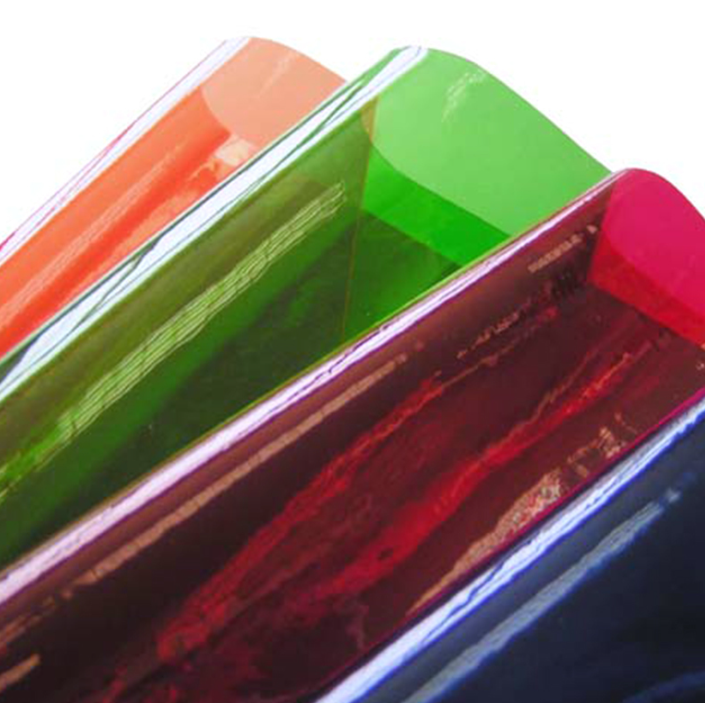
The Waterproof Barrier's Birthplace: Engineering Flexibility and Protection
A PVC raincoat film factory is a specialized industrial facility dedicated to the production of flexible, waterproof sheets made from plasticized polyvinyl chloride (PVC). This factory’s core output is not finished garments, but the essential roll goods—large rolls of laminated film—that are later cut and welded by downstream manufacturers into raincoats, ponchos, protective suits, and other waterproof apparel. The factory’s expertise lies in the precise formulation and processing of PVC compounds to achieve a critical balance of properties: absolute water impermeability, high flexibility (even in cold temperatures), sufficient tensile and tear strength, and a surface texture suitable for printing, welding, or lamination. It operates at the intersection of polymer chemistry, mechanical engineering, and textile-adjacent manufacturing.
Raw Material Alchemy: Formulating the PVC Compound
The process begins not with pure PVC, but with a tailored compound. Virgin suspension PVC resin (S-PVC) forms the base polymer. The most crucial additive is the plasticizer, typically phthalates (like DINP, DIDP) or increasingly, non-phthalate alternatives (like DOTP, TOTM), which are blended in high proportions (often 40-60 parts per hundred resin) to make the inherently rigid PVC flexible. Other additives include:
- Stabilizers: (e.g., calcium-zinc or organotin) to prevent thermal degradation during high-temperature processing.
- Lubricants: To aid flow and release from processing machinery.
- Fillers: (like calcium carbonate) to adjust cost and mechanical properties.
- Pigments and UV Inhibitors: To create colors and prevent degradation from sunlight.
This dry blend is then fed into a high-intensity mixer and later a hot mixer (fluxing mixer), where heat and shear force create a uniform, dough-like dry blend or fusion compound.
The Core Process: Calendering into Film
The heart of the factory is the calendering line. The fused PVC compound is fed into a series of heated, counter-rotating precision rollers—a calender. Typically, a four-roll inverted L-calender is used. As the material passes through the nips (gaps) between each successive pair of rolls, it is progressively squeezed and heated into a continuous sheet of precise and uniform thickness (e.g., 0.08mm to 0.20mm for raincoats). The final pair of rolls imparts the desired surface finish: smooth, glossy, matt, or embossed with a fabric-like pattern. The speed, temperature, and gap settings of each roll are critically controlled. The hot film is then cooled on a series of chill rolls before being trimmed at the edges and wound onto large master rolls.