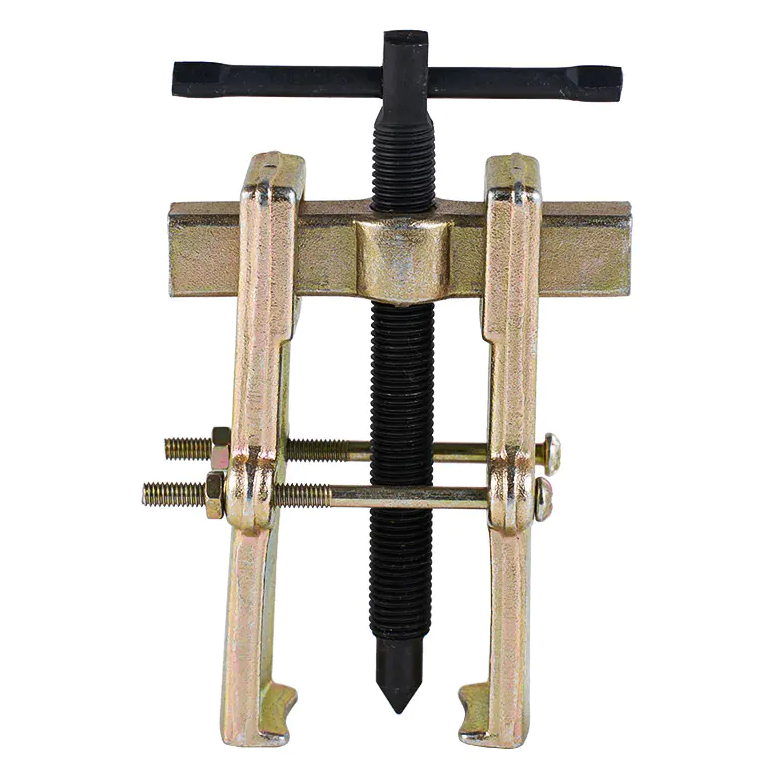
The Precision Forge of Controlled Extraction
A bearing puller factory is a highly specialized manufacturing center focused on the engineering and production of tools designed for the singular, critical task of removing bearings from housings and shafts without damaging the components or the surrounding machinery. Unlike general-purpose tools, bearing pullers are engineered systems that translate rotational torque or hydraulic pressure into focused, linear tensile force. This factory’s expertise lies not just in metal fabrication, but in the applied physics of force distribution, metallurgical science for strength, and precision machining for flawless operation. It serves as the backbone for maintenance, repair, and operations (MRO) across virtually every heavy industry, where the ability to perform a controlled, non-destructive disassembly is paramount to minimizing downtime and repair costs.
Taxonomy of Force: Mechanical, Hydraulic, and Specialized Systems
The factory’s production lines are organized around the principle of force generation:
- Mechanical (Screw-Type) Pullers: The most common. These utilize a high-strength center forcing screw with Acme or trapezoidal threads, turned by a wrench or impact tool. The force is transmitted through a crossbar or yoke to two or three jaws or legs that grip behind the bearing. Designs include two/three-arm pullers and push-pull pullers, where force is applied in opposition against the shaft end.
- Hydraulic Pullers: For the most demanding industrial applications. These incorporate a hydraulic ram (single or double-acting) into the puller frame. Hydraulic pressure, generated by a hand pump or power unit, provides smooth, controllable, and immense force (often 50+ tons) with minimal operator effort. The factory may manufacture the mechanical frame and integrate purchased, certified hydraulic components.
- Specialized Bearing Pullers: Including internal pullers (with expanding collets or jaws that grip the bearing’s inner race), blind-hole bearing pullers (for bearings in recessed housings), and bearing separator kits (thin wedges that slide behind a bearing to provide a gripping point for a standard puller).
Material and Process: Building to Withstand Extreme Stress
The factory is, at its core, a master of high-strength metallurgy. Critical components are subject to forces that can exceed 100 tons.
Forging and Heat Treatment: Load-bearing components—arms, crossbars, and jaws—are typically hot-forged from alloy steels like 4140 or 4340. Forging aligns the grain flow to the part’s contours, optimizing strength. After rough machining, parts undergo precise heat treatment: hardening to achieve high surface strength, followed by tempering to restore crucial toughness and prevent catastrophic brittle fracture under shock load.