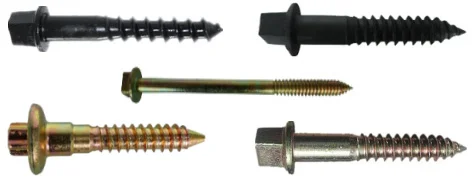
Wood screw spikes play a critical role in modern timber fastening systems, particularly in applications where high holding force, vibration resistance, and long-term structural stability are required. Unlike conventional nails or standard screws, wood screw spikes combine deep-thread geometry with a robust load-bearing shank, making them suitable for heavy-duty structural use.
In railway infrastructure, industrial construction, and large-scale timber assemblies, fastening reliability directly affects operational safety. As an experienced supplier of railway and industrial components, HuiBo Railway provides wood screw spikes designed for demanding environments and bulk procurement requirements.
What Is a Wood Screw Spike?
Definition and Functional Role
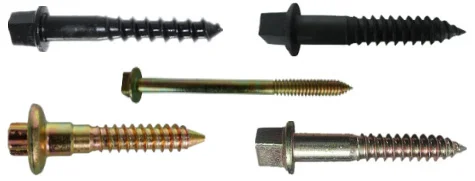
A wood screw spike is a heavy-duty threaded fastener specifically engineered for wood-based structural connections. It is commonly used where traditional nails or light-duty screws cannot meet strength or durability requirements.
Typical Structural Features
A standard wood screw spike includes:
-
Coarse, deep threads for strong wood fiber engagement
-
A thick core diameter to resist shear and bending
-
Square or hexagonal heads for high-torque installation
-
Steel construction suitable for load-bearing applications
These features allow screw spikes to function reliably under static and dynamic loads.
Engineering Design Principles Behind Wood Screw Spikes
Thread Design and Pull-Out Resistance
Thread geometry is a key determinant of fastening performance. Deep, aggressive threads increase contact area with wood fibers, improving resistance to pull-out forces while minimizing loosening under vibration.
Well-controlled thread pitch and flank angle ensure:
-
Even stress distribution
-
Predictable installation torque
-
Long-term fastening stability
High-quality manufacturers apply strict dimensional control during production to maintain consistency.
Shank Strength and Load Distribution
The solid shank of a wood screw spike must withstand both axial and lateral forces. In railway and infrastructure environments, this includes cyclic loads, vibration, and environmental stress, requiring careful balance between hardness and toughness.
Material Selection and Heat Treatment
Common Materials Used
Industrial wood screw spikes are typically manufactured from:
Medium-carbon steel for general structural use
Alloy steel for higher strength and fatigue resistance
Material choice directly affects service life and mechanical performance.
Heat Treatment Processes
Processes such as quenching and tempering are applied to achieve:
-
Adequate tensile strength
-
Controlled hardness
-
Resistance to brittle failure
HuiBo Railway emphasizes consistent heat treatment standards to ensure batch-to-batch mechanical reliability for wholesale supply.
Manufacturing Processes: From Steel to Finished Spike
Forging vs. Machining
Wood screw spikes are produced using:
Hot forging, preferred for high-volume production and improved grain structure
CNC machining, used for custom designs or tighter tolerances
Forged screw spikes generally offer superior fatigue performance, making them suitable for infrastructure projects.
Surface Treatment and Corrosion Protection
To enhance durability, common surface treatments include:
-
Hot-dip galvanizing
-
Electro-galvanizing
-
Black oxide or protective coatings
Selection depends on exposure conditions, especially for outdoor or railway use.
Typical Applications of Wood Screw Spikes
Railway and Track Infrastructure
In railway systems, wood screw spikes are widely used to:
-
Fix rail components to timber sleepers
-
Secure base plates and fastening assemblies
-
Maintain track geometry under repeated dynamic loads
Consistent dimensions and strength are essential for safety-critical installations.
Heavy Timber and Industrial Construction
Beyond railways, applications include:
-
Timber bridges and decking
-
Industrial wooden frames
-
Retaining walls and outdoor structures
Their load-bearing capability makes screw spikes suitable for long-term structural use.
Quality Standards and Procurement Considerations
Key Quality Factors for Buyers
When sourcing wood screw spikes in bulk, professional buyers typically evaluate:
-
Dimensional accuracy
-
Thread consistency
-
Mechanical strength performance
-
Coating adhesion and thickness
Wholesale Supply Advantages
As a wholesale-oriented manufacturer and supplier, HuiBo Railway focuses on production stability, quality repeatability, and long-term supply continuity rather than short-term retail sales.
Why Choose HuiBo Railway as Your Wood Screw Spike Supplier?
HuiBo Railway supports global buyers by offering:
-
Stable large-volume manufacturing capacity
-
Engineering support for specification matching
-
Quality control across production batches
-
Experience in railway and industrial fastener supply
This makes HuiBo Railway a reliable partner for infrastructure contractors, distributors, and OEM customers.
Conclusion: More Than a Simple Fastener
Wood screw spikes are critical structural components, not basic hardware. Their performance directly affects the safety and longevity of timber-based systems. Understanding their design, materials, and manufacturing processes is essential for informed procurement decisions.
With its emphasis on wholesale supply, industrial-grade manufacturing, and railway application expertise, HuiBo Railway continues to deliver dependable wood screw spike solutions for global markets.