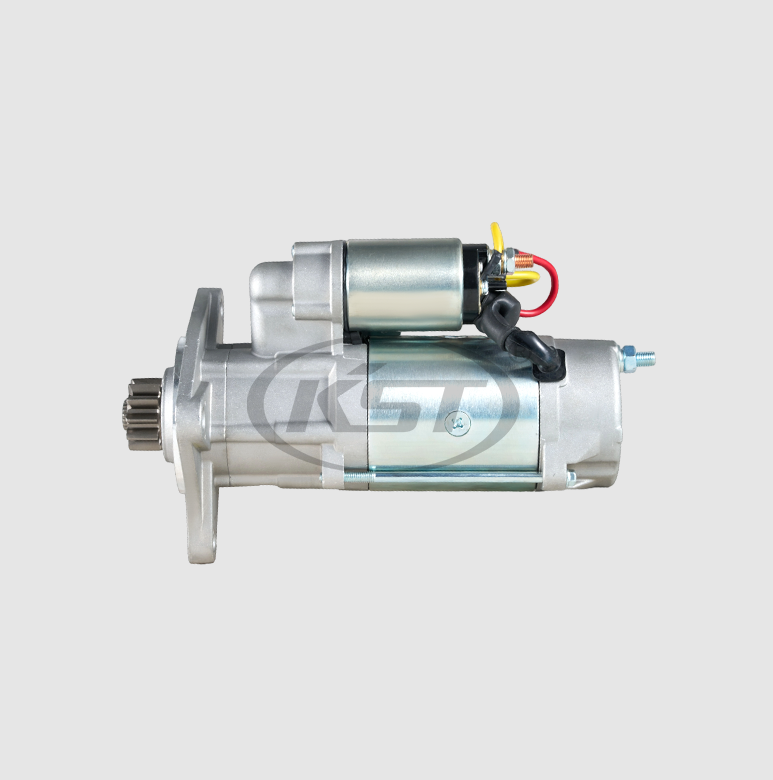
The moment of truth on any job site comes when the operator turns the key. A silent response or a futile click can derail a day's work, with the culprit frequently lying within the ignition sequence. Central to this process is the construction machinery starter, a high-torque electric motor designed to overcome the immense inertia of a cold diesel engine. Its failure is not merely an inconvenience; it represents significant downtime and repair costs. However, many apparent starter failures are actually issues within the supporting electrical circuit. Adopting a logical, step-by-step diagnostic approach can quickly isolate the true problem, whether it's a simple loose wire or a motor needing replacement, getting your equipment back to work faster.
The Initial Assessment: Gathering Clues
Before grabbing any tools, conduct a preliminary sensory investigation. Listen carefully: Is there a single loud click, a rapid series of clicks, or complete silence? Observe the dashboard: Do lights dim severely when attempting to crank? Check for any recent history: Was the machine hard to start before it failed entirely? This information directs your next steps. A single click often points to high resistance in the main power circuit or a faulty solenoid, while rapid clicking typically indicates insufficient available current, usually from a weak battery. Complete silence suggests a break in the control circuit, such as a failed safety switch, ignition switch, or relay.
Stage One: Verifying Power Source and Integrity
The first and most common cause of cranking issues is not the starter itself, but the battery and its connections. Begin by visually inspecting the battery terminals and cable ends for corrosion, looseness, or damage. Clean and tighten them securely. Next, use a multimeter to measure the battery's static voltage; a reading below 12.4V for a 12V system indicates a depleted charge. The critical test, however, is voltage under load. Perform a crank test (if possible) or a dedicated battery load test. A battery that holds adequate voltage at rest but collapses under the starter's demand must be charged or replaced. Remember, two 12V batteries in series for a 24V system must be tested individually, as one weak cell can cripple the entire circuit.