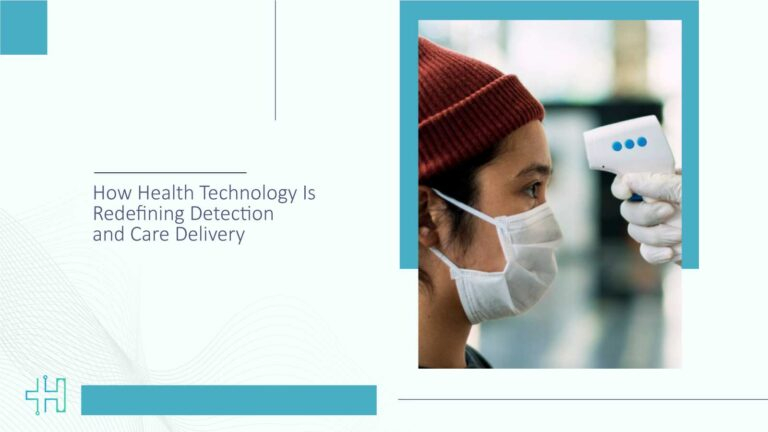
Healthcare is undergoing a rapid digital evolution, with health technology playing a central role in reshaping how diseases are detected, diagnosed, and treated. From AI-powered diagnostics to remote monitoring platforms, innovation is no longer limited to improving workflows - it is redefining how care is delivered across the entire patient lifecycle.
For healthcare executives, clinicians, and technology leaders, understanding this shift is critical. Early detection improves outcomes, while optimized care delivery enhances operational efficiency, cost control, and patient satisfaction. Together, these advancements are shaping a more proactive and data-driven healthcare ecosystem.
The Shift from Reactive to Proactive Healthcare
Traditional healthcare models often relied on reactive treatment - addressing conditions after symptoms became severe. Today, advanced health technologies enable earlier detection and predictive intervention.
Key drivers of this transformation include:
- Artificial intelligence in diagnostic imaging
- Predictive analytics for risk stratification
- Wearable health monitoring devices
- Remote patient monitoring (RPM) systems
- Cloud-based health data integration
These innovations allow providers to identify risks sooner, intervene earlier, and personalize treatment pathways more effectively.
AI and Advanced Diagnostics Improving Detection
Artificial intelligence is revolutionizing disease detection across specialties. Machine learning algorithms can analyze imaging scans, pathology slides, and patient data faster and often more consistently than manual review alone.
AI-driven systems now assist with:
- Early cancer detection through imaging analysis
- Cardiovascular risk prediction
- Sepsis identification in hospital settings
- Chronic disease progression monitoring
By enhancing diagnostic accuracy and reducing time-to-detection, healthcare organizations improve both clinical outcomes and resource utilization.
Digital Tools Redefining Care Delivery Models
Detection is only one part of the equation. Modern health technology also strengthens how care is delivered across in-person and virtual environments.
1. Telehealth Expansion
Telemedicine platforms have expanded access to specialists, reduced geographic barriers, and improved follow-up compliance. Hybrid care models are now becoming the standard in many healthcare systems.
2. Remote Patient Monitoring
Wearables and connected devices allow clinicians to track vital signs and chronic conditions in real time. This reduces hospital readmissions and enables early intervention when anomalies are detected.
3. Data-Driven Care Coordination
Integrated health information systems improve collaboration between primary care providers, specialists, and care managers. Unified data access enhances treatment continuity and reduces duplication.
4. Workflow Automation and Operational Efficiency
Automation tools streamline administrative tasks such as scheduling, documentation, and billing, allowing clinicians to focus more on patient care.
Why This Matters for Healthcare Leaders
For CIOs, CMIOs, CTOs, and healthcare operations executives, investing in advanced health technology directly impacts:
- Patient safety and quality metrics
- Value-based care performance
- Revenue cycle efficiency
- Compliance and cybersecurity standards
- Long-term organizational scalability
Health technology is no longer a support function - it is a strategic growth enabler.
Final Thoughts
Health technology is redefining detection and care delivery by shifting healthcare from reactive treatment models to proactive, data-driven systems. Early diagnosis, personalized interventions, and digitally connected care environments are improving outcomes while strengthening operational performance.
Organizations that prioritize intelligent diagnostics, interoperable systems, and patient-centered digital engagement will lead the next era of healthcare innovation. The future of care delivery belongs to those who embrace integrated technology ecosystems today.