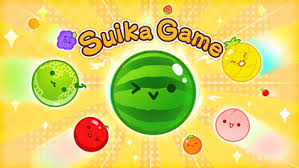
Puzzle games often succeed because they take a simple idea and turn it into a surprisingly addictive challenge. One recent example that has quietly captured the attention of casual players is the fruit‑stacking puzzle known as Suika Game. At first glance it looks playful and almost silly—fruits bouncing around inside a container—but after a few rounds, many players realize they are dealing with a clever physics puzzle that rewards patience, planning, and a bit of experimentation.
If you enjoy relaxing games that still challenge your thinking, this watermelon puzzle might be worth exploring. Here’s how it works, what makes it interesting, and a few tips that can help you enjoy the experience even more.
Introduction: Why the Watermelon Puzzle Feels So Addictive
The basic idea behind the watermelon puzzle genre is beautifully simple. You drop fruits into a container, and when two identical fruits touch, they merge into a larger fruit. Continue merging fruits and eventually you reach the biggest fruit in the chain—the watermelon.
What makes the experience special is the balance between calm visuals and strategic thinking. The fruits bounce and roll realistically, meaning that every drop slightly changes the layout of the container. A single careless placement can create a messy pile, while a thoughtful move can trigger a satisfying chain reaction of merges.
Unlike fast-paced action games, this puzzle doesn’t pressure you with timers or complicated rules. Instead, the challenge comes from managing space and predicting how the fruits will settle. It’s the kind of game where you might start playing “just one round” and realize half an hour has passed.
Gameplay: How the Fruit Merging Works
The gameplay loop is easy to understand, which is one reason it appeals to so many players.
You start with an empty container and a fruit waiting to be dropped from above. Your goal is to position the fruit carefully before releasing it. Once it falls, gravity and physics take over. The fruit may bounce slightly or roll to one side depending on the surface it lands on.
The key mechanic is merging. When two fruits of the same type touch each other, they combine into a larger fruit. For example, two small cherries merge into a strawberry, two strawberries become a larger fruit, and so on. The merging chain continues through several fruit stages until you finally create the watermelon.
But there’s an important limitation: the container can fill up. If the fruit stack rises above the boundary line at the top, the game ends. This means every drop matters. As the pile grows, it becomes harder to find safe places to place new fruits.
Another interesting part of the experience is how physics affects strategy. Fruits are round and slightly bouncy, so they rarely stay exactly where you expect. A carefully planned drop might slide into a different position or accidentally trigger a merge that changes the entire structure.
Because of this unpredictability, each session feels unique. Sometimes the fruits line up perfectly and create satisfying combo merges. Other times you’ll be trying to rescue a chaotic pile that’s about to overflow.
Tips: Simple Strategies to Play More Effectively
While the puzzle looks casual, a few thoughtful habits can make a big difference in how long you survive.
First, try to build from the bottom rather than the sides. Keeping larger fruits near the base creates a stable foundation and prevents awkward gaps that waste valuable space.
Second, think ahead before dropping a fruit. Instead of focusing only on the immediate merge, consider how the resulting fruit will affect nearby ones. A small merge might create a larger fruit that rolls into position for another merge later.
Third, avoid scattering identical fruits too far apart. When similar fruits are spread around the container, it becomes difficult to merge them later without disturbing the entire pile.
Another useful tip is to control the center of the container. Many players naturally drop fruits toward the edges, which can create uneven stacks. By maintaining a balanced center, you leave yourself more flexibility for future merges.
Finally, stay calm when things look messy. Some of the most satisfying moments in this puzzle happen when a seemingly chaotic pile suddenly collapses into a series of merges. Sometimes patience is better than trying to “fix” everything immediately.
Conclusion: A Small Puzzle With Big Charm
Part of the charm of the watermelon puzzle is that it doesn’t try too hard. The visuals are simple, the rules are easy to understand, and each round can be enjoyed at your own pace. Yet beneath that simplicity lies a clever balance of physics, planning, and luck.
Whether you play for a few minutes during a break or spend longer sessions chasing a higher score, the fruit‑merging mechanic keeps the experience fresh. Every drop changes the situation, and every merge feels like a small reward.
If you enjoy puzzle games that are relaxing but still require thoughtful decisions, the watermelon stacking challenge offers a surprisingly engaging experience. Sometimes the most enjoyable games are the ones built on the simplest ideas—and watching a pile of fruit slowly transform into a giant watermelon is a perfect example of that.