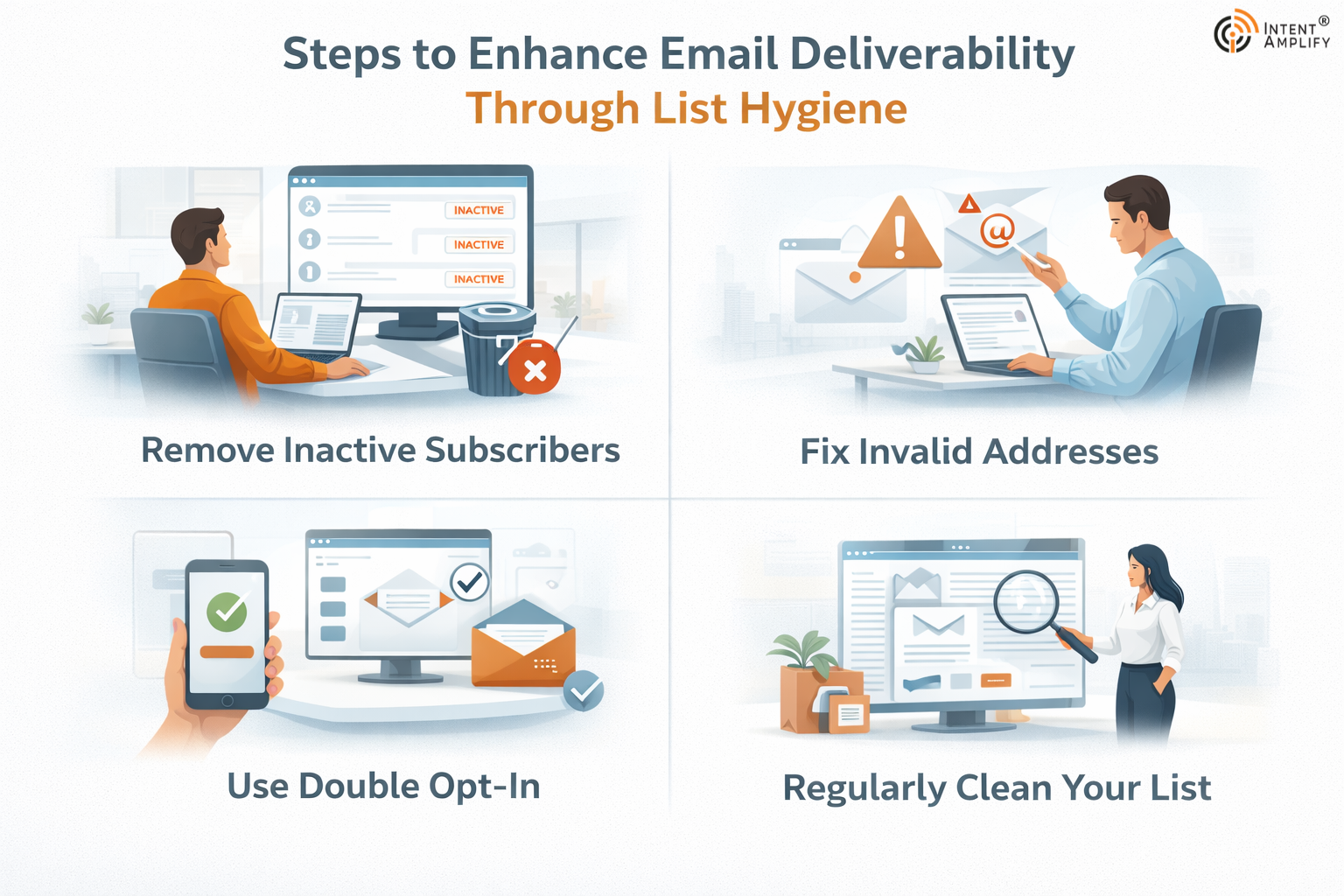
Email marketing remains one of the most effective channels for B2B and SaaS companies to nurture prospects, engage customers, and generate consistent revenue opportunities. However, even the most well-crafted campaigns can fail if emails never reach the intended inbox. Poor list quality, outdated contacts, and inactive subscribers can significantly impact email deliverability.
This is where list hygiene becomes essential. Maintaining a clean and well-managed email database ensures that marketing messages reach real, engaged recipients rather than bouncing, being flagged as spam, or landing in inactive inboxes. For SaaS marketers who rely heavily on email campaigns as part of their broader digital marketing and demand generation strategies, strong list hygiene practices are critical for protecting sender reputation and improving campaign performance.
By regularly cleaning and optimizing email lists, organizations can improve deliverability rates, increase engagement, and ensure their marketing efforts produce measurable results.
Why List Hygiene Matters for Email Deliverability
Email service providers closely monitor sender behavior to determine whether emails should be delivered to the inbox, filtered into spam, or blocked entirely. Factors such as high bounce rates, spam complaints, and low engagement signals can negatively impact sender reputation.
List hygiene directly influences these factors by ensuring that email campaigns are sent to valid, active, and interested recipients.
Maintaining a healthy email list helps marketers:
- Reduce hard and soft bounce rates.
- Improve open and click-through rates.
- Protect sender reputation
- Avoid spam filters and blacklisting.
- Increase overall campaign effectiveness.
For SaaS organizations that depend on ongoing communication with prospects and customers, a well-maintained email database is essential for sustaining reliable outreach and engagement.
Common Issues That Affect Email Deliverability
Before implementing effective list hygiene strategies, marketers must understand the common problems that harm email deliverability.
Outdated or Invalid Email Addresses
Over time, contacts change roles, companies update domains, and email accounts become inactive. Sending emails to invalid addresses increases bounce rates and damages sender credibility.
Purchased or Low-Quality Lists
Using purchased email lists may seem like a quick way to expand outreach, but these lists often contain outdated or unverified contacts that can trigger spam filters.
Inactive Subscribers
Subscribers who have not engaged with emails for long periods can negatively affect engagement metrics, which email providers use to evaluate sender quality.
Spam Traps
Spam traps are email addresses specifically designed to identify senders who are not maintaining proper list hygiene. Sending emails to these addresses can severely harm deliverability.
Key Steps to Improve Email Deliverability Through List Hygiene
Maintaining a clean email list requires consistent monitoring and proactive management. SaaS marketers can adopt several best practices to improve deliverability and ensure successful campaigns.
- Regularly Remove Invalid Contacts
Conduct routine audits to identify and remove hard bounces, invalid email addresses, and duplicate contacts. This reduces the risk of repeated bounce attempts that could harm the sender's reputation.
- Implement Double Opt-In
Double opt-in processes require subscribers to confirm their email address before being added to the mailing list. This ensures that contacts are legitimate and genuinely interested in receiving communications.
- Segment and Target Your Audience
Segmenting email lists based on behavior, interests, or industry allows marketers to send more relevant content to each audience group. Targeted campaigns typically generate higher engagement rates.
- Monitor Engagement Metrics
Tracking open rates, click-through rates, and unsubscribe patterns can help identify inactive contacts. Subscribers who remain unengaged for extended periods should be re-engaged or gradually removed from the list.
- Use Re-Engagement Campaigns
Before removing inactive subscribers, companies can run targeted re-engagement campaigns to encourage recipients to confirm their interest in future communications.
- Verify Email Addresses at Entry Points
Using email validation tools at sign-up forms or event registrations helps ensure that only legitimate email addresses enter the database.
The Role of Content and Digital Strategy in Email Engagement
While list hygiene improves deliverability, the quality of content also plays a major role in keeping audiences engaged. SaaS marketers must ensure that email campaigns provide valuable insights, relevant updates, and meaningful industry perspectives.
Combining strong email practices with broader content marketing and digital marketing initiatives helps reinforce brand authority while encouraging consistent audience interaction. When recipients regularly engage with informative content and useful resources, email providers recognize these positive signals and improve inbox placement.
Best Practices for Maintaining Long-Term List Health
Maintaining list hygiene is not a one-time task but an ongoing process that supports sustainable email marketing success.
Key practices include:
- Scheduling regular database audits
- Monitoring bounce and complaint rates
- Keeping subscription forms clear and transparent
- Providing easy unsubscribe options
- Continuously delivering valuable and relevant content.
By consistently managing email lists, organizations can ensure that their communication remains effective and welcomed by recipients.
Conclusion
In the competitive SaaS landscape, email marketing remains a vital channel for nurturing leads, sharing valuable insights, and maintaining relationships with prospects and customers. However, achieving strong results requires more than just compelling messaging - it depends heavily on maintaining a clean and engaged email database.
By prioritizing list hygiene, audience segmentation, and high-quality content, SaaS marketers can significantly improve email deliverability and campaign performance. These practices not only protect the sender's reputation but also ensure that marketing messages consistently reach the inbox of the right audience.
As email ecosystems continue to evolve, companies that adopt proactive list management and responsible email marketing strategies will be better positioned to build trust, strengthen engagement, and drive long-term business growth.