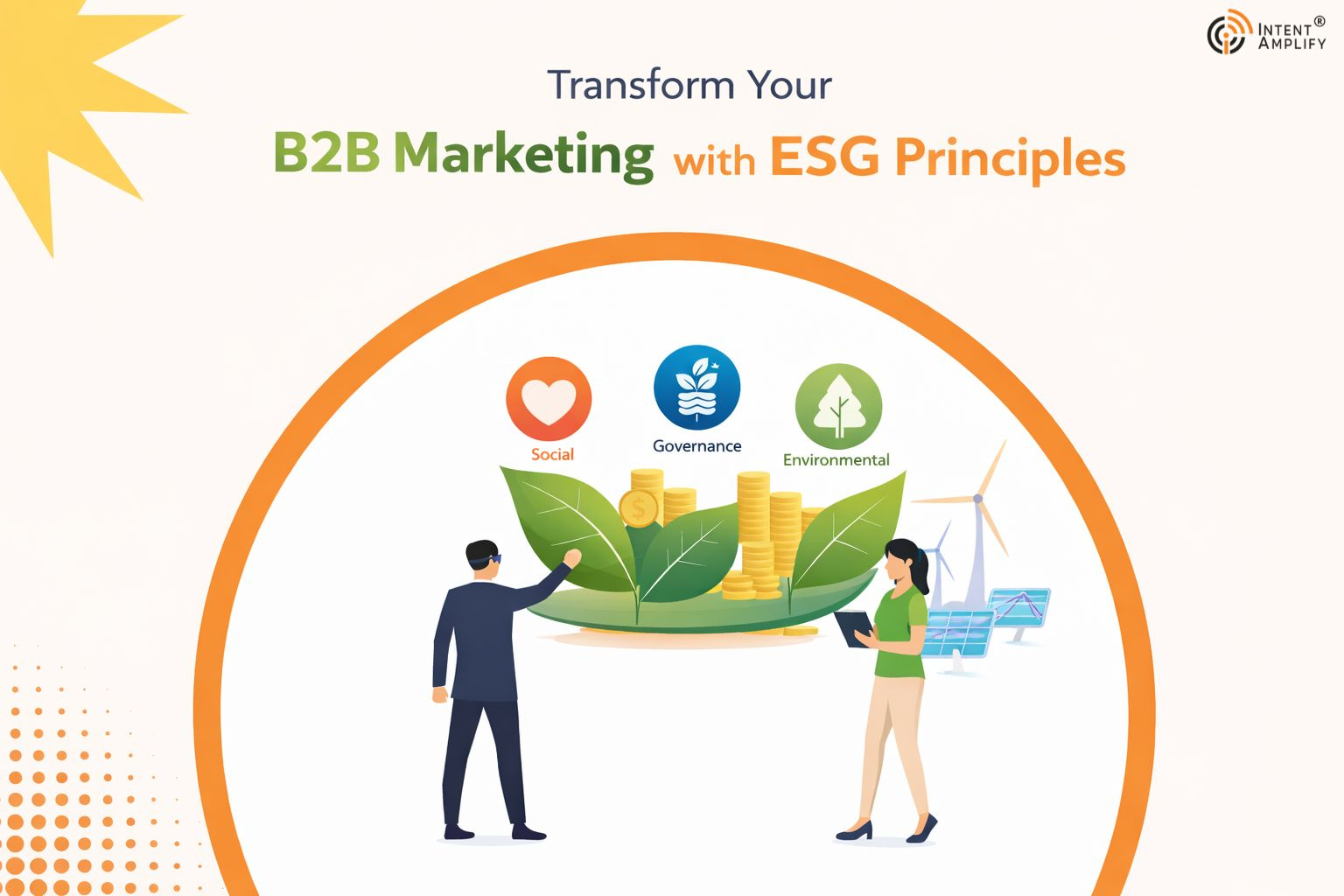
In recent years, Environmental, Social, and Governance (ESG) principles have moved from being a corporate responsibility initiative to becoming a strategic business priority. Organizations across industries are increasingly expected to demonstrate transparency, ethical practices, and sustainable operations. As a result, ESG is now influencing not only business operations but also how companies approach B2B marketing and demand generation.
Modern buyers are more conscious about the values and long-term impact of the companies they engage with. Decision-makers prefer to partner with organizations that demonstrate responsible practices and align with broader sustainability goals. For B2B marketers, integrating ESG principles into marketing strategies offers an opportunity to strengthen brand credibility, build trust, and connect with audiences that value responsible business practices.
When implemented effectively, ESG-driven marketing goes beyond messaging. It becomes a core component of brand storytelling, content strategies, and digital engagement initiatives that resonate with modern business audiences.
Understanding ESG in the Context of B2B Marketing
ESG refers to three main aspects that influence ethical business practices:
- Environmental: Commitment to sustainable operations, resource efficiency, and environmental responsibility.
- Social: Focus on employee well-being, community engagement, and ethical business relationships.
- Governance: Transparent leadership, ethical decision-making, and strong corporate accountability.
For B2B marketing teams, ESG principles help shape how brands communicate their values and demonstrate their impact within their industries. Marketing efforts that highlight sustainability initiatives, ethical partnerships, and transparent operations can significantly strengthen brand perception among potential clients and stakeholders.
By aligning marketing messages with genuine ESG commitments, organizations can position themselves as responsible industry leaders.
Why ESG Matters in Modern B2B Demand Generation
Today’s B2B buyers conduct extensive research before making purchasing decisions. Along with product capabilities and pricing, they increasingly evaluate a company’s values, sustainability initiatives, and corporate ethics.
Integrating ESG into marketing strategies can positively influence buyer perception and create stronger engagement opportunities.
Key advantages of ESG-driven marketing include:
- Enhanced brand credibility and trust
- Stronger relationships with socially conscious buyers
- Improved reputation within industry communities
- Greater alignment with long-term corporate goals
- Differentiation in competitive markets
Organizations that communicate their ESG initiatives through credible content and transparent messaging often see higher engagement from audiences who prioritize responsible business partnerships.
Using Content to Communicate ESG Values
Content plays a vital role in communicating ESG initiatives and demonstrating a company’s commitment to sustainability and ethical practices. Thought leadership, industry insights, and research-driven content allow organizations to showcase their contributions while educating their audience.
Effective ESG-focused content strategies often include:
- Thought leadership articles on sustainable innovation
- Industry reports highlighting environmental and social impact.
- Case studies showcasing responsible business practices
- Expert discussions on governance and ethical leadership
Through well-crafted content marketing initiatives, companies can share meaningful narratives that highlight their ESG commitments while providing valuable insights to their audience.
This approach not only strengthens credibility but also improves visibility across digital channels where industry professionals seek trusted information.
Leveraging Digital Marketing to Amplify ESG Messaging
Digital marketing plays an essential role in expanding the reach of ESG-driven initiatives. By integrating ESG messaging into broader marketing campaigns, companies can ensure their sustainability efforts are communicated effectively to relevant audiences.
Strategic digital marketing efforts may include:
- Search-optimized content focused on sustainability topics
- Sponsored editorial placements on industry platforms
- Educational webinars discussing ESG trends and innovations
- Social media campaigns highlighting corporate responsibility initiatives
These digital strategies help organizations engage decision-makers who are actively exploring companies that prioritize ethical and sustainable practices.
When supported by credible industry platforms and strong content ecosystems, ESG messaging can significantly enhance brand visibility and influence demand generation efforts.
Aligning Brand Strategy with ESG Principles
For ESG-driven marketing to be effective, it must align closely with the organization’s overall brand strategy. Authenticity is critical—audiences quickly recognize when sustainability messaging lacks genuine commitment.
Companies should ensure that ESG values are consistently reflected across:
- Corporate communications
- Marketing campaigns
- Brand messaging and storytelling
- Industry partnerships and collaborations
When ESG principles are integrated into the brand identity, they become a natural extension of the company’s voice and mission rather than a standalone marketing tactic.
This alignment strengthens long-term credibility and reinforces the organization’s position as a responsible industry participant.
Best Practices for Implementing ESG in B2B Marketing
Organizations looking to incorporate ESG into their marketing strategies should consider several practical approaches.
Communicate Authentic Initiatives
Highlight real sustainability efforts, ethical policies, and measurable progress rather than broad claims.
Educate Your Audience
Share insights on how ESG practices are shaping industries and business strategies.
Collaborate with Industry Platforms
Engaging with trusted B2B media channels can help amplify ESG messaging within relevant professional communities.
Integrate ESG into Content and Campaigns
Include sustainability themes in articles, reports, digital campaigns, and thought leadership initiatives.
Maintain Transparency
Provide clear data, progress updates, and measurable outcomes to reinforce credibility.
Conclusion
ESG principles are becoming a powerful force shaping the future of B2B marketing and demand generation. As businesses place greater emphasis on sustainability, transparency, and ethical practices, marketers have an opportunity to align their strategies with these evolving expectations.
By integrating ESG values into content marketing, digital engagement, and brand storytelling, organizations can build stronger relationships with modern buyers who prioritize responsible partnerships.
Companies that authentically communicate their ESG commitments not only enhance brand reputation but also position themselves as forward-thinking leaders in their industries. In an increasingly values-driven marketplace, ESG-focused marketing is no longer optional - it is becoming a key driver of trust, engagement, and long-term growth.