Core Definition and Purpose
Side core pulling refers to a mechanism in injection molding that retracts mold components laterally before part ejection. This technique creates features that cannot be formed with a straight mold opening and closing. Holes, threads, undercuts, and recesses on vertical or angled surfaces all require side core pulling. Without this capability, countless plastic parts with complex geometries would be impossible to manufacture efficiently.
Basic Operating Principle
The mechanism operates through coordinated motion during mold opening. A fixed component called an angle pin or shovel base engages with a movable slide block containing the core. As the mold separates, the angled interaction forces the slide block to move laterally, withdrawing the core from the formed feature. This synchronized movement occurs automatically without additional controls. The core remains embedded during injection, then retreats cleanly before ejection, leaving the completed feature intact and undamaged.
Common Mechanism Types
Several standard configurations serve different application requirements. Angle pin mechanisms use inclined guide pins mounted on the fixed mold half to drive slide blocks on the movable side. Hydraulic systems provide independent control for large cores requiring longer strokes or precise timing. Air cylinder actuation suits lighter applications with space constraints. T-type guide block arrangements accommodate complex motion paths. Each approach offers specific advantages depending on part geometry, production volume, and available mold space.
Slide Block Design Considerations
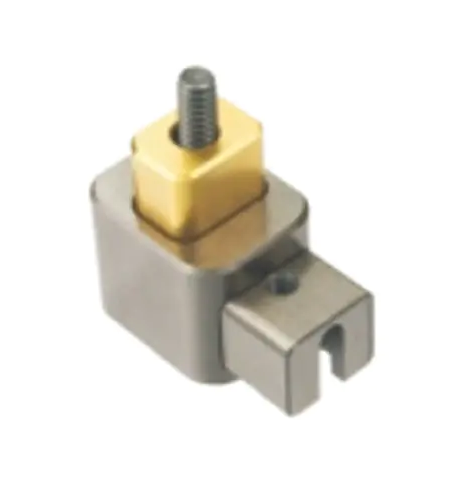
Slide blocks form the heart of most side core pulling systems. These precision components must move smoothly while maintaining exact alignment with mating mold faces. Wear-resistant materials and proper lubrication ensure longevity through millions of cycles. Guide rails or gibs constrain motion to the intended path while preventing deflection under injection pressure. Locking surfaces on the slide block engage with wedges during mold closing, resisting the tremendous forces generated during plastic injection.
Applications for Internal Features
Side cores frequently create internal undercuts requiring retraction before part ejection. Threaded features demand rotational motion combined with linear withdrawal. Deep internal recesses benefit from lifters or angled slide systems that move inward during ejection. Complete cycle barbs on flexible parts require specialized mechanisms with sequenced motion to avoid distortion. These applications demonstrate the essential role of side core pulling in producing functional internal geometries.
Applications for External Features
External side holes, bosses, and recesses also require lateral core movement. Snap-fit features, mounting holes, and decorative elements all benefit from this capability. Complex parts with features on multiple faces may require multiple slide blocks operating in different directions simultaneously. Coordinating these independent motions demands careful design to prevent interference while ensuring all cores withdraw completely before ejection.
Multiple Direction Core Pulling
Advanced parts often require core movement in several directions. Orthogonal slides handle features on perpendicular faces. Angled mechanisms address compound surfaces. Sequential motion sequences ensure cores in interfering paths withdraw in proper order. Some designs combine lifter mechanisms with slide blocks to achieve complex demolding from multiple axes. These sophisticated arrangements enable single molds to produce parts that would otherwise require multiple operations or assembly steps.
Angle Pin Design Parameters
Angle pin geometry directly affects mechanism performance. Pin angle typically ranges from ten to twenty-five degrees relative to mold opening direction. Steeper angles increase lateral travel per mold opening distance but generate higher friction and wear. Shallow angles reduce mechanical advantage but provide smoother motion. Pin diameter must withstand bending forces from slide block resistance. Proper clearance ensures free movement without excessive play affecting core position accuracy.
Hydraulic and Pneumatic Systems
Powered core pulling suits applications exceeding mechanical mechanism capabilities. Large cores with substantial mass benefit from controlled hydraulic motion. Deep cores requiring long strokes often need cylinder actuation because angle pin length becomes impractical. Complex sequences with timed delays rely on valve control and position sensing. Pneumatic systems provide economical solutions for lighter loads where precision requirements allow. These powered options expand design possibilities beyond mechanical limitations.